
Last updated November 14, 2026
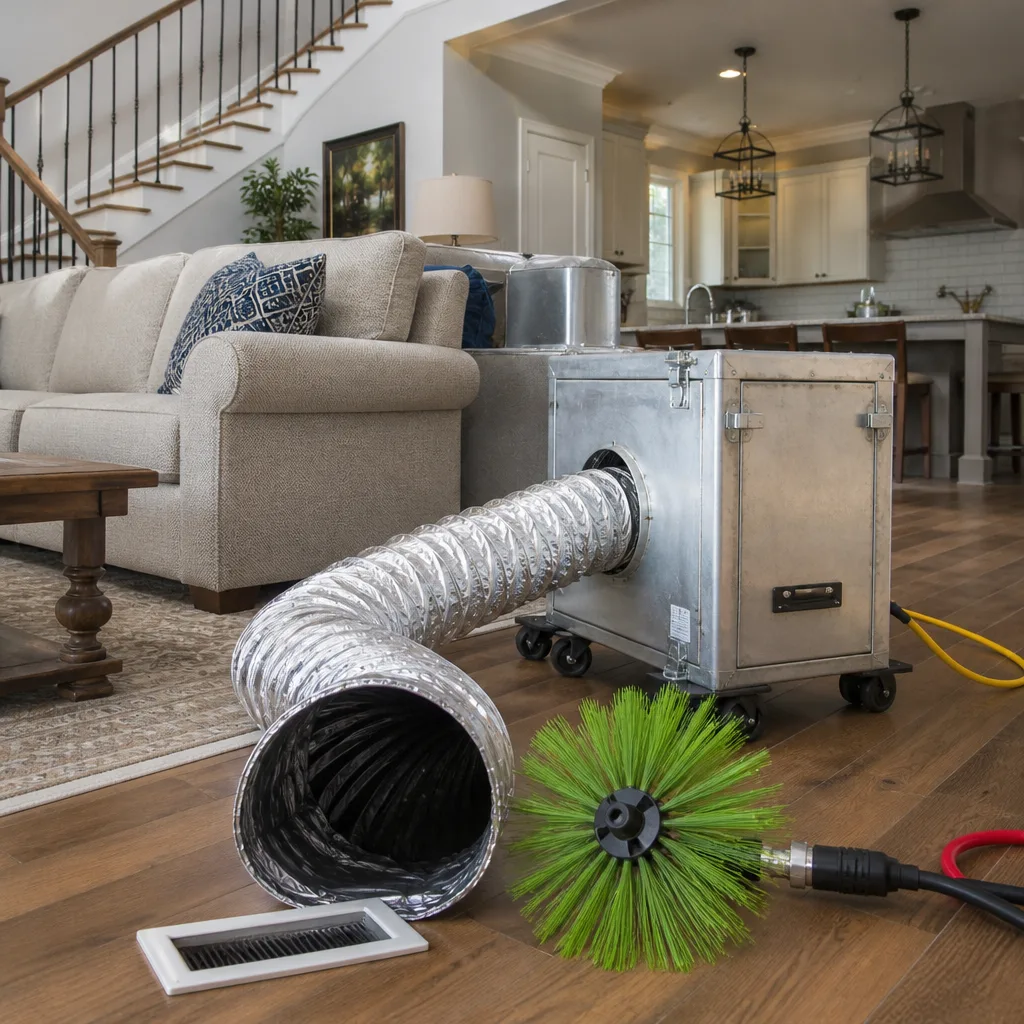 Whole-home duct cleaning
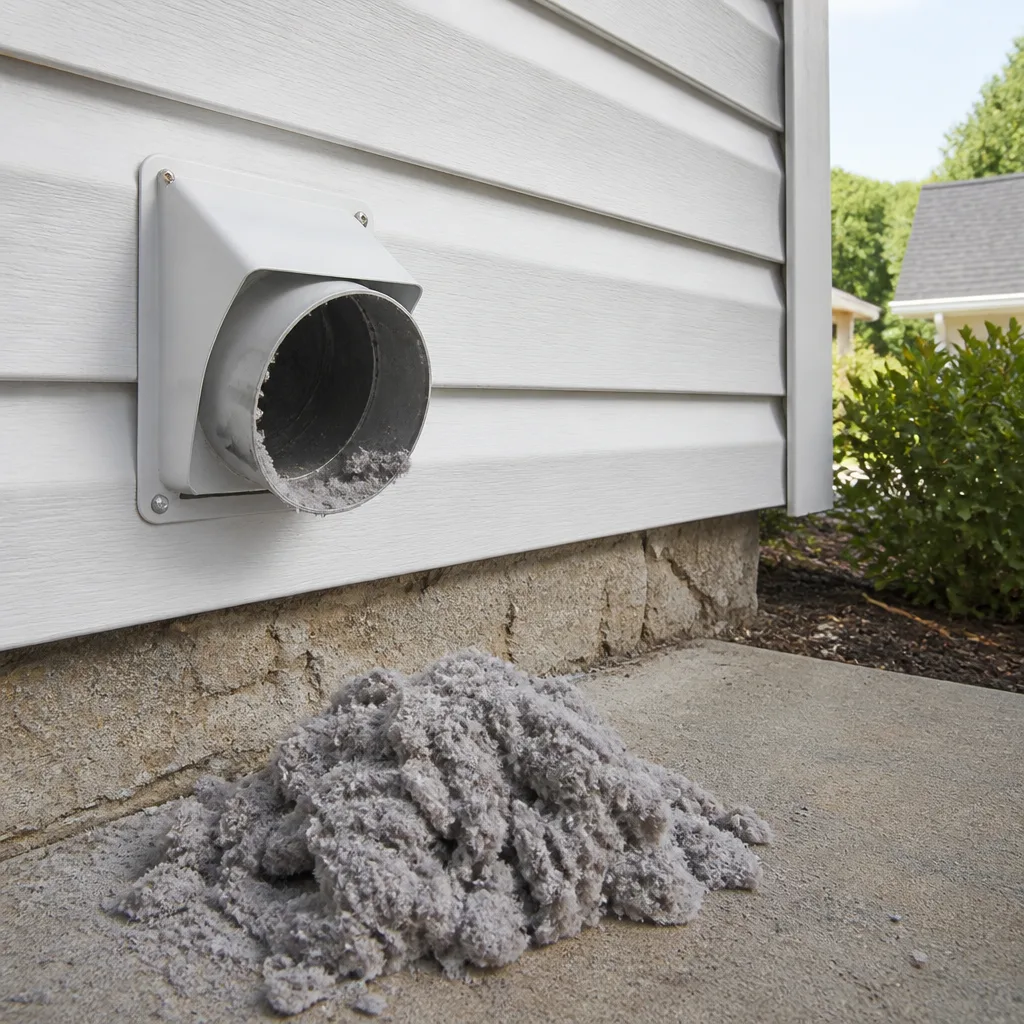 Dryer vent cleaning
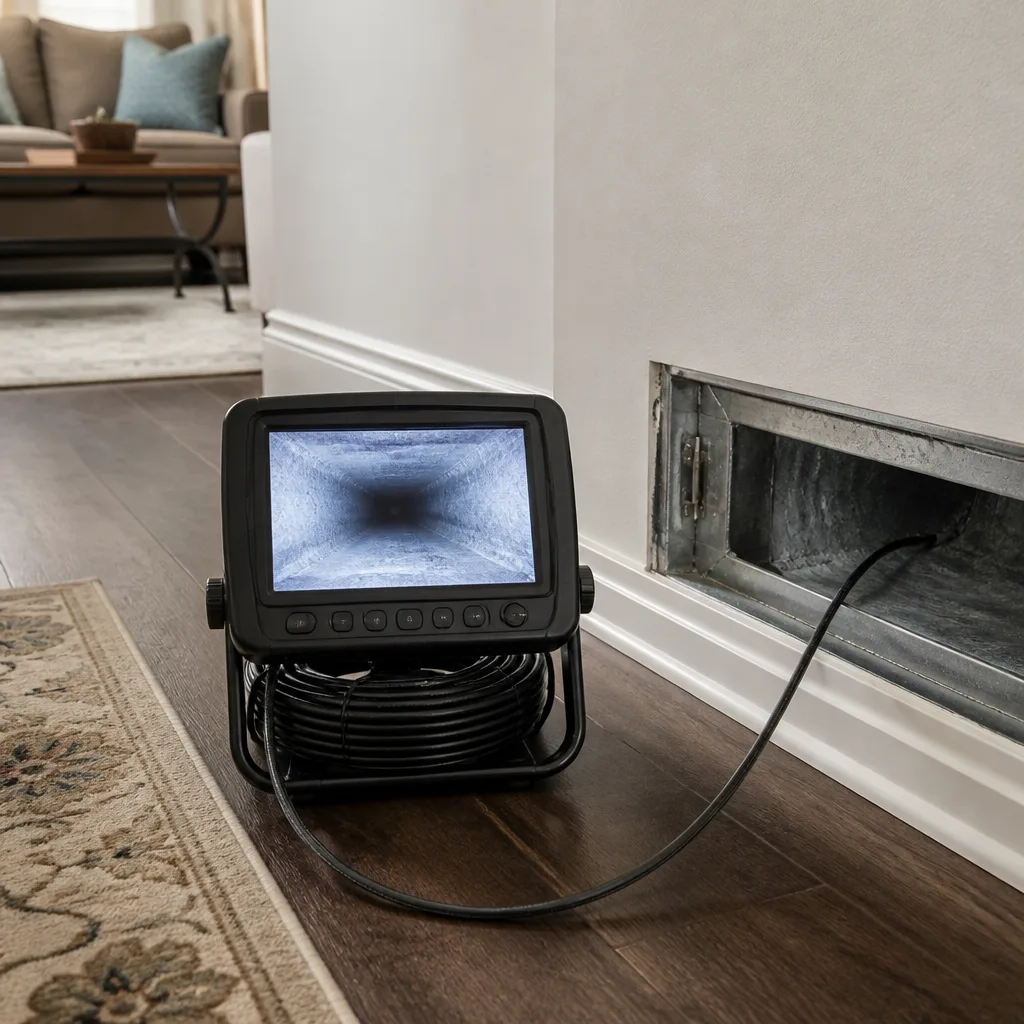 Camera inspection
 Sanitizing & deodorizing
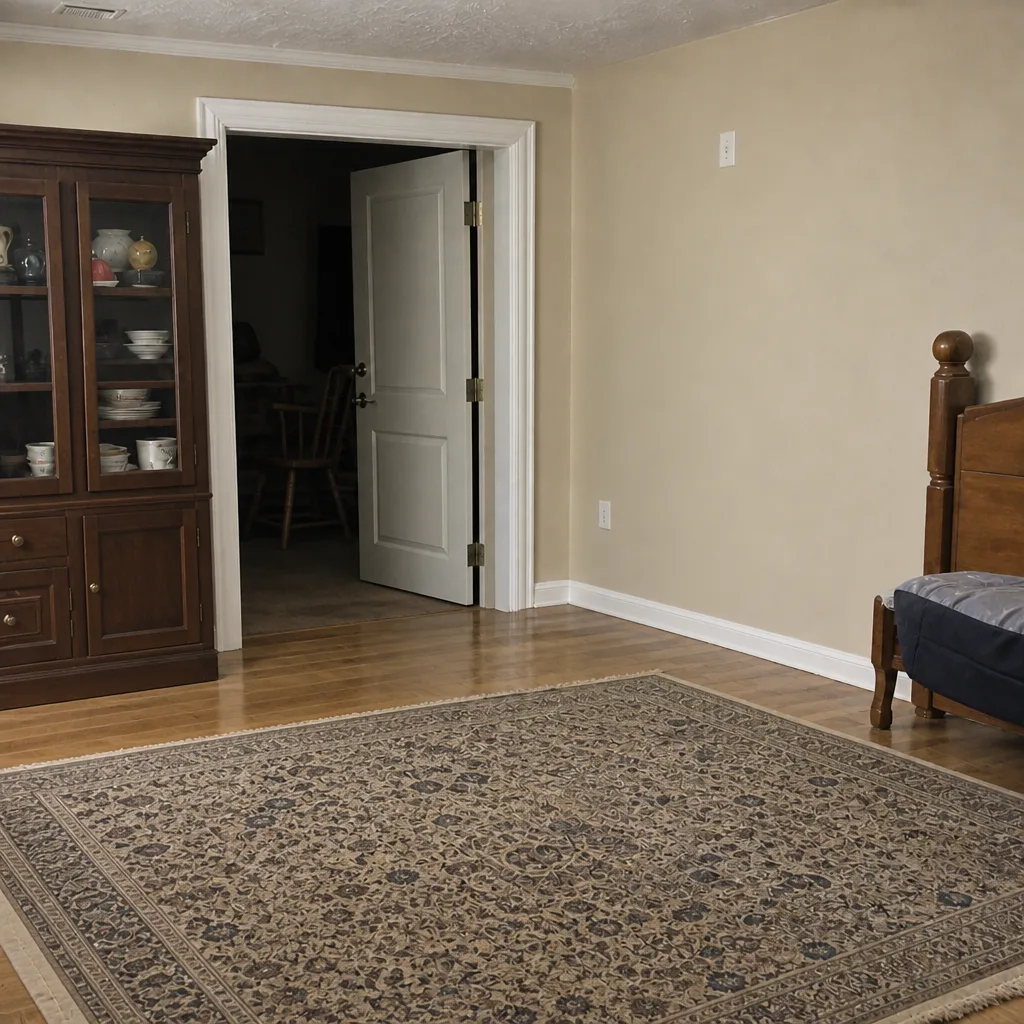
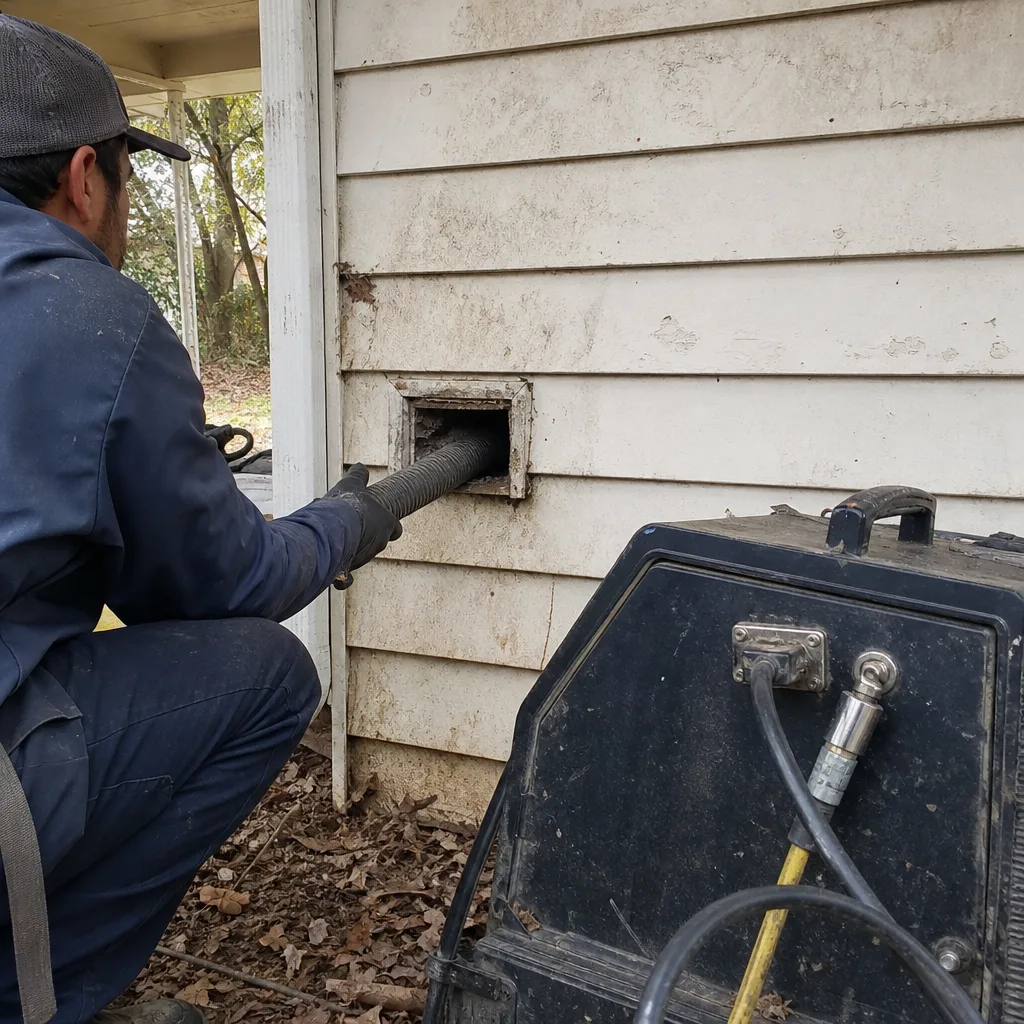
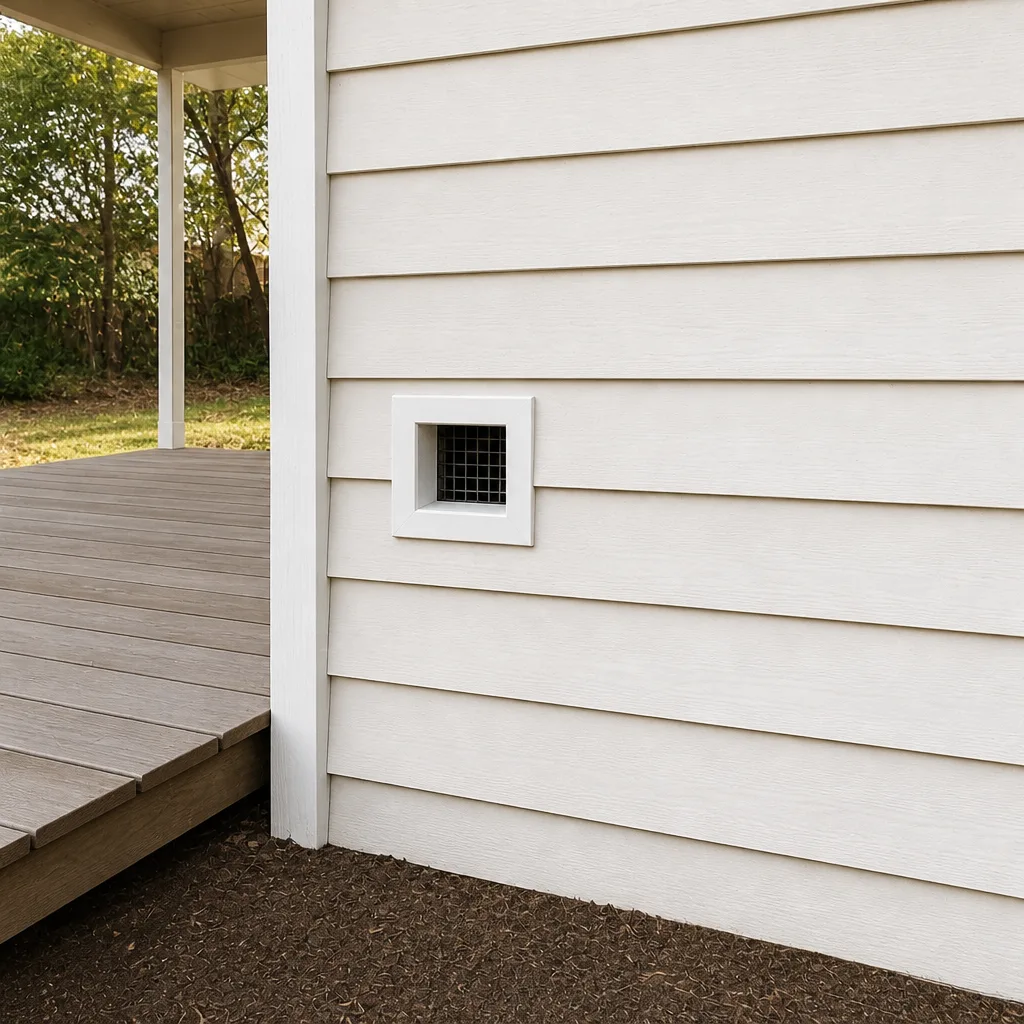
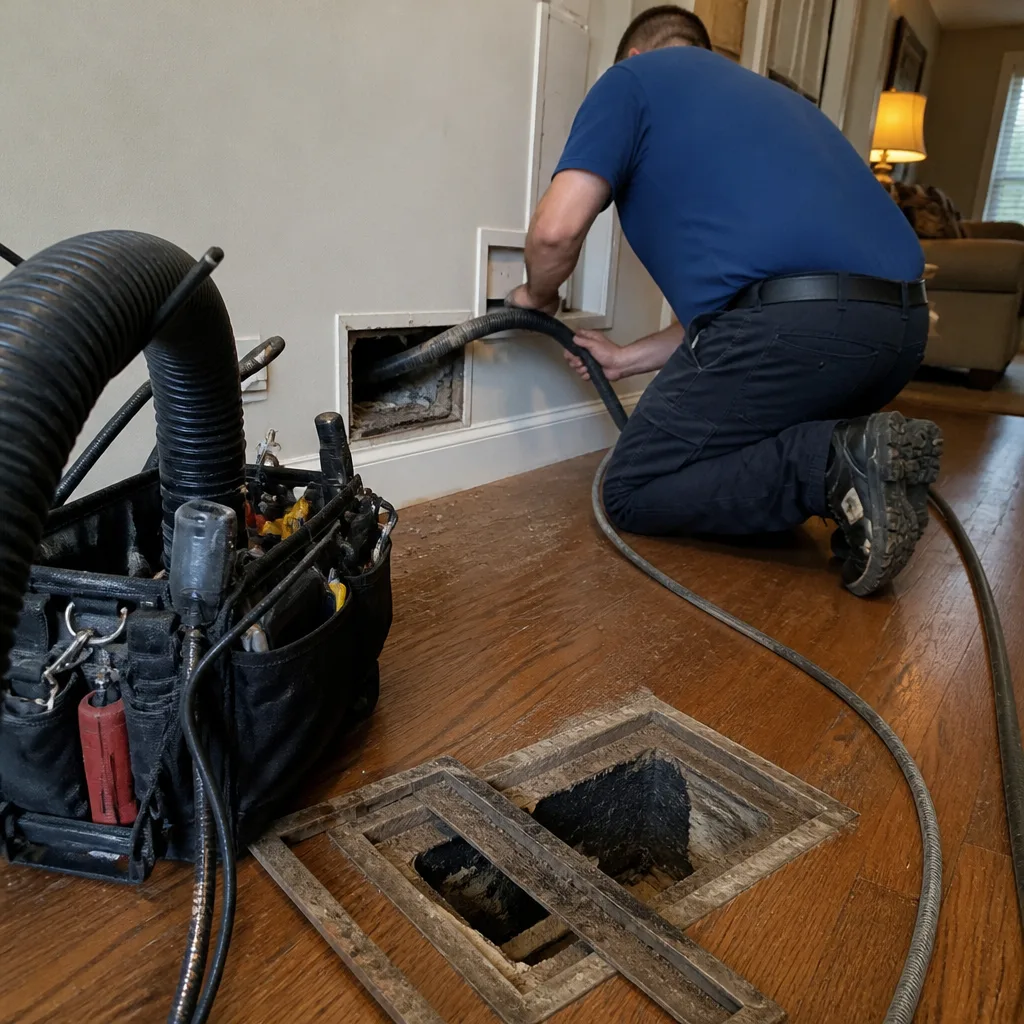
Whole-system duct and dryer vent check with before-and-after photos - you see exactly what came out of your vents
That "$99 whole-house special" is a bait ad - the real number appears once they are in your hallway, or the "clean" is a shop-vac at the register. We photograph the inside of your ducts before and after instead.
Air Duct Cleaning Emergency Preparedness Guide for Charlotte Homes
Charlotte homeowners plan for hurricane season and ice storms the same way every year: batteries, water, a full tank of gas. Almost nobody plans for what those events do inside the duct system. After Hurricane Helene pushed inland in 2024, our experience has been that the call-back problems don’t come from the wind. They come from crawlspace flooding that leaves wet insulation pressed against flex duct for days, in a system that looks completely undamaged from the living room. This guide covers pre-storm protection, post-flood assessment, smoke events, power-restoration startup, and the paperwork your insurer will ask for. It’s written from Charlotte, for Charlotte homes.
Quick Answer
Protecting your ducts in an emergency means three things: seal the return air path and secure crawlspace access before the storm, do not restart the HVAC after flooding or a fire without an inspection, and document everything with photos before any cleanup begins. Most duct damage after a Charlotte storm isn’t visible from inside the house. It shows up as wet insulation, sagging flex duct, or fine particulate coating the interior of the runs.
Styles & brands we work with
- Whole-home duct cleaning
- Dryer vent cleaning
- Camera inspection
- Sanitizing & deodorizing
Table of Contents
- Pre-Storm Protocol: Protecting the HVAC System Before the Event
- Post-Flood Duct Assessment: Before You Restart the System
- Fire and Smoke Events: Why Running the HVAC Makes It Worse
- Ice Storms and Power Restoration: The First Startup
- What to Document for Insurance After Duct Damage
- How to Choose a Duct Contractor After a Storm in Charlotte
- Keeping a Duct System Ready Between Emergencies
Pre-Storm Protocol: Protecting the HVAC System Before the Event
The most useful hour you’ll spend before a major weather event isn’t on the roof or at the hardware store. It’s in the crawlspace and at the air handler. Charlotte’s housing stock carries a lot of its ductwork through unconditioned crawlspace, and that’s exactly where floodwater and driven rain do their damage. You can’t move the ducts, but you can reduce how much contamination reaches them.
- Seal the return air path. Close and tape the return grilles on the lowest floor of the house. If a window fails or water enters, the return is a direct line for debris-laden air to be pulled into the air handler and pushed through every supply run.
- Secure the crawlspace access. Make sure the crawlspace hatch, vent covers, and any foundation penetrations are closed. Water that pools under the house wets the insulation wrapped around flex duct, and wet insulation is where problems start.
- Turn the system off before the storm arrives. Not for the equipment’s sake, but because you don’t want it drawing outside air through a compromised return while wind-driven rain and debris are moving around the house.
- Photograph the mechanical closet and every visible duct run. A five-minute set of photos taken in calm weather gives your adjuster a baseline later. Do the same for the air handler and any exposed flex duct in the attic or crawlspace.
- Clean or replace the filter now. A loaded filter restricts airflow and pulls harder on every gap in the duct system during a power interruption and restart cycle.
One thing worth knowing about this region: Charlotte sits far enough inland that hurricane remnants typically arrive as heavy rain and wind rather than storm surge, but the flooding those remnants leave behind is what compromises duct insulation. The 2024 season showed that clearly. Homes that never lost a shingle still ended up with crawlspace moisture.
Post-Flood Duct Assessment: Before You Restart the System
If any part of your home took on water, do not restart the HVAC system until someone has looked at the ducts, the insulation, and the air handler. This is the single most important rule in this guide. Running a system with wet duct insulation pushes moisture and mold spores through every room in the house and can turn a fixable problem into a full replacement.
Here’s how a professional assessment typically goes.
- Check the insulation wrap first. Flex duct carries its insulation on the outside. If that wrap has been wet for more than a day or two, it’s holding moisture against the duct liner and it usually needs to come off, not dry out in place.
- Inspect the flex duct for sagging and separation. Floodwater and debris shift flex duct on its supports. A sagging run traps moisture and reduces airflow. A separated joint sends conditioned air into the crawlspace instead of your rooms.
- Look at the air handler and the interior of the plenum. Water that reached the air handler cabinet, the blower, or the coil is a repair issue, not a cleaning one. Some components should not be reused after flooding.
- Test the interior of the ducts for contamination. Contact cleaning with Rotobrush and HEPA-rated extraction from Nikro are the tools for this part of the job. HEPA-rated extraction matters here specifically because it captures fine particulate rather than blowing it back into the room.
- Repair what you find before you clean or in the same visit. A compromised run needs to be corrected, not simply cleaned. We repair what we find rather than passing the job to a second contractor.
In our experience, the Charlotte homes that handle a flood event best are the ones that got an inspection in the first few days, before the system was put back into service.
Fire and Smoke Events: Why Running the HVAC Makes It Worse
After a nearby structure fire or a regional smoke event, the instinct is to close the windows and turn on the air conditioning. That instinct is backwards. Your HVAC system pulls air from the house and returns it through a filter with a limited ability to catch smoke particles. Running it after smoke has entered the home distributes fine particulate through every duct run, coating surfaces that were clean and turning a surface problem into a duct system problem.
Smoke residue is sticky. That’s what makes it different from ordinary dust. The fine ash and combustion particles settle on the interior of the duct liner and on the blower wheel, and they don’t come off with a shop vacuum or a quick wipe of the registers.
What professional cleaning of a smoke-contaminated system involves:
- Source control first. Windows closed, system off, and any obvious smoke entry points sealed before cleaning begins.
- Mechanical contact cleaning. The interior surfaces have to be agitated, not just vacuumed. Rotobrush contact cleaning gets at the liner surface where smoke residue clings.
- HEPA-rated extraction. Nikro HEPA vacuums hold the captured particulate instead of releasing it back into the room. This is the equipment distinction that matters most on smoke jobs.
- Equipment built for remediation work. On heavier contamination we bring Abatement Technologies equipment, the same standard used in restoration and remediation work, because a smoke job after a structure fire is closer to remediation than to routine cleaning.
- A finishing and protection step. Guardsman products are part of how we close out a job, treating components and surfaces with care once extraction is done.
Whole-home filtration is worth discussing at the same time. Familiarity with Honeywell and Aprilaire systems lets us spot gaps in your current filtration and recommend a better fit, so the next smoke event is less of a problem than this one.
Ice Storms and Power Restoration: The First Startup
An ice storm that takes out power for several days leaves settled dust in a duct system that suddenly gets pushed into the house the moment the furnace comes back on. This is a quieter problem than flooding, and it catches people off guard. During an extended outage, the blower stops, airflow stops, and fine dust that was moving through the ducts settles onto the liner and into the returns. When power returns and the system kicks on, that dust goes airborne all at once.
For households with allergies, young children, or pets, that first startup after a winter outage can be rough. A few practical steps help:
- Replace the filter before you turn the system back on. A fresh filter costs very little and catches a meaningful share of the initial dust load.
- Run the fan without heat for a short period, with windows cracked, to clear the first wave. Then close up and let the system run normally.
- Check the condensate line and drain pan. A freeze event can crack a drain line. A slow leak discovered early is a small repair.
- If you see condensation, ice, or water near the air handler, stop and get an inspection. That’s the same rule as the flood section, applied to a winter event.
For a system that’s been through an outage and a freeze, an inspection before restart is a reasonable step. On the other side of it, if the ducts haven’t been cleaned in several years, a full duct-health visit afterward is often the right call. Ice storms don’t corrode ductwork. They just move a lot of old dust into your living space at once.
What to Document for Insurance After Duct Damage
Roof damage gets documented. Duct damage often doesn’t, and that’s where claims get complicated. If your policy covers the water or smoke event, the duct system damage is part of the loss, but only if you can show it. Here’s what to capture, in order, before anyone starts cleaning.
- Photograph the water line. In the crawlspace, on the insulation, anywhere water reached. Include a ruler or a common object for scale.
- Photograph the wet insulation against the duct. If the insulation wrap is wet, photograph it before it gets pulled off.
- Photograph the air handler and any visible interior. The plenum, the coil, the blower compartment.
- Keep a written timeline. Date the water entered, date the system was shut off, date of inspection. Adjusters work from timelines.
- Get before-and-after documentation from the contractor. This is the part most people miss. Ask up front whether the contractor photographs the interior of the ducts before and after the work. Adjusters want to see the condition being corrected, not just the invoice.
A contractor who can produce before-and-after photos of your own duct system is doing more than good work. They’re building the record your claim depends on. Stratford Air Duct Cleaning provides that documentation as part of the job, and it’s worth asking about when you request air duct cleaning or repair after any storm-related event.
How to Choose a Duct Contractor After a Storm in Charlotte
After a major storm, out-of-town crews with magnetic signs show up in every affected neighborhood, and the quotes range wildly. Here’s how to sort them out.
- Ask what equipment they’ll use, and whether they’ll name it. A contractor using Rotobrush contact cleaning and Nikro HEPA extraction will tell you without hesitation. A contractor who says “state-of-the-art equipment” is telling you nothing.
- Ask whether they can repair ductwork in-house. A compromised flex run needs to be fixed, not cleaned around. Know whether the contractor you hire handles the Stratford Air Duct Cleaning full scope of cleaning and repair, or whether you’ll be referred to a second company.
- Ask for before-and-after photos of your own system. Not stock photos. Yours.
- Ask whether the price is per system or per vent. A per-vent structure invites upsells. A flat price per system agreed before work starts is what you want.
- Ask whether they document for insurance. If your claim is open, this matters.
- Ask about dryer vent work at the same time. Storm seasons are a good moment to clear a dryer vent, since it’s a leading cause of residential fires and an easy thing to forget. That’s a separate service from duct cleaning, and it’s worth scheduling dryer vent cleaning alongside the duct work.
We’ve seen the difference equipment makes on a contaminated job, and it’s not small. It’s the difference between a system that’s genuinely clean and one that’s been blown around.
Keeping a Duct System Ready Between Emergencies
Preparedness isn’t only about storm week. Systems that are maintained year-round handle emergencies better and recover faster. A few habits make a real difference.
- Change the filter on a schedule, not on a feeling. In a Charlotte home with pets or allergy sufferers, a filter change matters more often than most people do it.
- Walk the crawlspace once a season. Look for wet insulation, sagging flex duct, or separation at the joints. You’ll catch most problems while they’re still small.
- Check the return air path is unobstructed. Furniture pushed against a return grille is a quiet airflow killer.
- Clear the dryer vent. This is a fire-safety item, not a comfort item, and it belongs in the same maintenance calendar.
- Keep the storm photos on your phone. The baseline images you take in calm weather are the ones your claim depends on after a storm.
If your home is in the broader Locust and Charlotte area and you’re not sure when the ducts were last inspected, a free estimate is a low-commitment way to find out. A full duct-health visit covers cleaning, ventilation, and repair in one pass, with the same team doing the work. In our experience, the homes that never had a post-storm problem are usually the ones that had a maintenance baseline before the storm ever arrived.
Common Mistakes to Avoid
- Turning the system back on after flooding without an inspection. This is the one that does the most damage. Wet duct insulation pushed through a running HVAC system turns a repair job into a replacement job and can spread mold through the whole house.
- Assuming the ducts are fine because the living room looks dry. Charlotte ductwork runs through crawlspaces and attics. The first floor can look perfect while the insulation wrap on the flex duct in the crawlspace is saturated.
- Opening windows and running the AC after a nearby structure fire. This pulls smoke particles into the duct system and coats surfaces that were clean. The instinct to cool the house is understandable and wrong in this particular case.
- Skipping the before-and-after photos. An adjuster needs documentation of the damage being corrected, not just an invoice. Ask your contractor up front whether they photograph the interior of the ducts before and after.
- Hiring the crew with the lowest quote and the vaguest answers. The bait-and-switch reputation of this trade exists for a reason. Ask what equipment they’ll use and whether the price is per system or per vent.
- Forgetting the dryer vent. Storm season is a natural moment to remember that dryer vent cleaning is a fire-safety service, not a comfort one. It’s easy to overlook when you’re focused on the HVAC.
- Waiting weeks after the event. The sooner a system is assessed after a flood or smoke event, the sooner contamination can be stopped from spreading. Waiting doesn’t usually make the problem cheaper.
See the difference
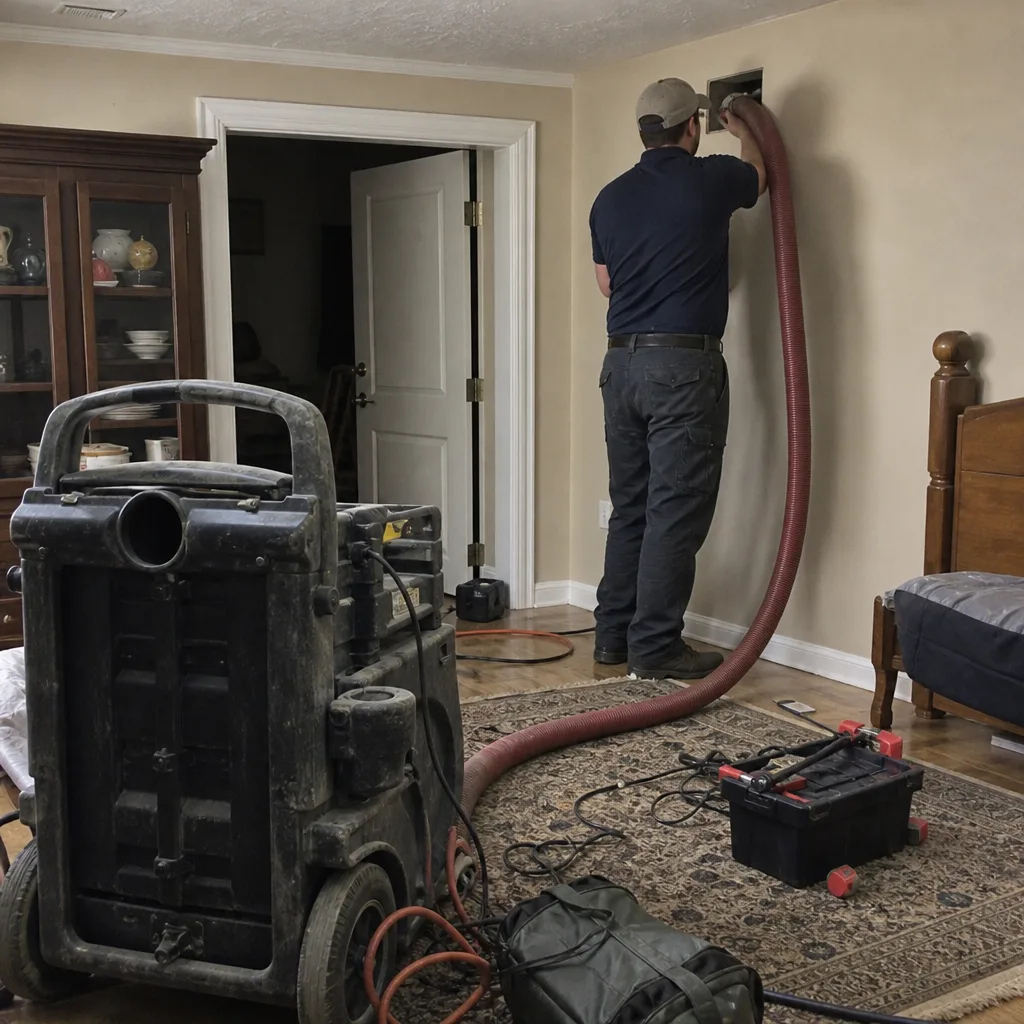 Before
 After
 Before
 After
 Before
 After
When to Call a Professional
Call a professional if your home took on water at any level during a storm, if there was a structure fire nearby and smoke entered the house, if your system sat through an extended outage and the first startup brought a wave of dust, or if you can see wet insulation, sagging flex duct, or condensation near the air handler. Call if you’re filing an insurance claim and need before-and-after documentation. Call if the ducts haven’t been cleaned in several years and you’ve never had a baseline inspection. Stratford Air Duct Cleaning offers free estimates in Charlotte. Call (833) 962-6967. We answer 24/7. Fast dispatch from 7am to 7pm, Sunday through Friday.
Frequently Asked Questions
No. Do not restart the system until the ducts, insulation, and air handler have been inspected. Wet duct insulation and a running blower push moisture and contamination through the entire house, and the damage tends to be worse than if the system had stayed off until the inspection.
Look at the insulation wrap around the flex duct in the crawlspace, not at the first floor. If the wrap has been wet for more than a day or two, or if you see sagging flex duct or separation at the joints, the system needs an assessment. A professional inspection catches what isn’t visible from the living room.
The equipment. A contractor using a consumer-grade blower and hose moves dust around and releases fine particulate back into the room. Professional work means contact cleaning with a rotary system and HEPA-rated extraction that captures fine particulate rather than releasing it. Ask any contractor to name the equipment they’ll use on your job.
Smoke residue is sticky and finer than household dust. Running the HVAC after smoke has entered the home pulls those particles into the return and distributes them through every duct run. Cleaning a smoke-contaminated system requires mechanical contact cleaning and HEPA extraction, not a quick wipe of the registers.
It depends on your policy and the nature of the loss. If your policy covers the water or smoke event, duct system damage may be part of the claim, but it usually depends on documentation. Photograph the water line and the wet insulation before cleanup, keep a written timeline, and ask your contractor for before-and-after photos of your own ducts.
We repair what we find. Duct repair is part of the same visit, so you’re not referred out to a second company. That’s how the work should go after a storm, when separation and sagging are common and cleaning alone won’t fix a compromised run.
The Bottom Line
Storm preparedness for a Charlotte home is mostly about two decisions: what you do before the event and what you don’t do right after it. Before: seal the return path, secure the crawlspace, shut the system down, and photograph everything. After: inspect before you restart, document before you clean, and ask your contractor what equipment they’ll use and whether the price is per system. A duct system that’s been through flooding, smoke, or an extended outage deserves a real assessment, not a quick blow-through. The equipment standard used on remediation work is the standard that gets a contaminated system back to clean, and it’s the standard your insurer’s adjuster will want to see documented.
Written by the team at Stratford Air Duct Cleaning, serving Charlotte since 2017.
Call (833) 962-6967 for a free estimate. We answer 24/7. Fast dispatch from 7am to 7pm, Sunday through Friday.