
Last updated November 14, 2026
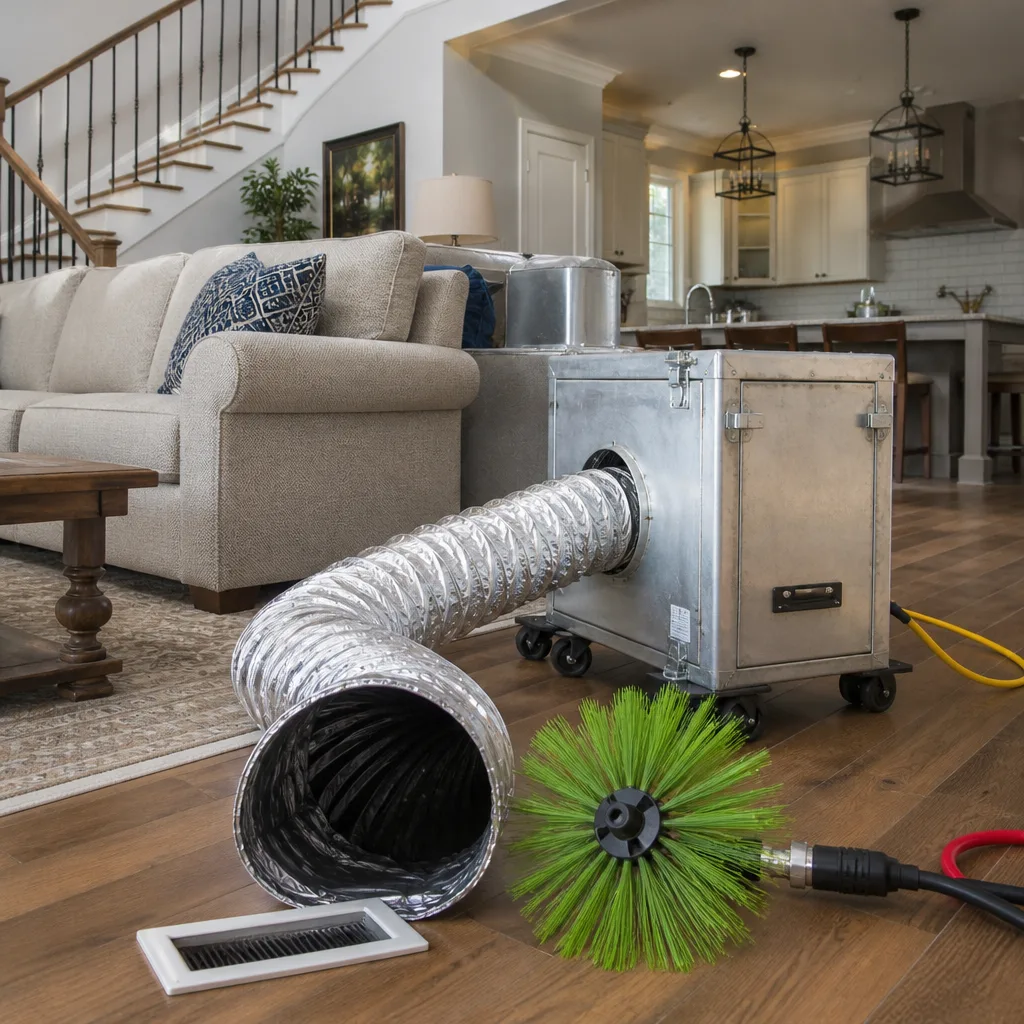 Whole-home duct cleaning
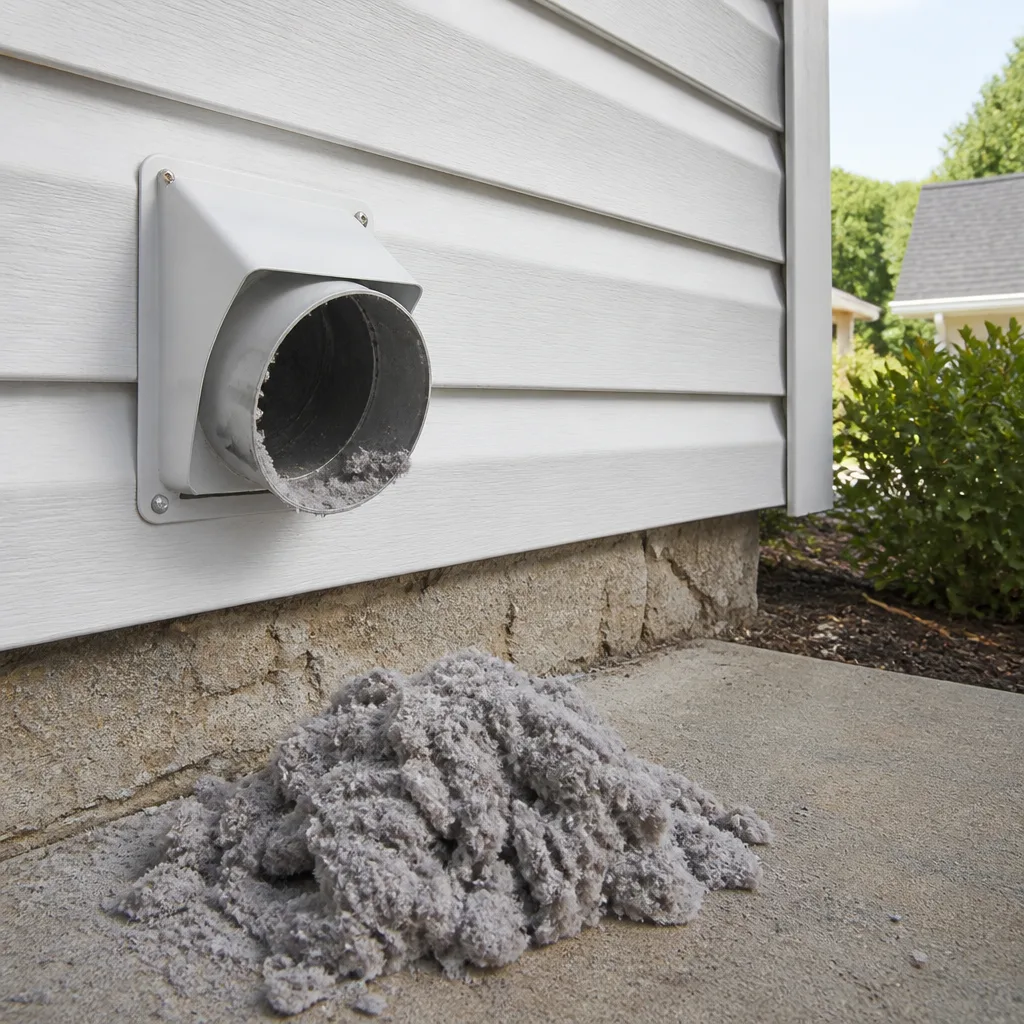 Dryer vent cleaning
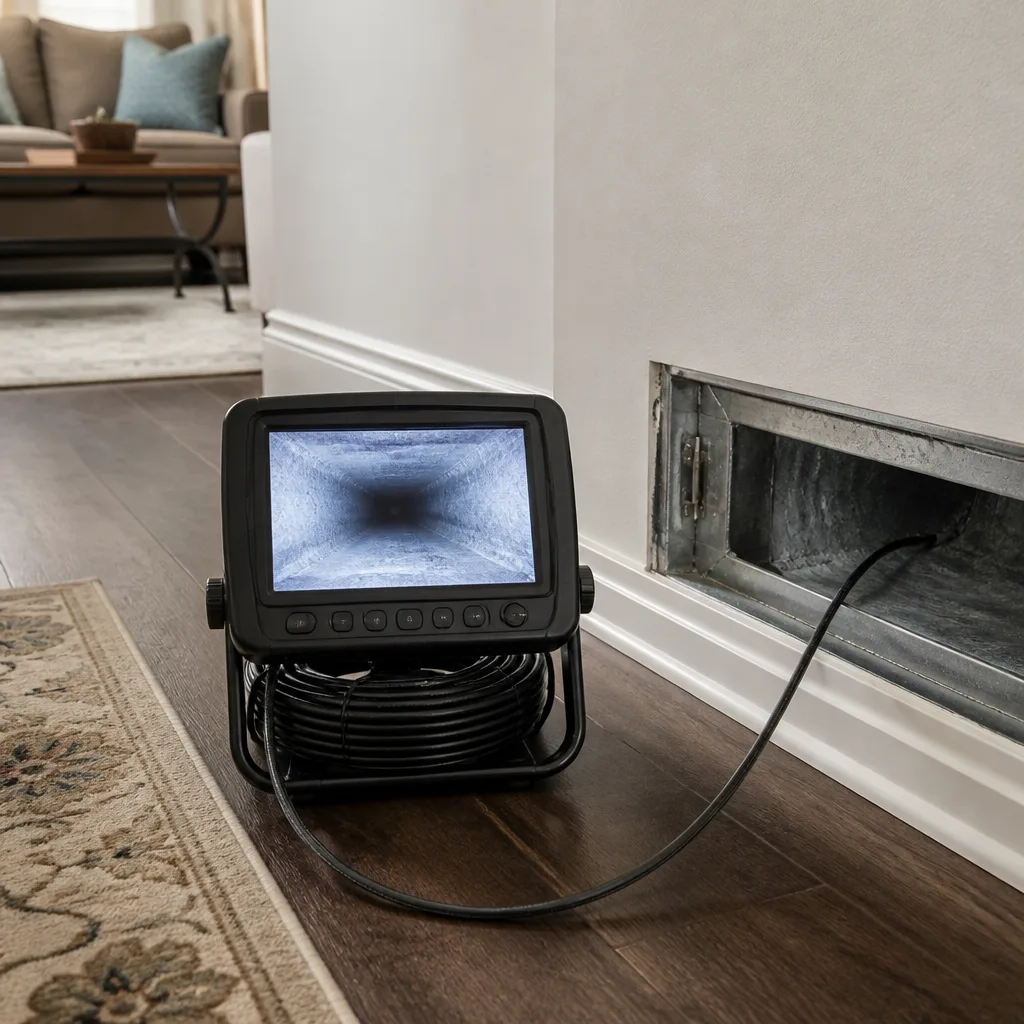 Camera inspection
 Sanitizing & deodorizing
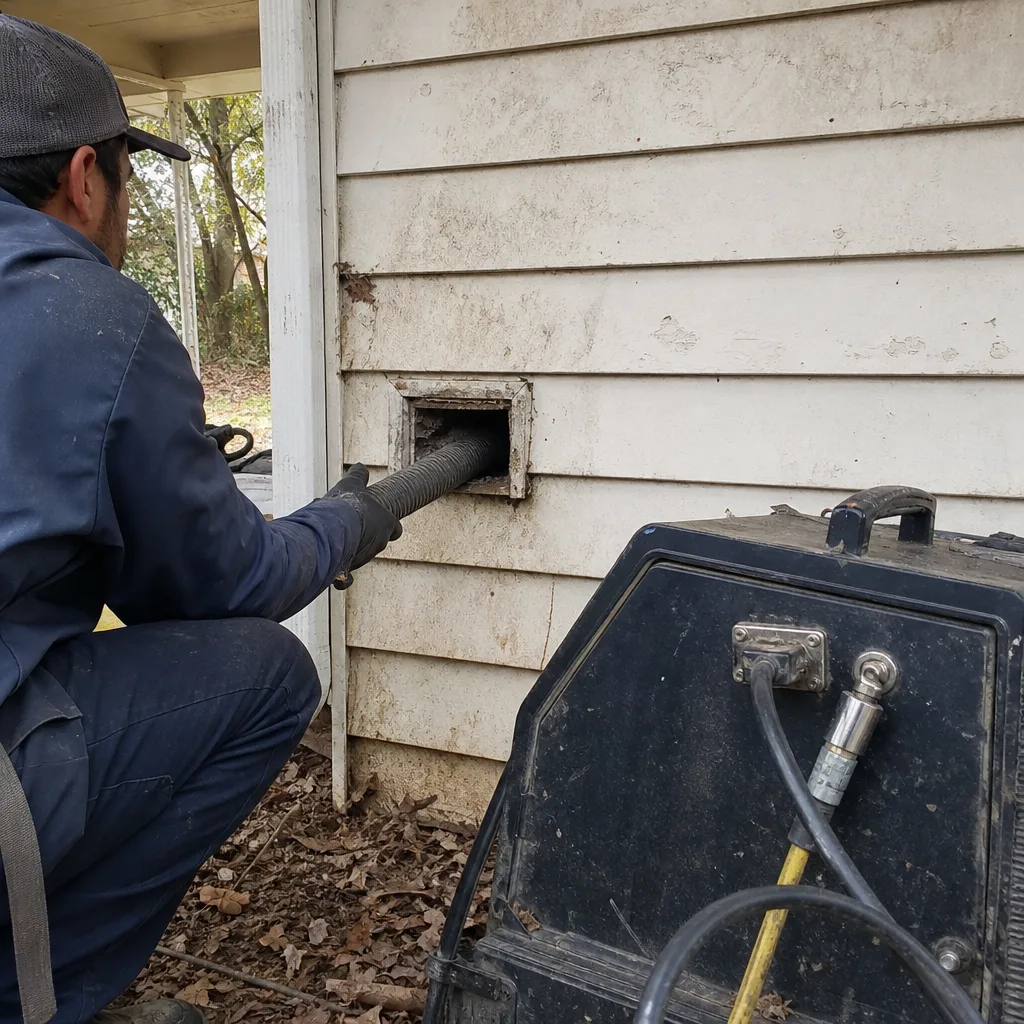
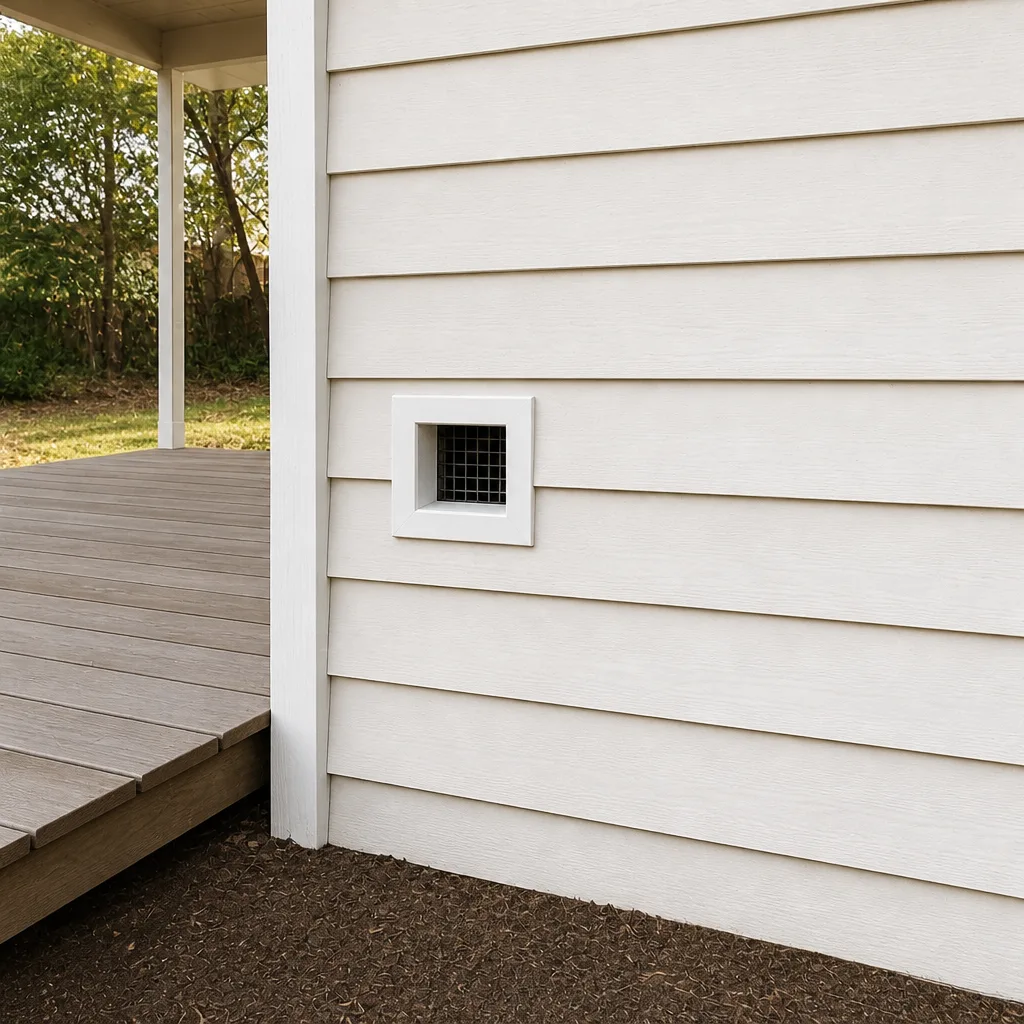
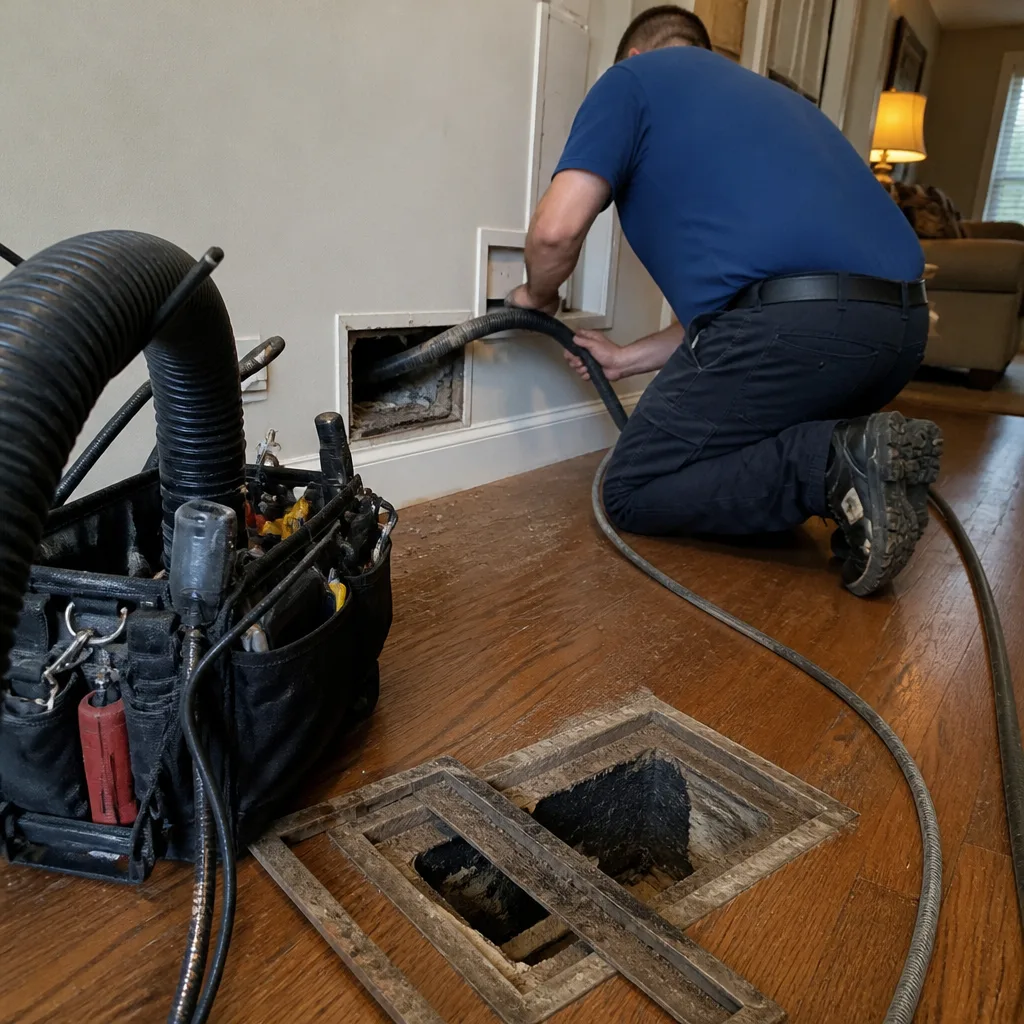
Whole-system duct and dryer vent check with before-and-after photos - you see exactly what came out of your vents
That "$99 whole-house special" is a bait ad - the real number appears once they are in your hallway, or the "clean" is a shop-vac at the register. We photograph the inside of your ducts before and after instead.
Air Duct Cleaning Troubleshooting in Charlotte: Common Problems and How to Fix Them
If cleaning your ducts didn’t fix the musty smell, the problem probably wasn’t the ducts. It was what the cleaning method missed, or what it couldn’t reach. That’s the uncomfortable truth about a lot of duct work done around Charlotte: the dust gets knocked loose, the airflow improves for a few weeks, then the odor or the dust comes right back. The ducts weren’t the whole story. Something in the system – a sagging run of flex duct in a hot attic, a joint that pulled apart behind a register, moisture collecting at the air handler – kept feeding the problem after the van left the driveway. We’ve seen this pattern enough times to know it isn’t bad luck. This guide shows you how to read your symptoms the way a technician does, match each one to its likely mechanical cause, and know when cleaning is enough, when you need repair, and when a job crosses into remediation. Charlotte homes have their own quirks, and we’ll get into those too.
Quick Answer
Most air duct problems in Charlotte trace back to three things: loose or collapsed flex duct in the attic, moisture at the air handler that feeds mold, or a cleaning that only blew dust around instead of extracting it. A proper diagnosis starts with matching the symptom – musty smell versus persistent dust versus weak airflow – to the part of the system most likely to cause it. Cleaning fixes a dirty system; repair fixes a broken one; and only a close look inside the ducts tells you which you’re facing.
Styles & brands we work with
- Whole-home duct cleaning
- Dryer vent cleaning
- Camera inspection
- Sanitizing & deodorizing
Table of Contents
- Symptom to Cause: Reading Your Duct System Like a Technician
- Why Your House Smells Musty After Duct Cleaning
- Why Dust Comes Back Weeks After a Cleaning
- Weak Airflow in Some Rooms and Not Others
- The Dryer Vent Problem That Gets Blamed on the HVAC
- What a Camera Inspection Shows That Suction Alone Misses
- Why Cleaning Equipment Changes the Diagnosis
- Clean, Repair, or Remediate: A Decision Tree for Charlotte Homeowners
Symptom to Cause: Reading Your Duct System Like a Technician
Before you call anyone, get specific about the symptom. “My ducts are dirty” is not a diagnosis. A technician listens for the difference between a smell, a dust pattern, and an airflow complaint, because each one points to a different part of the system. Homeowners who can describe their problem precisely get more useful answers and better estimates.
Here’s the mapping we use when we walk into a Charlotte home:
- Musty or earthy smell, strongest near certain registers: usually moisture. The likely culprits are condensation at the air handler, a duct run sweating in a humid attic, or microbial growth on the interior lining of flex duct. This is an extraction-and-repair problem, not a dust problem.
- Fine gray dust settling on furniture days after you clean: often a joint that has separated or a boot that isn’t sealed to the register. Air escapes and pulls attic dust into the stream. Cleaning alone can’t fix a leak.
- Weak airflow in upstairs or far-end rooms: typically a crushed, kinked, or disconnected flex run, or a damper stuck partway closed. The system is fine at the trunk and starved at the end.
- Heat that smells like lint or something hot: often the dryer vent, not the HVAC. We’ll cover that separately because it gets misdiagnosed constantly.
- Headaches or irritation that clear when you leave the house: could be fine particulate getting recirculated. This is where the quality of the vacuum matters, and we’ll explain why.
Charlotte’s climate adds a wrinkle. Long humid summers mean the attic, where most of your duct runs live, is hot and wet for months. Flex duct that sags or loses its insulation jacket will sweat. Once the interior stays damp, dust sticks to it and biological growth gets a foothold. That’s why a musty smell here often isn’t a whole-house problem but a two-or-three-run problem in the attic. Finding it is the whole job.
Why Your House Smells Musty After Duct Cleaning
If the smell came back within days of a cleaning, the cleaning didn’t reach the source. Musty air after a duct cleaning almost always means one of three things: moisture is still being generated somewhere in the system, the cleaning disturbed growth without removing it, or the odor is coming from the air handler cabinet itself rather than the ducts. Suction through the trunk line won’t touch a wet evaporator coil pan, and it won’t disinfect a damp cabinet interior.
Here’s where a professional-grade approach separates itself. Contact cleaning with a Rotobrush rotary system scrubs the duct walls mechanically rather than relying on air pressure alone, which matters when growth has bonded to the lining. High-efficiency extraction then pulls the loosened material out instead of pushing it downstream. And because the equipment we carry includes Abatement Technologies units built for contaminated environments, we can handle a duct system that has gone past routine dust into something closer to remediation. That’s not marketing language; it’s a different class of tool for a different class of problem.
What to check before you assume the ducts are to blame:
- Look at the air handler cabinet. Is there standing water in the drain pan, rust, or a damp smell when you open the access panel?
- Look at the evaporator coil if it’s visible. A dirty, wet coil grows things and sends the smell right through the supply side.
- Check for sweating ducts in the attic – condensation on the outside of a run means the insulation is compromised.
- Note which rooms smell worst. A localized smell points to a localized cause, and that’s cheaper to fix.
One more thing homeowners in Charlotte should know: this is humid country, and a duct system that stays above the dew point all summer is doing its job. A system that doesn’t has an insulation or sealing problem that shows up as an odor. The smell is a symptom. Fixing the moisture is the cure. Call (833) 962-6967 if you want the system looked at by someone who’ll tell you which of these you’re facing.
Why Dust Comes Back Weeks After a Cleaning
Dust returning within a month of a cleaning means the cleaning missed either the source or the leak. Ducts are a closed loop. If dust reappears that fast, something is still introducing particulate into the system – a return leak pulling attic or crawlspace air, a filter that’s the wrong size or seated poorly, or a cleaning that loosened debris without extracting it. A truck-mounted blower run that agitates the ducts and calls it done can actually make the first two weeks worse by throwing fine dust into the air stream.
This is the specific reason we use Nikro HEPA-rated vacuums on every job. A HEPA-rated vacuum captures fine particulate rather than exhausting it back into the room, which a shop vacuum or an underpowered blower setup will not do. When the extraction captures what the contact cleaning loosens, the dust you see on your furniture afterward is coming from somewhere else. And that “somewhere else” is the useful information. A negative-pressure system surfacing a fresh dust plume from a return boot tells you exactly where the leak is.
Common dust sources a good inspection will expose:
- Unsealed return boots. Gaps between the boot and the drywall pull air from wall cavities and attics. It’s one of the most common culprits in Charlotte’s older neighborhoods, where duct systems have been added or reworked over the years.
- Disconnected or torn flex duct. A tear the size of a coin sends a steady stream of insulation fibers and dust into the living space.
- Improper filtration. A filter that’s too restrictive starves the system; one that’s too thin lets particulate straight through. We work with Honeywell and Aprilaire filtration products and can point out where yours is falling short.
- Construction or renovation nearby. Drywall dust is relentless, and duct systems under renovation draw it in through every gap.
The pattern to remember: recurring dust after a cleaning is a diagnostic clue, not a reason to schedule another cleaning. If you’ve had the ducts done and the dust returned, the next step is inspection, not another invoice.
Weak Airflow in Some Rooms and Not Others
Weak airflow in one or two rooms while the rest of the house is fine almost always means a problem in the branch runs serving those rooms. The trunk is doing its job; the last length of duct isn’t. In our experience, the top causes in Charlotte are crushed or kinked flex duct in a tight attic, a run that’s pulled off the takeoff collar at the main trunk, and a balancing damper that was never opened properly. None of those are fixed by cleaning.
Flex duct is convenient and cheap to install, and it’s in the majority of homes built or reworked around here in the last few decades. It’s also easy to damage. A section that’s compressed under a joist, or a run that has a sharp 90-degree bend, loses a large share of its capacity. When a room is starved, the problem isn’t dust; it’s resistance. Reach into that run with a camera and you’ll see the restriction in seconds.
What we check when a homeowner says “the back bedroom never gets cool”:
- Confirm the symptom is airflow and not temperature – is the register moving air at all?
- Trace the run from the register back to the trunk, looking for kinks, crushing, or separation.
- Check the boot seal at the register – a gap there dumps conditioned air into the wall cavity.
- Verify the balancing dampers at the trunk are open the right amount for that room.
- Look at the return side. A starved return will make every supply run feel weak.
When the run is genuinely damaged – crushed, disconnected, or torn – the fix is repair, and we handle Stratford Air Duct Cleaning duct repair work in-house rather than handing you off to a second contractor. That matters, because a duct-health visit that finds a broken run and can’t fix it has only done half the job. Our full range of air duct cleaning service gets the system clean; repair gets it working the way it was designed to. These are two different things, and knowing which you need is the entire point of this guide.
The Dryer Vent Problem That Gets Blamed on the HVAC
If your laundry room smells hot, your dryer takes two cycles to dry a load, or the dryer cabinet feels warm to the touch, look at the dryer vent before you look at the ducts. The dryer vent is a separate system from your HVAC ducts, but it runs through the same walls and often the same attic space, and its symptoms – heat, lint smell, a musty laundry room – get misattributed to the air handler. It’s also a fire-safety issue. Lint accumulation in a clogged vent is a leading cause of residential fires, which is why we treat dryer vent cleaning as a safety service, not an add-on.
Here’s the test a homeowner can do without any tools. Disconnect the dryer vent from the back of the dryer, then look inside the dryer’s exhaust port and inside the vent duct itself. You’ll see either clear air or a felt-like coating of lint. If the lint is thick and the run is long – and in many Charlotte homes it’s a long, elbows-and-all route through the garage or attic – the vent is restricted. A restricted vent traps heat where it shouldn’t be, and the dryer works harder and runs longer. That’s a heat symptom that has nothing to do with your HVAC ducts.
A few things to know about dryer vents in this area:
- Rigid metal duct is the standard to look for. The flexible foil or plastic stuff that’s common in older homes is more prone to crushing and lint buildup; ask for rigid where the run can take it.
- Long runs with multiple elbows are the highest-risk installations. The more turns, the more places lint settles.
- An exterior flapper that won’t fully open is a sign the vent is restricted, not a sign the flap is broken.
- A musty smell in the laundry room can be a vent issue or a moisture issue, so this is worth having looked at rather than guessed at.
The good news: this is one of the cheaper things to fix, and it’s an easy win on the safety front. It’s also one of the reasons we cover cleaning, dryer vent work, and repair all under one roof – the three problems tend to show up together, and you shouldn’t have to call three contractors to get to the bottom of one house.
What a Camera Inspection Shows That Suction Alone Misses
A camera inspection answers the question suction can’t: what does the inside of the system actually look like, and is anything broken? Suction-only cleaning tells you how much material came out. It doesn’t tell you whether a run is crushed, a joint is separated, or a duct has become a breeding ground. That’s the difference between a cleaning and a diagnosis. If you’ve had a “blow-and-go” service and the problem persists, a camera is how you find out why.
What we look for when a camera goes into a Charlotte home’s duct system:
- Collapsed or kinked flex runs. The camera shows the restriction directly; you don’t have to infer it from weak airflow.
- Disconnected joints and takeoff collars. A gap at the main trunk is invisible from the register but obvious on camera.
- Microbial growth on the interior lining. A dark, mottled coating on flex duct is a moisture problem the naked eye at the register will never see.
- Construction debris. Drywall chunks, insulation scraps, and even packaging from a renovation can sit in a run for years. Suction misses what it can’t reach; contact cleaning and repair don’t.
- The condition of the boot-to-register seal. A camera behind the register shows the gaps that let attic air in.
This is the point where we should say plainly why we use the equipment we use. A camera inspection followed by Locust-area duct cleaning with a contact-cleaning system is a different operation than a camera inspection followed by a blower. Contact cleaning with a Rotobrush rotary system scrubs the interior surface, and HEPA-rated extraction captures the result. You can’t diagnose a system you only blast with air. The tool has to match the problem, and the diagnosis has to come before the tool.
What to ask any duct cleaner before you hire, in plain terms:
- “Will you show me the inside of the system before and after, on camera or in photos?”
- “What equipment are you using, and is it contact cleaning or just air pressure?”
- “Does your vacuum capture fine particulate, or exhaust it back into my house?”
- “If you find a broken run, do you fix it, or do I have to call someone else?”
If the answer to the first question is no, the rest don’t matter. That’s the whole test. Call (833) 962-6967 and we’ll walk you through what we find and what it means before we recommend anything.
Why Cleaning Equipment Changes the Diagnosis
The equipment a duct cleaner shows up with determines what they can actually find and fix. A standard “blow-and-go” setup agitates dust with air and leaves the finer material suspended, which is why so many homeowners see dust return in a week or two. A professional-grade system built for remediation work sees and captures a different picture. When you use the same class of tool that restoration and remediation pros rely on, the inspection is more revealing and the cleaning is more complete.
Here’s the difference in plain terms:
- Contact cleaning with Rotobrush scrubs the interior walls of the duct, so bonded dust and growth come off instead of just loosening. It’s a mechanical method, and it’s the standard we use on every job, not on premium ones.
- Nikro HEPA-rated extraction captures fine particulate at the point of collection. Over-the-counter shop vacuums and budget blower setups release much of that back into the air, which is exactly what an allergy sufferer doesn’t need.
- Abatement Technologies equipment is what lets us handle a contaminated or compromised system – post-construction particulate, mold-affected runs, remediation-level debris – without overpromising. It’s the same category of gear used in restoration work, and it means the job doesn’t get punted to a specialty contractor.
- Guardsman products are part of a finishing step that treats surfaces and components after extraction. The work doesn’t stop at vacuums running; the system gets put back together properly.
We mention the brands because they’re checkable. Rotobrush, Nikro, and Abatement Technologies are names in professional remediation, not consumer marketing. If you’re comparing quotes in Charlotte and one cleaner quotes you a “special” that sounds too good to be true, ask what they use. The answer tells you whether the cleaning will reach the problem or just move it around.
Clean, Repair, or Remediate: A Decision Tree for Charlotte Homeowners
Once you’ve matched the symptom to a likely cause, the next question is what kind of job you’re facing. There are three, and they’re not the same service. Cleaning removes what’s accumulated. Repair fixes what’s broken. Remediation addresses the system when contamination or damage has gone past the point where cleaning alone will restore it. Most homeowners can sort themselves into one of the three with a few honest answers.
You need cleaning if:
- The system has never been cleaned, or hasn’t been cleaned in several years.
- You’ve done a renovation and want construction dust cleared from the ducts.
- Dust is visible at the registers, and the airflow is otherwise fine.
- There’s no musty smell and no airflow complaint in any room.
You need repair if:
- Airflow is weak in specific rooms but normal elsewhere.
- You can see a sagging or kinked run, or a gap at a register.
- Dust returns within weeks of a cleaning.
- A camera inspection shows a crushed, torn, or disconnected run.
You need to escalate to remediation-level work if:
- There’s a persistent musty smell and moisture at the air handler or in the attic runs.
- A camera shows microbial growth inside the duct lining.
- The system has been through a flood, pest, or contamination event.
The lines aren’t sealed shut in practice – a job can start as cleaning and turn into repair once a camera is inside. That’s normal, and it’s why we quote per job and talk through what we find before proceeding. What you shouldn’t do is skip from a dirty-duct cleaning straight to another cleaning when the symptom tells you something’s actually broken. The Locust and Charlotte area has plenty of homes with older duct systems that have been retrofitted and reworked, and the systems wear in ways that show up as symptoms before they ever show up as a noticeable problem. If you’re unsure which category you’re in, call (833) 962-6967 and describe the symptom. That’s where the diagnosis starts.
Common Mistakes to Avoid
- Judging the work by how much dust came out. The amount of debris in a bag tells you how dirty the system was, not whether it’s fixed. Look at whether the symptom is gone and whether the system was inspected before and after.
- Hiring on price alone. A low quote often reflects a blower-only method that moves dust instead of removing it, and Charlotte homes with long attic runs are the ones most likely to need real contact cleaning. Ask what equipment is used, and treat a quote that won’t answer as a red flag.
- Treating every smell as a duct problem. A musty smell in the laundry room is often the dryer vent, and a hot-dryer complaint is almost always a vent restriction rather than the HVAC. Match the symptom to the system before you call.
- Skipping the camera. Without a camera inspection, you’re guessing about what’s inside. A system with a crushed run gets a cleaning that doesn’t help the room that needed help most.
- Waiting for a repair you already suspect. If a run is crushed or a joint is separated, every day you run the system recirculates what it’s pulling in through the gap. The fix is usually straightforward once you know where the gap is.
- Assuming a cleaning covers filtration. Your filter is the first line of defense, and a restrictive or undersized one will keep the system fighting the same battle. Honeywell and Aprilaire filtration products are worth understanding if dust keeps coming back.
See the difference
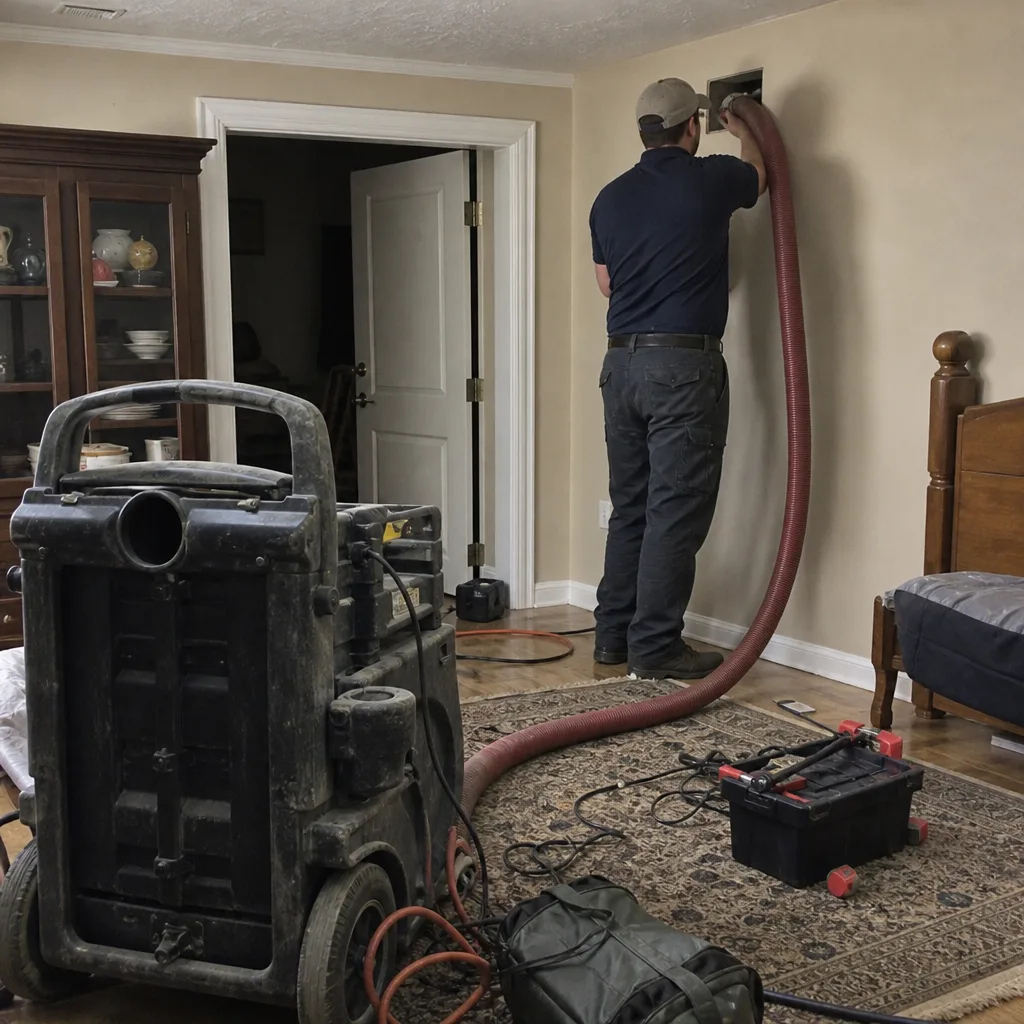 Before
 After
 Before
 After
 Before
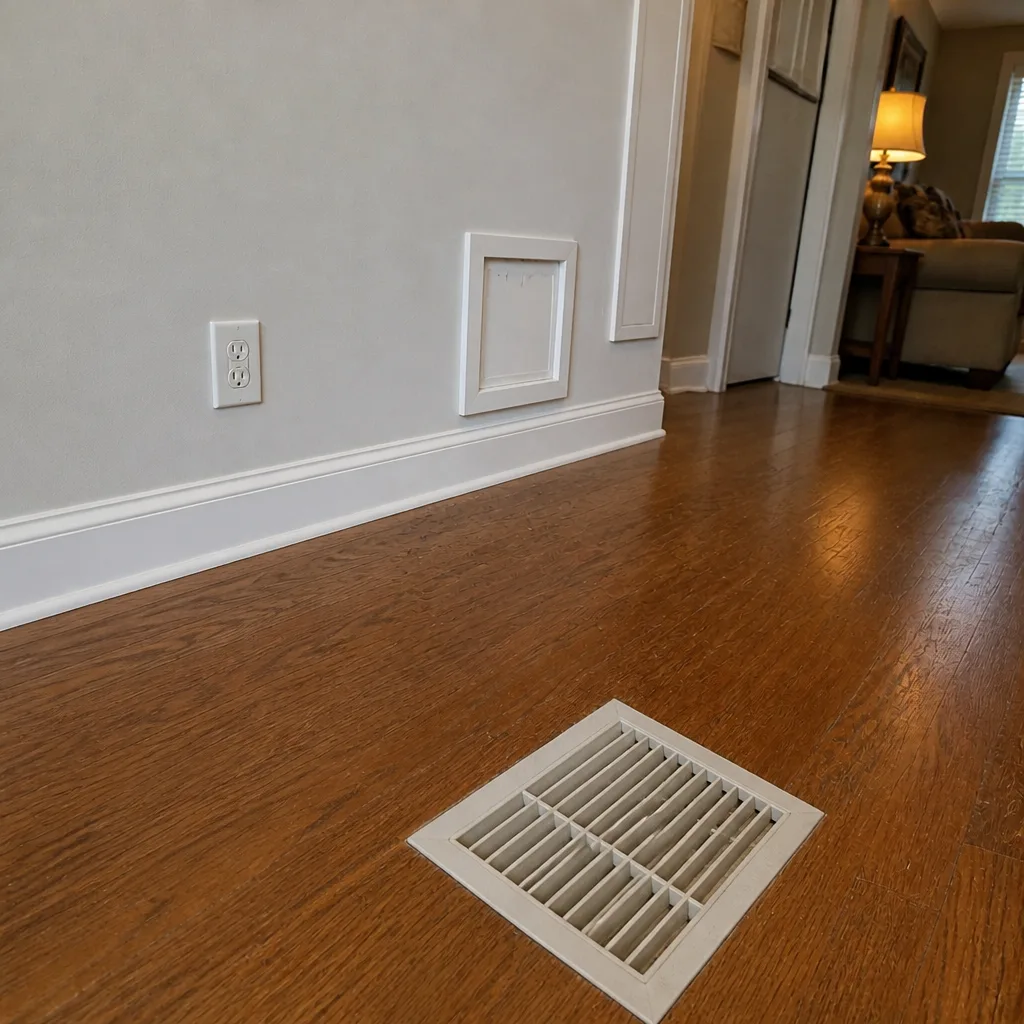 After
When to Call a Professional
Call for a look if you have a musty odor that persists after a cleaning, airflow that’s weak in specific rooms, visible dust at registers that returns within weeks, or a laundry room that gets hot and humid during drying cycles. Also call if you’ve had a renovation and want the system cleared before you move back into the space, or if a camera inspection has surfaced a concern you don’t know how to read. These are situations where a wrong guess costs more than a diagnostic look, because a second cleaning won’t fix a broken run. Stratford Air Duct Cleaning offers free estimates in Charlotte. Call (833) 962-6967. We answer 24/7. Fast dispatch from 7am to 7pm, Sunday through Friday. We’ll tell you what we find and what it means before we recommend the work.
Frequently Asked Questions
Because the cleaning missed the moisture source. A musty smell after cleaning usually traces to a wet air handler, a sweating duct run in the attic, or microbial growth on the duct lining that suction alone can’t remove. It’s a moisture problem, not a dust problem, and finding it requires a camera and a look at the air handler rather than another cleaning pass. Call (833) 962-6967 and describe where the smell is strongest – it usually narrows the diagnosis down quickly.
If airflow is weak in specific rooms, or dust returns within a few weeks of a cleaning, that points to a broken or leaking run rather than a dirty system. If the air is generally dusty, registers are loaded, and there’s no localized symptom, cleaning is the more likely need. A camera inspection tells you which you’re facing in minutes. Call (833) 962-6967 to get that look scheduled – the estimate is free.
Yes, and it’s one of the most common reasons to clean in Charlotte after a renovation. Drywall dust is fine and gets pulled into the system through return leaks and open registers. Contact cleaning with a rotary system and HEPA-rated extraction is the way to clear it, because a blower will just put it back into the air. Call (833) 962-6967 and tell us what the renovation involved – that shapes the right approach.
Almost certainly not. A dryer that takes two cycles and a laundry room that heats up usually points to a restricted dryer vent, not the HVAC ducts. Lint buildup traps heat and forces the dryer to run longer, and it’s a fire-safety concern worth dealing with directly. We handle dryer vent cleaning as a safety service. Call (833) 962-6967 for a free estimate.
Ask what equipment they’ll use – contact cleaning with a rotary system versus a blower – whether the vacuum captures fine particulate, and whether they’ll show you before-and-after photos or video of your own system. Also ask whether they repair ducts in-house or refer out. If they can’t answer clearly, that’s your answer. Call (833) 962-6967 with the same questions for us; we’ll answer them straight.
There’s no single number that fits every home. Homes with pets, allergy sufferers, recent renovations, or heavily used systems tend to need it more often than a low-occupancy house with good filtration. The useful rule is to let the symptom drive the schedule: visible dust at registers, a persistent odor, or a recent renovation are the real signals. Call (833) 962-6967 and we’ll give you an honest read on whether now is the time.
The Bottom Line
Most duct problems you can troubleshoot at home come down to matching a symptom to a cause. A musty smell is moisture. Dust that returns is a leak or an incomplete cleaning. Weak airflow in one room is a damaged run. A hot dryer is a vent restriction. Once you know which one you’re facing, you know whether you need cleaning, repair, or an escalation to remediation – and you know what to ask before anyone shows up. The right equipment matters as much as the right diagnosis, which is why we clean with Rotobrush contact systems, extract with Nikro HEPA-rated vacuums, and carry Abatement Technologies gear for the jobs that need it. If you’re in Charlotte and the problem outlasted the last cleaning, call (833) 962-6967. We answer 24/7. Fast dispatch from 7am to 7pm, Sunday through Friday. Free estimates, and a straight answer about what your system needs.
Written by the team at Stratford Air Duct Cleaning, serving Charlotte since 2017.