
Last updated November 14, 2026
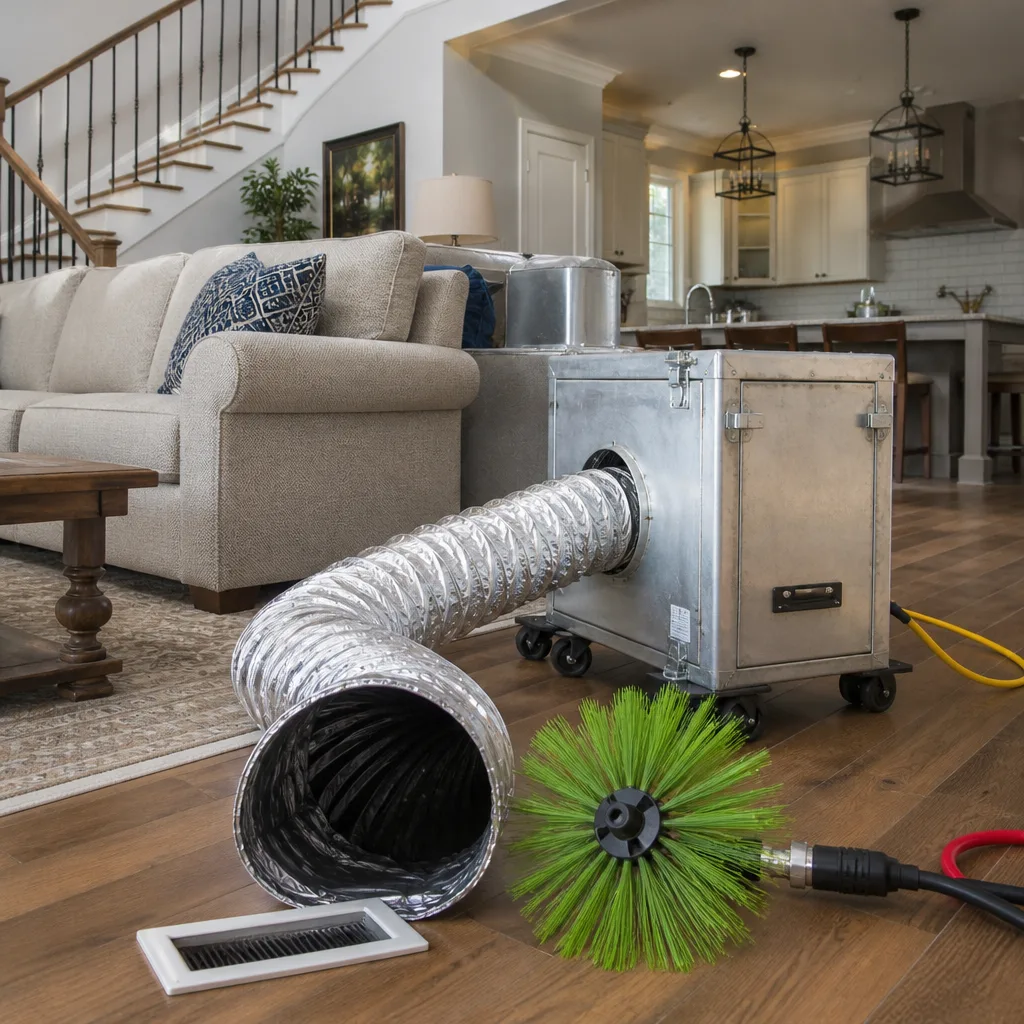 Whole-home duct cleaning
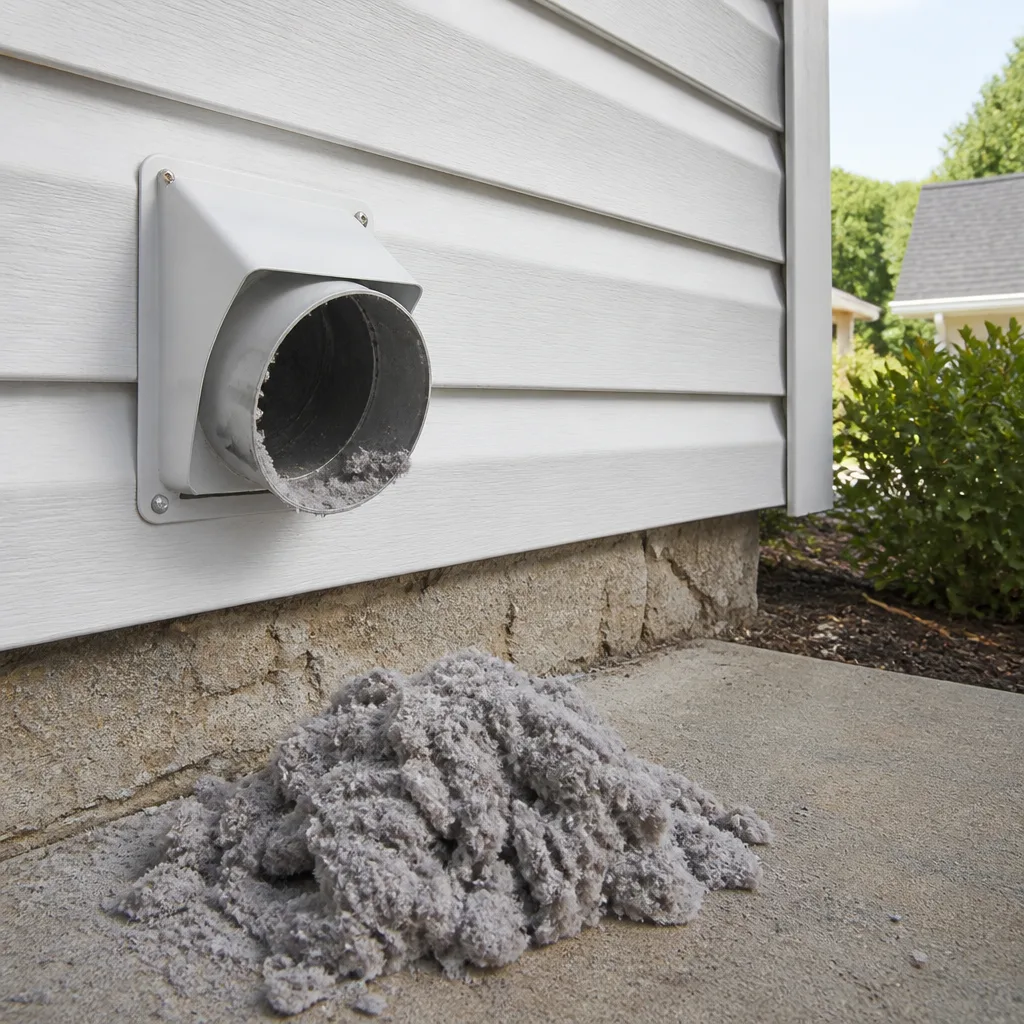 Dryer vent cleaning
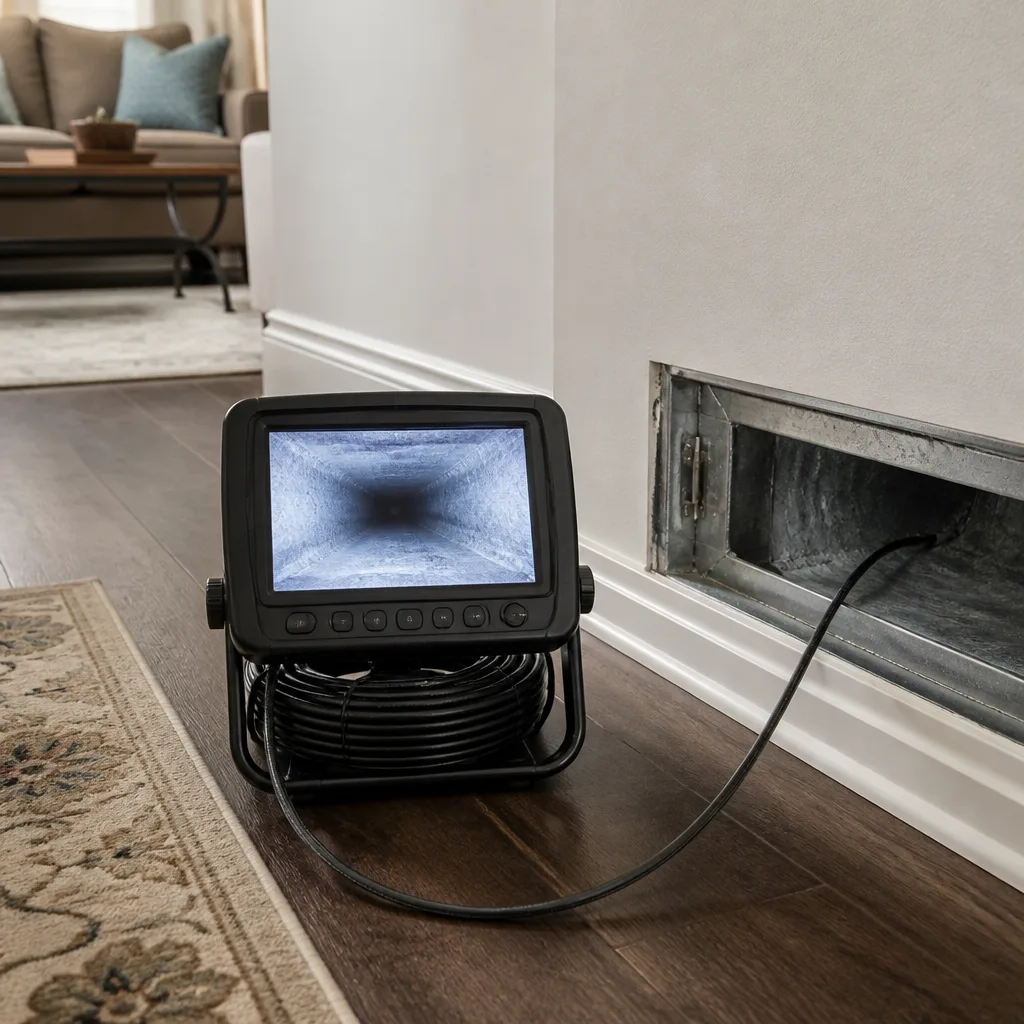 Camera inspection
 Sanitizing & deodorizing
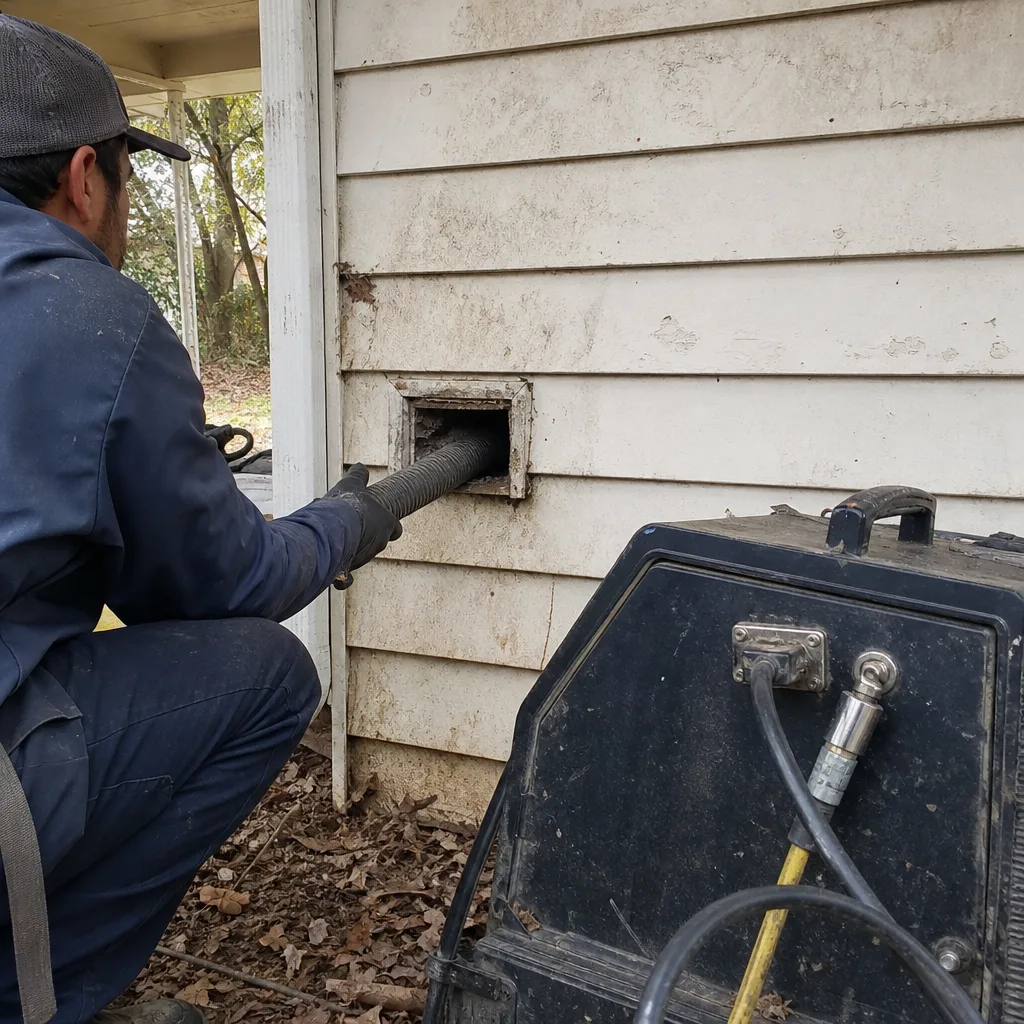
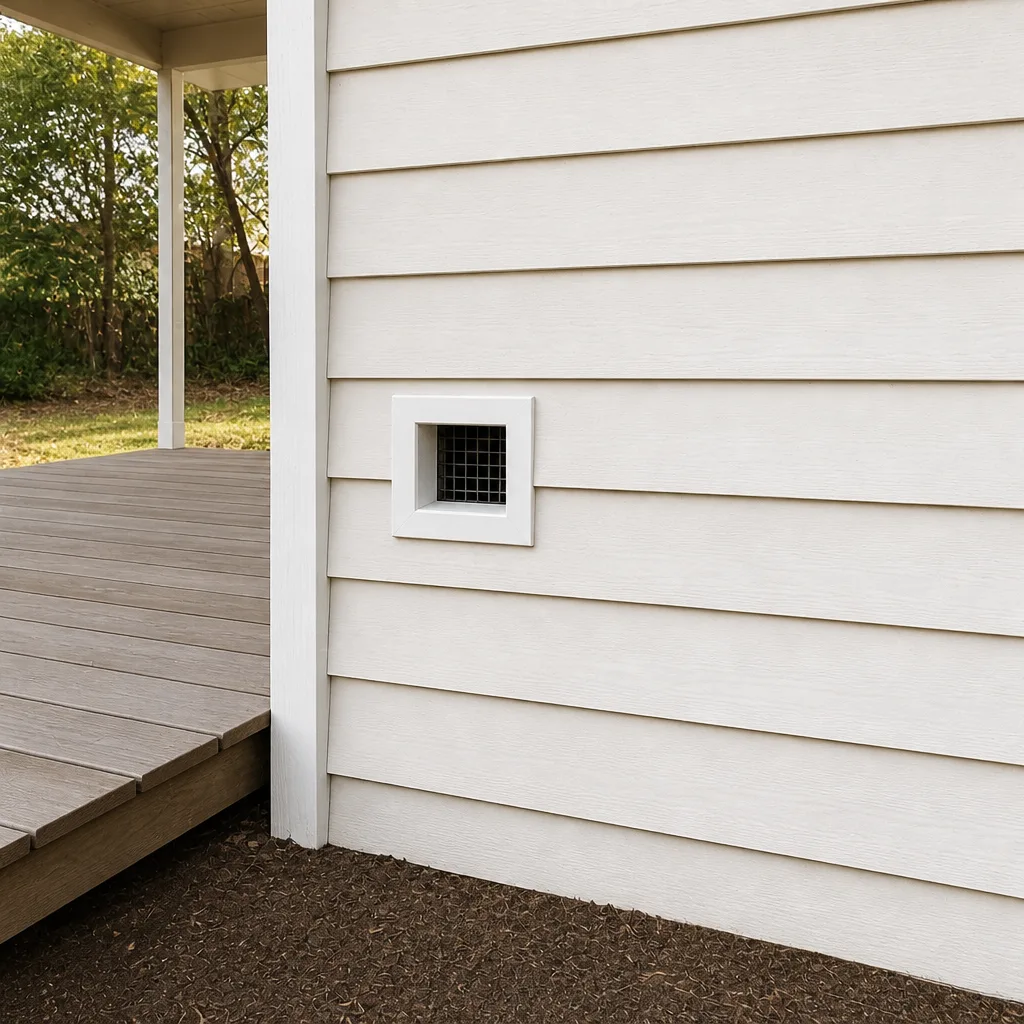
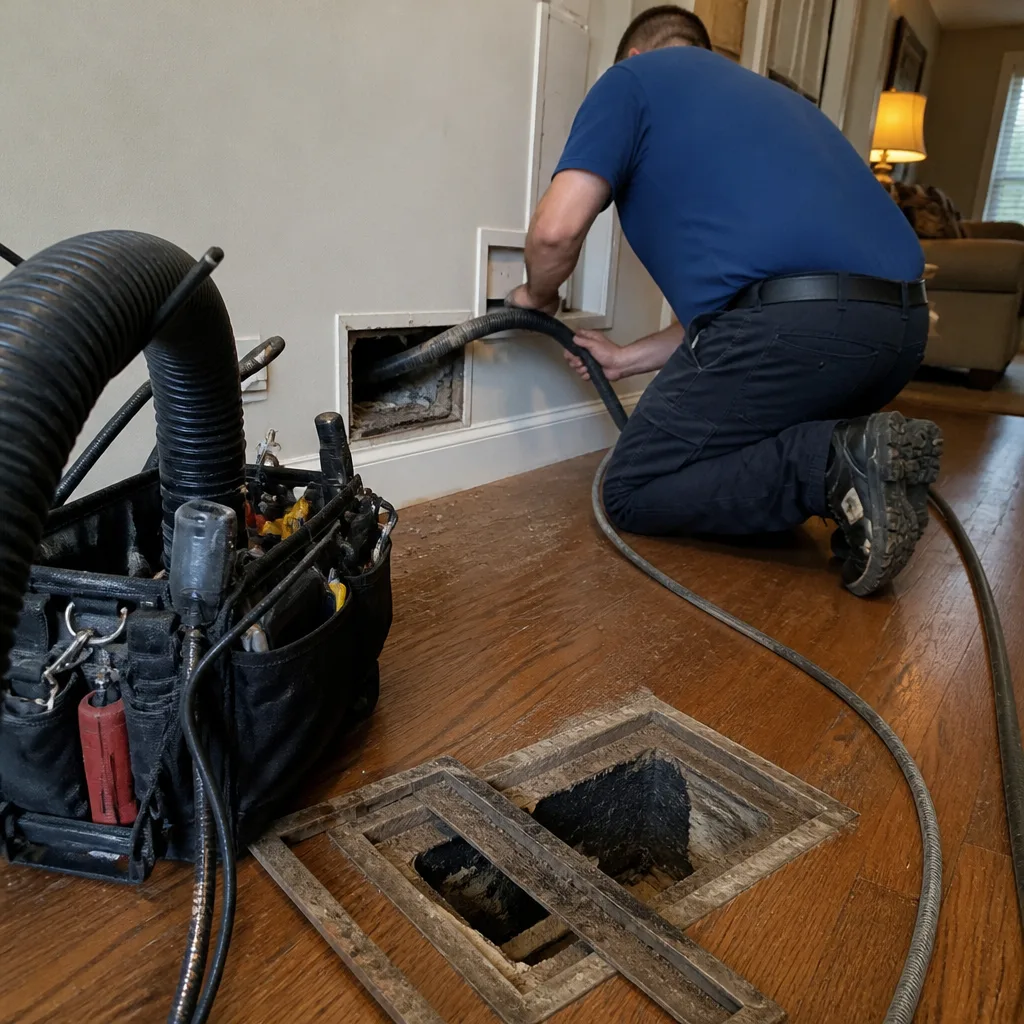
Whole-system duct and dryer vent check with before-and-after photos - you see exactly what came out of your vents
That "$99 whole-house special" is a bait ad - the real number appears once they are in your hallway, or the "clean" is a shop-vac at the register. We photograph the inside of your ducts before and after instead.
Air Duct Cleaning Warning Signs: A Charlotte Homeowner’s Reference Guide
By the time a Charlotte homeowner notices dust settling on the furniture a day after cleaning, or a musty smell that won’t leave the hallway, the problem in the ducts has usually been building for months. The loud signals are the last ones to show up. The reliable ones are quieter: a bedroom register that pushes less air than it did last summer, a flex duct that’s slipped off its boot in the crawlspace, a dryer that suddenly needs two cycles. This guide walks through the warning signs a trained eye checks for in Charlotte homes, why this region’s housing and climate produce particular failures, and how to inspect a register yourself before you call anyone. You’ll finish knowing what’s normal, what’s a real problem, and what it will take to fix it.
Quick Answer
In Charlotte, the most reliable early duct warning signs are uneven airflow between rooms, musty odors at first startup, visible dust streaks at supply registers, flex duct sagging or disconnection in the crawlspace, and longer dryer cycles with lint collecting around the exterior vent cap. Visible dust and high energy bills are late signals, not early ones. A trained technician inspects the duct system with contact cleaning equipment like Rotobrush and HEPA-rated extraction, because a blower alone won’t reveal or remove what’s caked to the duct walls.
Styles & brands we work with
- Whole-home duct cleaning
- Dryer vent cleaning
- Camera inspection
- Sanitizing & deodorizing
Table of Contents
- 1. Register-Level Airflow Asymmetry: The Signal Almost Everyone Misses
- 2. What to Look For at Flex Duct Connections in Charlotte Crawlspaces
- 3. Musty Smell at Startup vs. Musty Smell All the Time
- 4. Dryer Vent Warning Signs Unique to Charlotte Townhomes
- 5. How to Inspect Your Own Registers With a Flashlight and Phone
- 6. Why Charlotte’s Climate and Housing Stock Drive Duct Problems
- 7. Repair or Clean First? How to Decide
- 8. Why Equipment Choice Changes What a Cleaning Actually Removes
1. Register-Level Airflow Asymmetry: The Signal Almost Everyone Misses
Stand under each supply register in your house and hold a tissue up to it. If one room’s register barely moves the tissue and the room next door blows hard, that difference is worth paying attention to. In a system that’s working as designed, airflow should be reasonably even across rooms served by similar duct runs, with some natural variation for distance from the air handler. A bedroom that used to cool fine and now runs three to four degrees warmer than the rest of the house usually points to a duct that’s leaking, disconnected, or crushed rather than a duct that’s dirty.
This matters because narrowing airflow is an early structural warning sign, and it shows up before visible contamination. The system is telling you something has changed in the ductwork itself, not just in the air quality. In Charlotte’s older ranch homes and split-levels, a single disconnected flex run in the crawlspace can rob a whole bedroom of conditioned air while the rest of the house stays comfortable. Homeowners often blame the air conditioner. The AC is usually fine.
What uneven airflow usually means, in order of likelihood
- Disconnected or slipped flex duct at a boot or collar. Very common in crawlspace runs after years of temperature cycling.
- Crushed or kinked flex duct where a run bends sharply or was stepped on during other work.
- Leaking joints at the trunk or plenum, letting conditioned air escape into unconditioned space instead of into the room.
- Blocked register or damper left partially closed, a quick thing to rule out first.
- Heavy internal buildup narrowing the duct, more likely in a system that hasn’t been serviced in many years.
Of those five, the first three are duct repair issues. Cleaning won’t fix a disconnected run, and it won’t restore airflow to a room that’s lost its supply. That’s why a proper duct-health visit includes inspection, not just extraction. At Stratford Air Duct Cleaning we repair what we find rather than passing the job to another contractor, because the connection and the cleaning are part of the same investigation.
2. What to Look For at Flex Duct Connections in Charlotte Crawlspaces
Most of Charlotte’s single-family homes built from the 1970s through the 2000s run their ductwork through a vented crawlspace. That’s a different operating environment than a home with ducts in a conditioned attic or inside the ceiling. The crawlspace gets humid in summer, cold in winter, and it cycles constantly. Flex duct, which is flexible because of an inner wire helix wrapped in insulation, doesn’t love that cycle. Connections at the boot and collar loosen over time. Insulation jackets tear. Condensation forms on cold runs. All of it is visible from the access hatch if you know what you’re looking at.
Three things to look for from the crawlspace access
- Sagging runs. A flex duct that sags between supports is more than cosmetic. The low point collects dust and moisture and can eventually restrict airflow. Ducts should run reasonably taut.
- Disconnection or slippage at the boot. Look where the duct meets a floor register from below. The inner liner should be attached to the boot with a proper connection, not just resting against it. A visible gap is a problem even if it’s only a half-inch.
- Microbial staining on the duct jacket or nearby wood. Dark streaks, spotting, or a damp, greyish film on the outer jacket is worth noting. It may indicate condensation, a leak nearby, or a moisture problem the duct is living next to.
If you see any of those, don’t try to fix them yourself. The crawlspace under a Charlotte home can be tight, poorly lit, and full of sharp edges and wiring. A trained technician can inspect and repair a flex connection safely and identify the reason it failed. If contamination or microbial growth is present, that’s where equipment built for remediation work comes in, and why we keep Abatement Technologies systems on hand for jobs involving compromised duct conditions rather than treating every home as routine dust removal.
3. Musty Smell at Startup vs. Musty Smell All the Time
Not all musty smells mean the same thing. A smell that shows up only for the first minute or two after the system kicks on, then fades, is telling you something different from a smell that hangs in the room all day. Getting that distinction right saves you money, because the fix for one is not the fix for the other.
Musty smell only at first startup
This is the smell of a system sitting idle for hours or days, then moving air through a cooling coil or duct section that’s collected moisture. In Charlotte’s humid summers, the evaporator coil is wet most of the time it’s running. When the system shuts off, that moisture has nowhere to go, and a typical first-startup musty smell is often the coil or drain pan rather than the ducts themselves. It’s usually a sign that the condensate drain is slow, the coil is dirty, or the system isn’t drying properly after a cycle. Cleaning the ducts may help, but the source is often upstream of the duct run.
Musty smell always present
A smell that never leaves the room, even when the system has been running for an hour, is a bigger deal. Persistent odor usually points to biological growth somewhere in the airstream, sitting duct insulation, or a moisture problem the ductwork is pulling air across. That’s a job that needs a proper inspection before anything is cleaned, because aggressively agitating a contaminated duct with the wrong equipment can release what’s growing on the liner into living space. Nikro HEPA-rated extraction equipment captures fine particulate that shop vacuums and inferior setups release, and Remediation-grade Abatement Technologies equipment lets a trained team handle contaminated ducts without treating the job as routine.
If the smell appears in one room only, check whether that run passes over an unconditioned space or near a plumbing wall. Sometimes the duct is fine and the smell is coming from something else the register is pulling air from. That’s worth a professional look.
4. Dryer Vent Warning Signs Unique to Charlotte Townhomes
Charlotte townhomes have a particular dryer vent situation. Because they share walls and often tuck the laundry in an interior closet or hallway, the vent run is longer than in a single-family home, and it has more bends. Longer runs with more elbows trap more lint. Lint is what dryer vent fires are made of, which is why vent cleaning isn’t just about efficiency. It’s a safety concern.
The three signs to watch in a Charlotte townhome
- Dry times creeping up. If a load that used to dry in 45 minutes now needs 70, the vent is likely restricted. Don’t wait for it to take two cycles, because at that point there’s usually a serious blockage.
- Lint around the exterior cap. Step outside and look at where the dryer vent exits the building. A healthy vent has a flap that opens freely. Lint collecting on or around the cap, or a flap that’s stuck open or stuck shut, is a warning sign.
- Heat buildup in the laundry room. A townhome laundry closet that gets noticeably hot and humid during a dry cycle, or feels warm to the touch on the wall behind the dryer, is telling you air isn’t moving through the vent the way it should.
Any of those three is enough to book dryer vent cleaning. It’s a service we run on the same truck as duct cleaning, so a full duct-health visit can cover both if you’re scheduling anyway. If you live in a historic or older Charlotte neighborhood where the dryer vent was retrofit into a wall that wasn’t designed for it, the run may be longer than you realize. Vent cleaning is one of those jobs where the length of the run matters a lot, and a proper inspection catches it.
5. How to Inspect Your Own Registers With a Flashlight and Phone
You don’t need special equipment to do a first-pass inspection. A flashlight and a phone camera are enough to catch the obvious signals. This isn’t a do-it-yourself cleaning method. It’s a way to arrive at a conversation with a contractor knowing what you’re seeing, and to rule out the easy stuff before you call.
Step by step
- Turn the system off at the thermostat. Air movement will make it harder to see and can push dust toward your face.
- Remove the register grille with a screwdriver if it’s screwed on. Most are held by two screws, and many slide out of a frame.
- Shine the flashlight up into the duct. Look at the first foot or two of the duct interior. You’re looking for color and texture, not dust in the room.
- Take a photo with the phone flash on. The camera sees more than the eye, and you’ll have a reference to compare across rooms and over time.
- Repeat for every register on the same zone. Even one clean register and one dirty one tells you something.
What “normal” looks like
A duct interior with a light, even film of dust is normal, even on a fairly new system. It’s a smooth greyish color, no buildup on the walls, no flaking, no dark pooling. That kind of dust is expected in any house with an air handler, and it doesn’t mean the ducts are dirty enough to justify cleaning.
What warrants a call
- Thick, dark buildup on the duct walls, especially visible bands or patches rather than a uniform film.
- Visible flaking or debris that falls when the register is tapped. That’s more than surface dust.
- Dark or greyish staining that looks like more than dust. Microbial growth stains differently than dust and needs a proper look.
- Debris inside the boot that’s obviously construction material, insulation, or something else that shouldn’t be there.
- One register dramatically dirtier than others when they’re on the same run. That can signal a leak or a connection issue upstream.
Don’t reach up into the duct with your hand to check further, especially if you see anything dark or damp. Leave the inspection of the interior to a technician with the right equipment and eye protection. For homeowners in the Charlotte area who want a second look, the team at our Locust location handles register-level inspections as part of a routine duct-health visit.
6. Why Charlotte’s Climate and Housing Stock Drive Duct Problems
Charlotte’s summers are humid in a way that changes how ductwork behaves. A system pushing cold air through ducts in a vented crawlspace will sweat. The insulation jacket on a flex run gets wet, dries, and gets wet again, and after enough cycles it loses some of its ability to insulate. When that happens, condensation forms on the duct, dust sticks to the damp surface faster than it would on a dry duct, and occasional start-up odors become more noticeable. It’s a regional pattern, not a sign of neglect.
The housing stock matters too. Charlotte neighborhoods built in the 1970s, 1980s, and 1990s are now in the range where original duct systems are due for repair. Flex duct connections installed decades ago were never meant to last indefinitely. Add that to the newer construction in neighborhoods closer to the urban core where duct runs are short and tight, and you get two very different duct profiles across the same city. A contractor who’s been working in Charlotte long enough knows to ask what year the house was built and where the ducts run before recommending cleaning.
Signs that show up more often in Charlotte than elsewhere
- Condensation staining on flex duct jackets in vented crawlspaces during summer.
- First-startup musty smells that get stronger in July and August.
- Longer dryer vents in townhomes where the vent was retrofit into a shared wall.
- Uneven airflow from crawlspace disconnections that show up after years of temperature cycling.
- Post-construction particulate in homes that were recently renovated or expanded, where the ducts were left connected during the work.
If you’ve been in your home since it was built, you have a good benchmark for “normal” airflow and can spot the change. If you bought a resale home, ask whether the ducts have ever been inspected, not just cleaned, because a cleaning without inspection can miss structural signals that would have been cheaper to fix early.
7. Repair or Clean First? How to Decide
Most duct-cleaning services do one thing: they clean. If the system has a disconnected run, a crushed flex duct, or a boot that’s slipped, cleaning doesn’t fix any of it. The cleaned ducts still won’t deliver conditioned air where it needs to go. In Charlotte homes with a mix of duct types and a crawlspace run that’s seen years of thermal cycling, the honest answer is often that the system needs both.
A simple decision path
- Is airflow uneven between rooms? If yes, repair first. Identify whether a run is disconnected, crushed, or leaking before cleaning.
- Is the register interior heavily dirty or stained? If yes, plan cleaning and check the connection while the technician is there.
- Is the musty smell persistent or startup-only? Persistent smell goes on the inspection track, not the routine cleaning track.
- Is the dryer vent longer than a straight exterior run? If so, inspect and clean the vent as a separate job from the ducts.
- Is the home recently renovated or built? Post-construction particulate often means cleaning with proper capture, not compressed-air shortcuts that release it indoors.
Repair and cleaning are the same visit for a full-service duct specialist. That’s why we handle air duct cleaning and structural duct repair on the same truck, rather than handing a homeowner off to a second contractor after the cleaning is done and the problem is revealed. If you’re scheduling a cleaning in Charlotte, ask the company you’re considering whether they repair what they find, or whether they clean and leave.
8. Why Equipment Choice Changes What a Cleaning Actually Removes
Two duct cleanings can be priced identically and do two very different jobs. The difference is almost always the equipment and the method. Contact cleaning with Rotobrush means a rotary brush physically contacts the duct interior and loosens what’s adhered to the walls. Blower-only setups push air through and call it done. On a duct that’s caked with years of accumulation, air pressure alone will not remove it. It will redistribute some, and it will release fine particulate into the air you breathe for a minute before it settles.
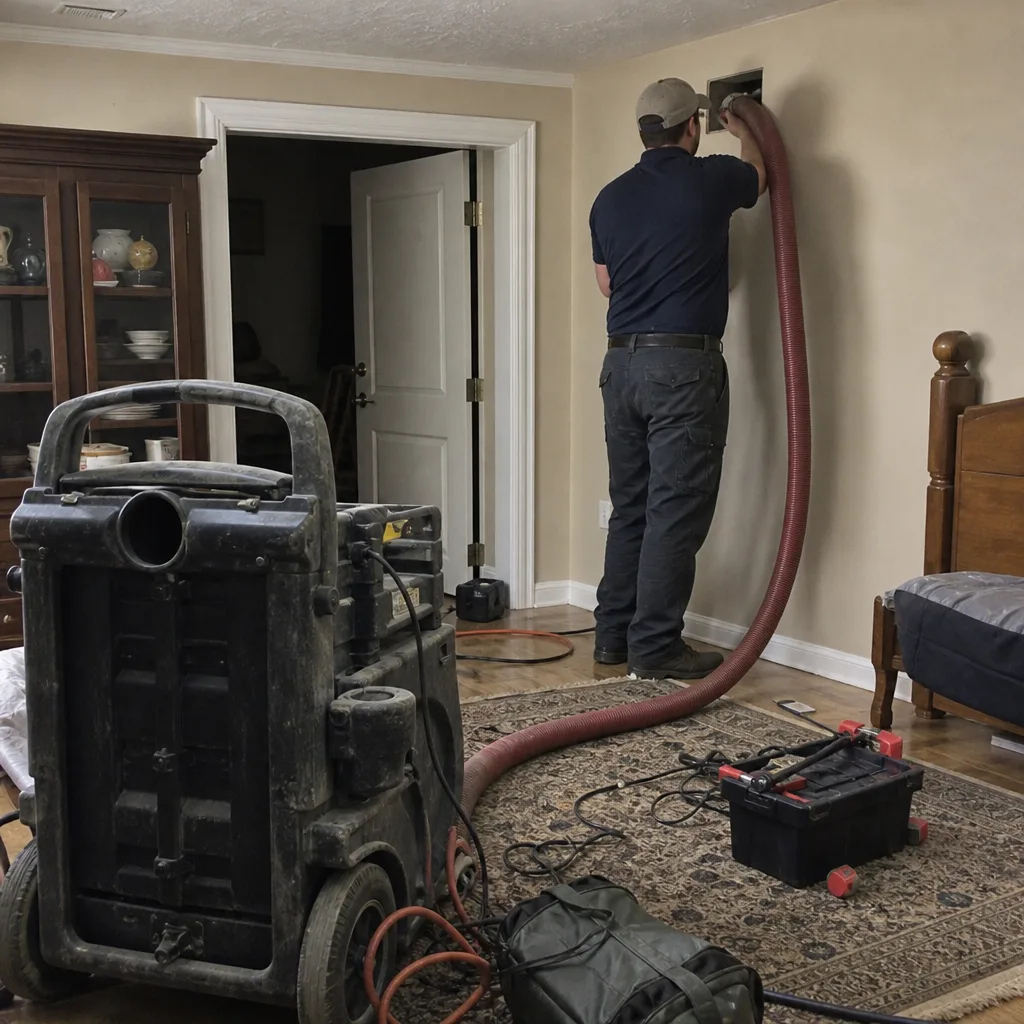
HEPA-rated extraction is the second half. A Nikro HEPA vacuum captures fine particulate instead of exhausting it back into the room, which matters if the ducts are in a home with allergy sufferers, young children, or pets. A shop vacuum is not a substitute, no matter how powerful it seems in a garage. The finishing step matters too. When the work includes Guardsman-brand post-clean treatment of components and surfaces, the routine is completed with care rather than just extraction.
Questions worth asking any duct cleaner
- Do you use contact cleaning (a rotary brush) or blower-only? A cheap quote is often the latter.
- What’s the capture equipment? HEPA-rated vacuum is the standard for fine particulate.
- Will you inspect the duct system, or just clean what’s visible?
- Can you handle repair if something’s disconnected, or do you pass it off?
- Do you handle dryer vents and post-construction debris in the same visit?
We also work with Honeywell and Aprilaire filtration and air quality products, which means we can identify filtration gaps during a cleaning visit and recommend whole-home solutions that extend the value of the job, rather than leaving a homeowner to figure out the filtration side later.
Common Mistakes to Avoid
- Treating a high energy bill as the first warning signal. It’s usually the last one. The earlier signals are airflow asymmetry and register-level changes, and they show up months before a bill spike in a Charlotte summer.
- Hiring a blower-only service because the coupon is cheap. A duct cleaning that pushes air through without contact cleaning is not the same service. You paid for a visit, but what’s attached to the duct walls is still there.
- Assuming a disconnected flex run is a duct-cleaning problem. It’s a repair problem. Cleaning the rest of the system doesn’t restore airflow to a room that’s lost its supply.
- Ignoring a persistent musty smell as “just the ducts being dirty.” Persistent mustiness often means the duct needs inspection for biological growth before cleaning, and the wrong method can make it worse.
- Skipping the dryer vent because it’s “not the HVAC.” Long townhome vent runs trap lint faster than single-family runs. Dryer vent fires are preventable, and vent cleaning is a distinct service from duct cleaning.
- Renovating with the ducts connected. Drywall dust and construction particulate travel through the whole system. If you’ve been renovating, schedule the cleaning for after the work is done, not before.
- Believing “one flat price” means a per-vent number. A legitimate flat price is for the whole system, agreed before work starts. A quote built on per-vent pricing tends to grow once the van is on the drive.
See the difference
 Before
 After
 Before
 After
 Before
 After
When to Call a Professional
Call when you see airflow asymmetry between rooms that used to be even, a persistent musty smell that stays in the room after the system has been running for an hour, visible dark staining in a register interior, a flex duct connection in the crawlspace that’s sagging or detached, or a dryer that now needs more than one cycle. Call after a renovation when the ducts were connected during the work, and call when you’ve never had the system inspected and you’ve lived in the home through several Charlotte summers without checking. A trained technician with contact cleaning equipment and HEPA-rated extraction can inspect, clean, and repair in one visit, which is where DIY checks get you a diagnosis but not a fix. Stratford Air Duct Cleaning offers free estimates in Charlotte. Call (833) 962-6967. We answer 24/7. Fast dispatch from 7am to 7pm, Sunday through Friday.
Frequently Asked Questions
Register-level airflow asymmetry is the earliest reliable signal: a room that used to cool and heat evenly now doesn’t. It usually means a flex duct has slipped, sagged, or been crushed somewhere in the crawlspace. Contact cleaning and HEPA-rated extraction won’t fix it; a duct inspection and repair will. Call (833) 962-6967 for a free estimate if you’re seeing it in your home.
Not necessarily. A smell that only appears for the first minute or two after the system kicks on is often moisture on the cooling coil or in a slow condensate drain, not the ducts themselves. A musty smell that stays in the room all day is a different problem and needs an inspection before any cleaning is done. Call (833) 962-6967 if you’re not sure which one you have.
Longer dry times, lint collecting around the exterior vent cap, and noticeable heat buildup in the laundry room are the three signs specific to townhomes. Townhome vent runs are longer and have more bends, so they trap lint faster. Dryer vent cleaning is a separate service from duct cleaning and worth scheduling on its own. Call (833) 962-6967 to book it.
Yes. Turn the system off, remove a register grille, and shine a phone flashlight into the duct. A light, even film of dust is normal. Thick dark buildup, visible flaking, or dark greyish staining that looks biological warrants a call. Don’t reach into the duct by hand. Call (833) 962-6967 for a professional inspection.
Homes built in the 1970s through the 1990s with crawlspace flex duct are more likely to need repair alongside cleaning, because connections loosen and sag over decades of temperature cycling. Newer homes with short, tight duct runs are more often cleaning-only. A proper inspection before the cleaning tells you which one you have. Call (833) 962-6967 to schedule one.
Contact cleaning with Rotobrush means a rotary brush physically contacts the duct interior and removes what’s adhered to the walls. Blower-only equipment pushes air through without that contact, so material caked to the ducts stays put. Pairing contact cleaning with Nikro HEPA-rated extraction captures what’s removed instead of releasing it into the room. Call (833) 962-6967 if you want to know what a proper cleaning actually involves before you book.
The Bottom Line
The early duct warning signs in Charlotte homes are not the obvious ones. Airflow asymmetry between rooms, flex duct sagging or disconnection in the crawlspace, musty smells that behave differently depending on when they show up, and dryer vent signals in townhomes all appear before the visible dust and the bill spike. Check your registers with a flashlight. Look at what you can see from the crawlspace access. If something doesn’t match the “normal” pattern described above, an inspection is cheaper than waiting for the system to fail. A full duct-health visit includes contact cleaning, HEPA-rated extraction, and repair on the same truck. Stratford Air Duct Cleaning has served Charlotte since 2017. Call (833) 962-6967 for a free estimate. We answer 24/7. Fast dispatch from 7am to 7pm, Sunday through Friday.
Written by the team at Stratford Air Duct Cleaning, serving Charlotte since 2017.