
Last updated November 14, 2026
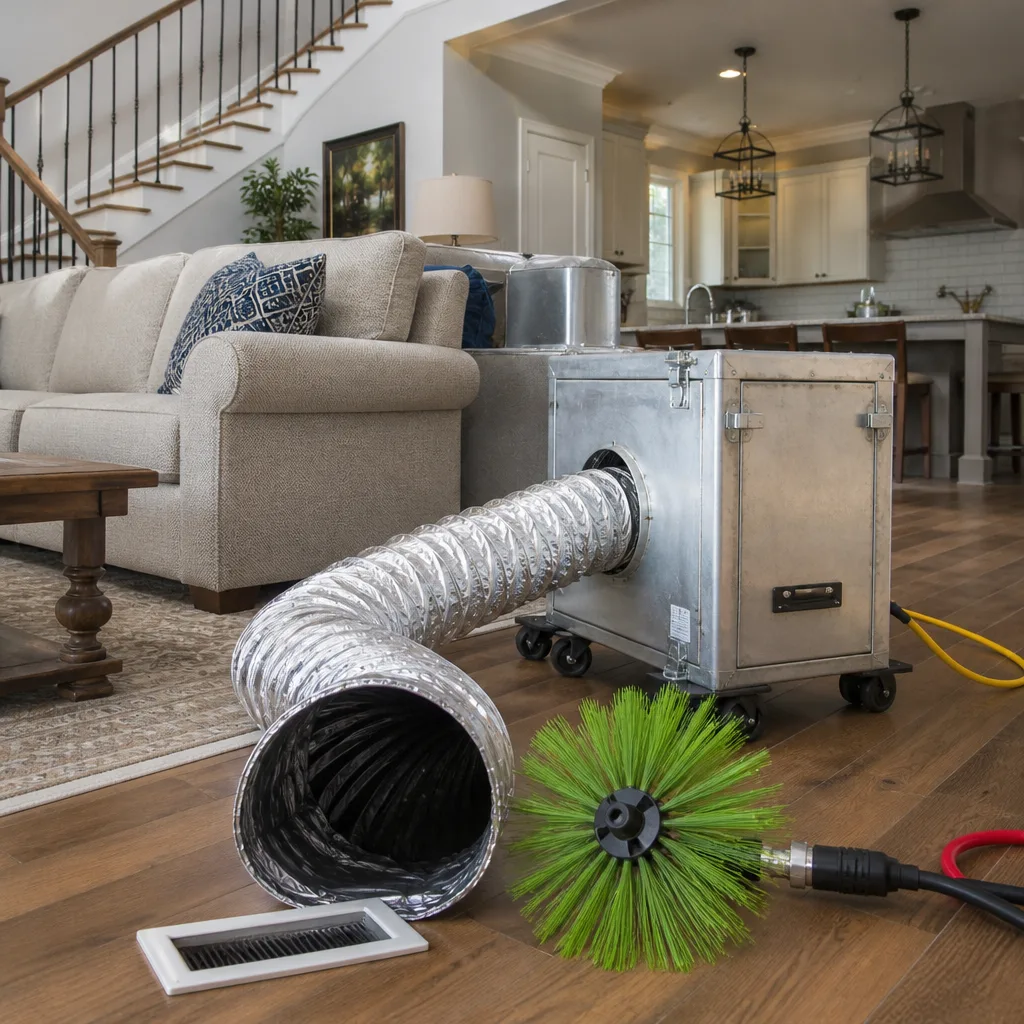 Whole-home duct cleaning
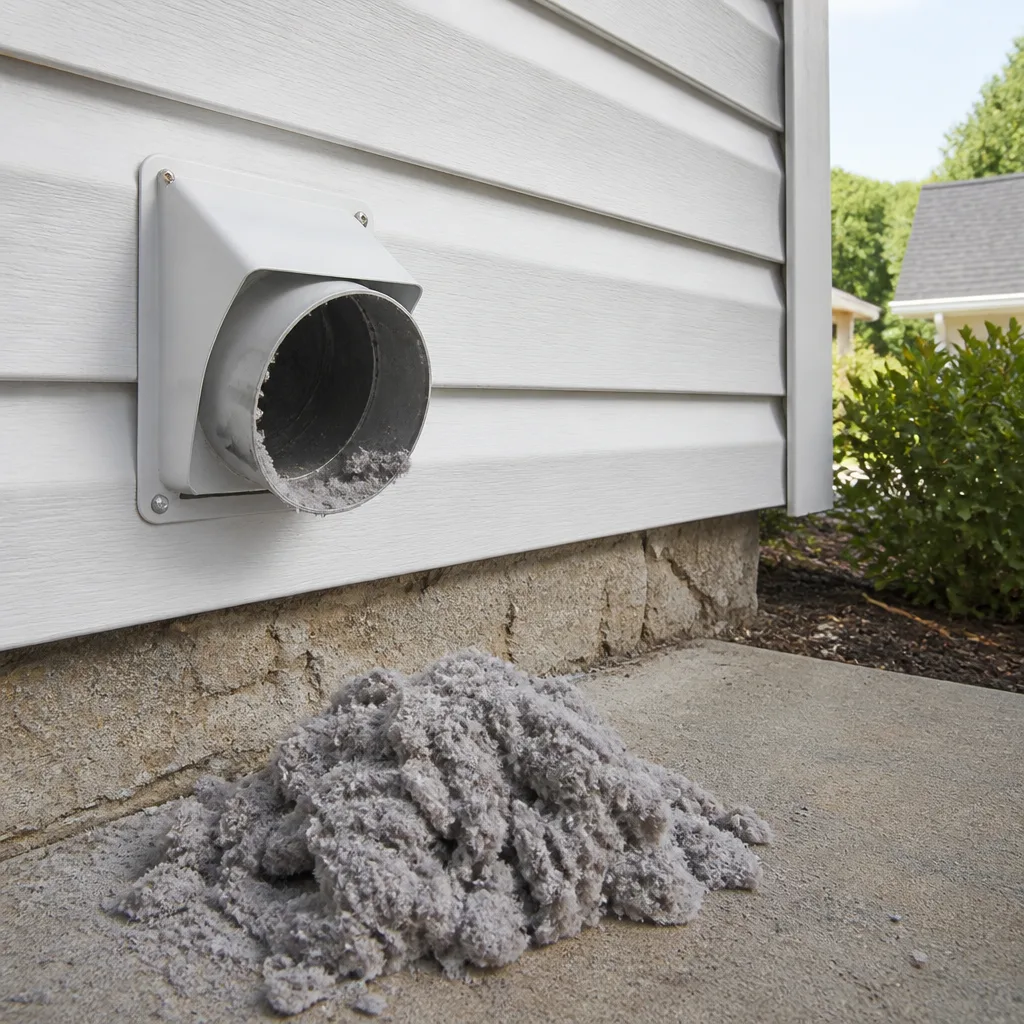 Dryer vent cleaning
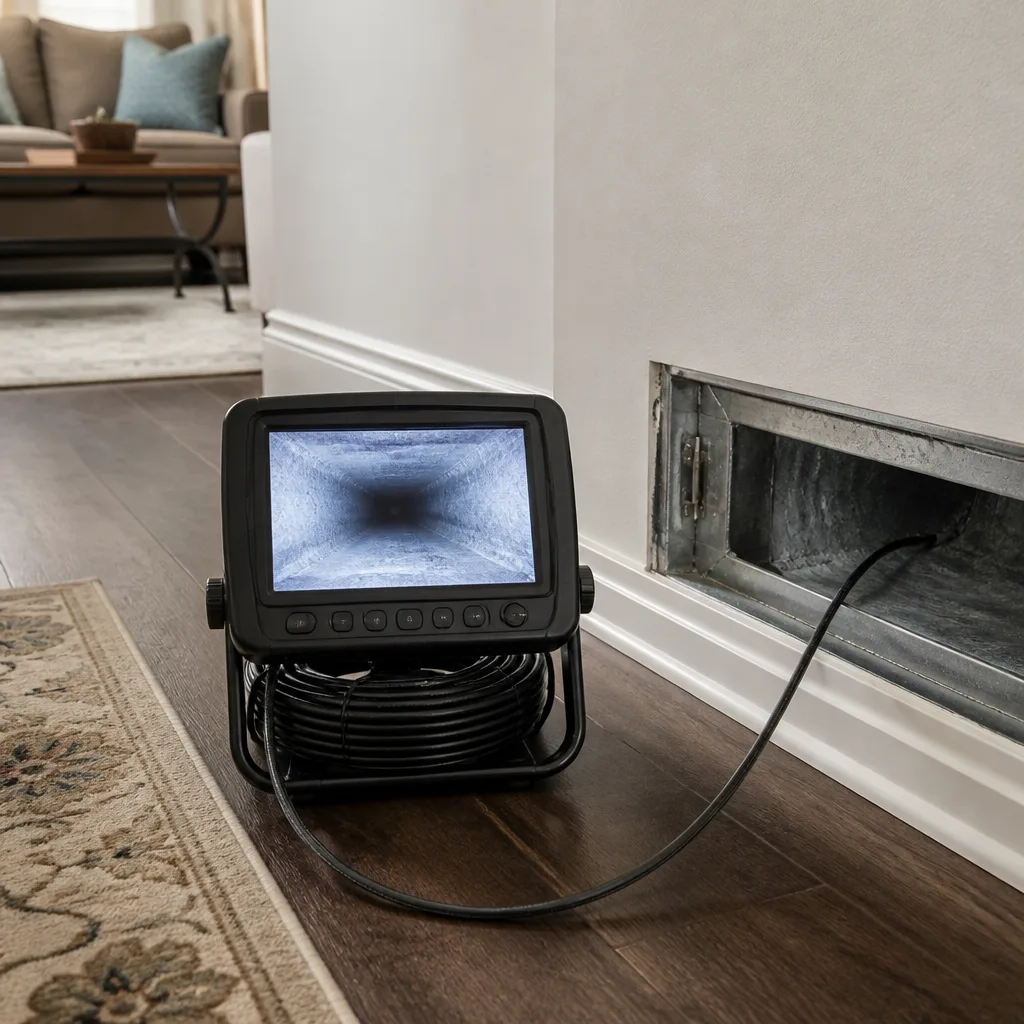 Camera inspection
 Sanitizing & deodorizing
Whole-system duct and dryer vent check with before-and-after photos - you see exactly what came out of your vents
That "$99 whole-house special" is a bait ad - the real number appears once they are in your hallway, or the "clean" is a shop-vac at the register. We photograph the inside of your ducts before and after instead.
The Complete Guide to Air Duct Cleaning in Charlotte
Most Charlotte homeowners assume duct cleaning is the same job everywhere. It isn’t. Charlotte averages over 200 cooling days per year, more than Miami, which means your air handler pushes humid air through the same ductwork for a longer stretch than almost any other major U.S. city. Add red clay dust tracked in from yards across Mecklenburg County and a steady pace of home renovation, and the contamination profile inside a Charlotte duct system looks nothing like what a generic national guide describes. This guide maps the real job: what accumulates, why, which methods actually remove it, and how to tell a serious duct-health visit from a cheap surface pass.
Quick Answer
Air duct cleaning in Charlotte is the mechanical removal of dust, clay particulate, pet hair, and microbial growth from the supply and return ductwork, followed by HEPA-rated extraction so the loosened debris leaves the system instead of settling back into it. It matters more here than in drier climates because the long cooling season keeps the air handler cycling humid air through the ducts for most of the year. A proper job combines rotary contact cleaning, negative-pressure capture, and an inspection that catches flex-duct and unsealed-return problems specific to Charlotte homes.
Styles & brands we work with
- Whole-home duct cleaning
- Dryer vent cleaning
- Camera inspection
- Sanitizing & deodorizing
Table of Contents
- Why Charlotte’s Climate Changes the Job
- What Actually Builds Up in Charlotte Ductwork
- Contact Cleaning vs. Source Removal: What the Method Means
- What Rotobrush and Nikro Equipment Do That a Shop Vac Can’t
- Charlotte Red Flags: Flex Duct, Crawlspaces, and Unsealed Returns
- How a Full Duct-Health Visit Unfolds, Step by Step
- Sequencing Cleaning, Filtration, and Coil Work So It Holds
- Common Mistakes to Avoid
Why Charlotte’s Climate Changes the Job
Charlotte averages more than 200 cooling days a year. That single number reshapes what happens inside ductwork. In a colder city, the air handler runs hard in winter and lightly in summer, and the ducts spend months idle. In Charlotte, the system moves conditioned air nearly year-round, and for most of that time the air is humid. Moisture is the variable that turns ordinary household dust into something else.
When humid air moves through a duct system, fine particles don’t just settle. They cling. Dust sticks to duct walls, to the interior of flex runs, and to the evaporator coil face. Once that film forms, it holds moisture, and a damp organic film on a warm surface is exactly the environment where microbial growth establishes itself. That’s the difference between a dry-climate dust problem and a Charlotte contamination problem.
The seasonal pattern matters too. Charlotte’s spring brings heavy pollen, and the system pulls outdoor air in through returns and any leaky duct joints. Summer delivers sustained humidity. Fall brings a burst of leaf and yard debris that gets tracked inside. By the time the cooling season ends, a duct system that hasn’t been cleaned has accumulated a layered mix of pollen, clay dust, pet hair, and biological film, not a simple coat of gray dust.
What this means practically:
- The air handler runs longer here, so more air passes through the same duct surface area per year.
- Humidity keeps fine particles adhering rather than falling out, so buildup is denser than in dry markets.
- Microbial growth is a realistic concern in Charlotte ductwork, not a scare tactic.
- Cleaning intervals that work in Phoenix or Denver may be too long for a Charlotte home with pets or allergies.
None of this means every Charlotte house needs cleaning on a fixed schedule. It means the assessment should account for how long the system runs and how humid the air it moves is, which is more than most national checklists ask you to consider.
What Actually Builds Up in Charlotte Ductwork
Open a return grille in a Charlotte home that hasn’t had duct work done and you’ll usually find a specific mix. Understanding what’s there explains why the cleaning method matters as much as whether you clean at all.
Red clay dust is the signature particle. Charlotte’s soil is heavy clay, and it dries to a fine, sticky powder that gets tracked in, goes airborne when disturbed, and then gets pulled into returns. Clay particles are small enough to stay suspended and tacky enough to coat duct walls rather than bounce off them. Standard dusting and a cheap filter don’t remove them from the airstream.
Pet hair behaves differently. It clumps, it tangles with other debris, and it forms mats on return grilles and inside flex runs where airflow slows. Those mats restrict airflow and give biological growth a place to anchor.
Pollen arrives every spring in volume. Charlotte’s tree canopy produces a heavy pollen load, and any duct joint that leaks pulls that pollen directly into the system instead of filtering it at the return.
Then there’s construction debris. Charlotte sees a high rate of renovation and remodeling, and drywall dust, sawdust, insulation fibers, and fine sanding particulate get pulled into returns during a project if the system isn’t sealed off. This debris is heavier and more abrasive than household dust. It settles in low spots and horizontal runs and can sit there for years.
Finally, moisture-driven film. As described above, the long humid cooling season lets a damp film develop on duct interiors and coil faces. That film is the part of the contamination profile that cheap blow-and-go cleaning does nothing about, because blasting air at a sticky film just redistributes it.
Contact Cleaning vs. Source Removal: What the Method Means
Two very different approaches get sold as “duct cleaning,” and the difference decides whether the work actually holds. Source-removal cleaning combines mechanical agitation of the duct surfaces with negative-pressure capture, so loosened debris is pulled out of the system and contained. Contact cleaning is the mechanical part of that: a rotary tool physically contacts the duct wall and lifts the adhered material rather than relying on airflow to dislodge it.
The budget alternative most discount cleaners use is a blower and a hose. The idea is to pressurize the ducts and push debris toward a collection point. In a dry climate with light dust, that can accomplish something. In Charlotte, where the contamination is adhered to the walls by humidity-driven film and heavy clay particulate, airflow alone leaves the layer intact.
Here’s the practical distinction:
- Source removal: mechanical contact breaks the bond between debris and duct wall, negative pressure captures it, and the duct interior is left visibly clean.
- Blower-only cleaning: air movement lifts the loose fraction and pushes it around, leaving adhered film in place and potentially redistributing debris into rooms.
- Contact-vacuum without containment: a vacuum head with a rotating brush, with no real negative pressure on the system, can release fine particulate into the living space.
In a humid system like Charlotte’s, the film on the duct walls is the real target. If it isn’t mechanically broken up, it stays, re-dampens next cooling season, and the visible dust returns within months. That’s why the method matters more here than in a drier market. It’s also why our approach is built around rotary contact cleaning paired with HEPA-rated extraction, with the ducts under negative pressure the whole time. If you want to see how that translates to a single home visit, the team behind Stratford Air Duct Cleaning outlines the same method on every job.
What Rotobrush and Nikro Equipment Do That a Shop Vac Can’t
Equipment choice is where a lot of quotes quietly differ. A shop vac and a brush rod look like duct cleaning tools, but they weren’t built for the conditions inside an HVAC system. Here’s what the professional-grade systems actually do during a job.
The Rotobrush rotary contact-cleaning system drives a rotating brush head through the duct run, contacting all sides as it moves. That contact is what breaks the adhered film and clay dust off the wall rather than just pushing air past it. The system is designed for duct interiors specifically, so the brush tension and head geometry match the surfaces it’s cleaning.
The Nikro HEPA-rated vacuum is the capture side. HEPA-rated extraction means fine particulate, including the sub-micron fraction that standard vacuums exhaust back into the room, gets trapped in the filter rather than returned to your air. That matters in Charlotte because the clay and pollen particles that make up most of the contamination are exactly the size range a shop vac releases.
We also keep Abatement Technologies equipment on hand. That’s the standard used in remediation and restoration work, and it’s what lets a job involving heavy post-renovation debris or compromised duct conditions be handled properly rather than treated like routine dust removal.
What this equipment combination delivers in practice:
- Mechanical contact with the duct wall, so adhered material is lifted, not just blown.
- HEPA-rated capture, so loosened particulate leaves the system instead of your return air.
- Remediation-grade capability for contaminated or post-construction situations.
- A finishing step, using Guardsman products, so components and surfaces are treated after extraction, not left raw.
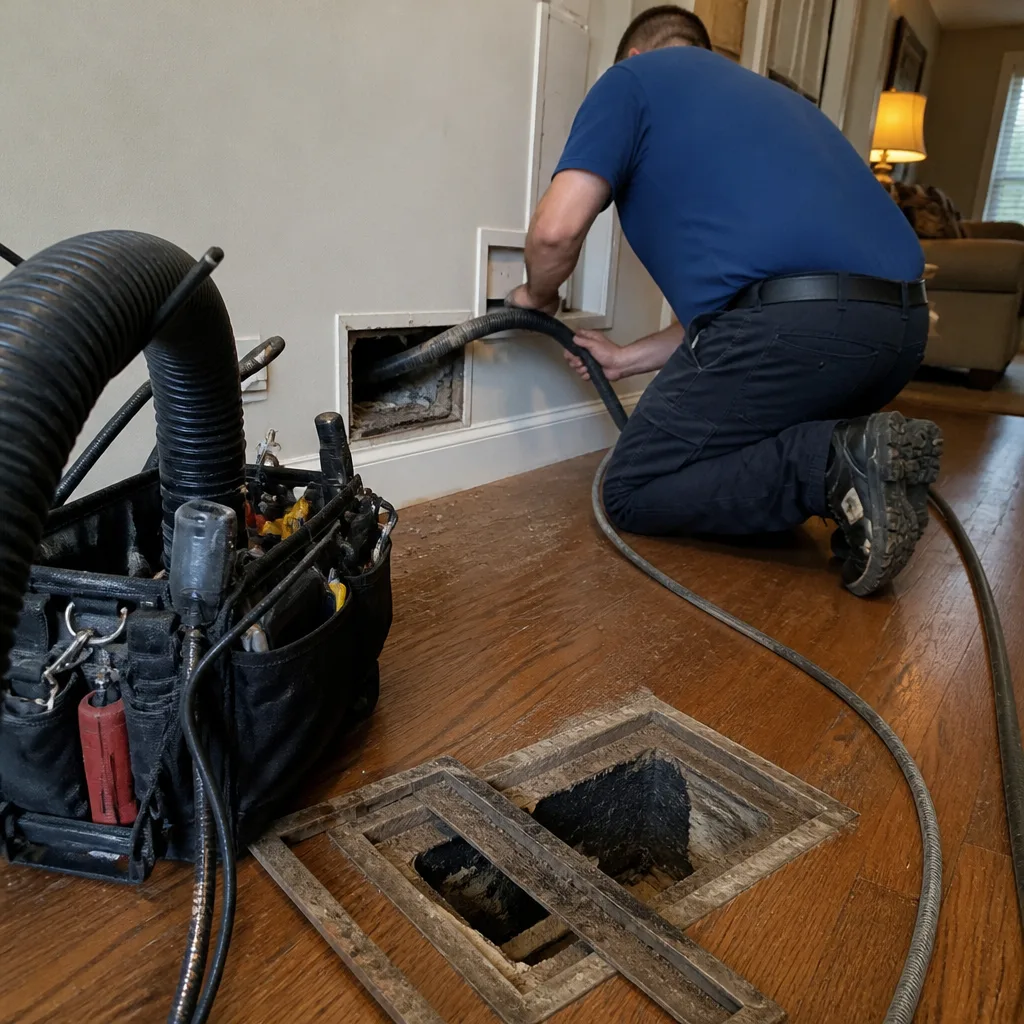
The result you can verify is a before-and-after view of your own ducts, not a generic photo from another job. Ask for it.
Charlotte Red Flags: Flex Duct, Crawlspaces, and Unsealed Returns
Charlotte’s housing stock creates a few duct problems that show up again and again. Knowing them helps you spot what a thorough inspection should catch.
Flex duct in crawlspaces. A large share of Charlotte homes, especially older ones and those with additions, run flexible duct through crawlspaces. Flex duct has a corrugated interior, and those ridges trap dust and clay far more effectively than smooth metal. It also sags over time, which creates low spots where debris collects. In a humid crawlspace, the outer jacket can degrade, letting crawlspace air and moisture migrate into the duct stream.
Unsealed returns. A return that pulls air from a crawlspace, attic, or attached garage is drawing unfiltered air into your system. In Charlotte, that means clay dust, insulation fibers, and crawlspace moisture going straight into the ducts and coil. Sealing the return is often as important as cleaning the duct behind it. If a cleaner cleans the ducts and leaves the unsealed return, the problem comes back.
Post-renovation debris. Charlotte’s remodel rate is high, and drywall dust and sawdust pulled into returns during a project is abrasive and heavy. It settles in horizontal runs and doesn’t move on its own. If your home has had work done in the last few years, that debris is likely still in the system.
Undersized or crushed runs. Additions and retrofits sometimes leave crushed or undersized flex runs that restrict airflow. Restricted airflow means debris settles faster downstream and the coil runs wetter. A duct-health visit should flag these, and duct repair should be able to fix them rather than referring you elsewhere.
If you’re comparing providers, the air duct cleaning page is a useful reference for what a proper inspection should cover.
How a Full Duct-Health Visit Unfolds, Step by Step
A real duct-health visit is a sequence, not a single pass with a hose. Here’s the order that makes the work hold.
- Inspection first. The technician walks the system, checks the air handler and coil, looks at return paths, identifies flex duct in crawlspaces, and checks for unsealed or crushed runs before any cleaning starts.
- Containment and negative pressure. The system is put under negative pressure so loosened debris is captured, not released into the house.
- Rotary contact cleaning. Rotobrush equipment runs each duct run, contacting all sides to break the adhered film and clay dust off the walls.
- HEPA-rated extraction. Nikro HEPA vacuum capture removes the loosened particulate, including the fine fraction a standard vacuum would exhaust.
- Registers and grilles. Supply and return covers are cleaned as part of the job, since they hold a surprising amount of the debris.
- Coil and air handler check. The evaporator coil face is inspected for the damp film that builds up in Charlotte’s humidity. If it’s fouled, that gets flagged for cleaning.
- Finishing step. Guardsman products are used to treat components after extraction.
- Before-and-after verification. You see the ducts before and after, so you know what you paid for.
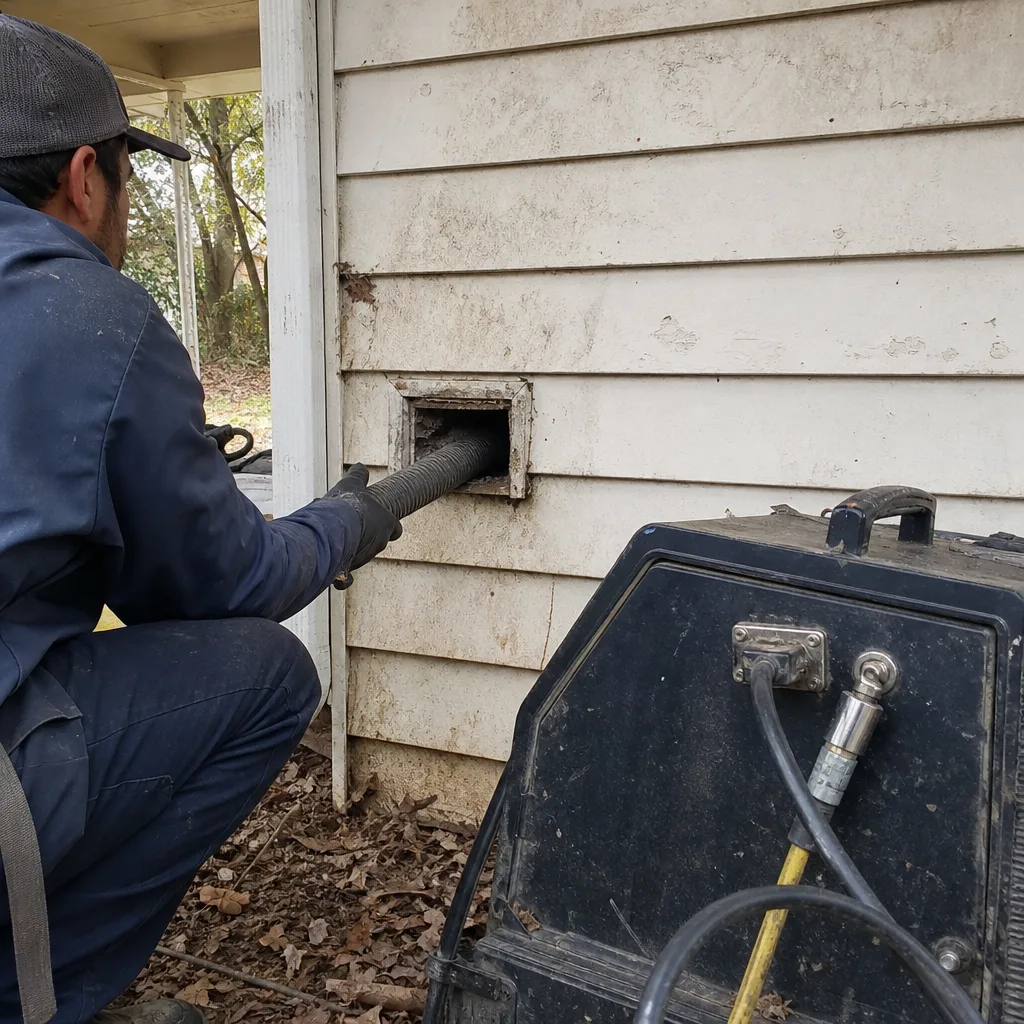
A full visit covers air duct cleaning, dryer vent work, and any duct repair the inspection turned up, all from the same team. That matters because a cleaner who only cleans will tell you the crushed run is someone else’s problem. We repair what we find. The same team handles dryer vent cleaning, which addresses one of the leading causes of residential fires, so it’s worth bundling if it’s been a while.
Sequencing Cleaning, Filtration, and Coil Work So It Holds
Cleaning without addressing filtration is a short-term fix in Charlotte. The system will pull the same clay dust and pollen back in, and the film returns. Getting the order right makes the result last.
Start with the ducts, because you don’t want to clean a coil and then blow debris back onto it. Once the ducts are clean and the returns are confirmed sealed, look at filtration. A filter that’s too restrictive for the system’s design airflow will starve it; a filter that’s too weak won’t catch the clay fraction. The right answer depends on the system, which is why a technician who works with Honeywell and Aprilaire filtration products can size the recommendation to the equipment rather than selling a universal filter.
Then address the coil. In Charlotte’s humid cooling season, the evaporator coil runs wet for months, and a fouled coil face both reduces efficiency and provides a surface for growth. Cleaning the coil after the ducts is the sequence that sticks.
The order that holds up:
- Inspect and clean the ducts, sealing unsealed returns and repairing crushed or damaged runs.
- Verify or upgrade filtration to match the system’s airflow and the local particulate load.
- Clean the coil and air handler once the ducts are clean.
- Re-check airflow and confirm the return paths are pulling from conditioned space, not crawlspace or attic.
Do it in that order and the next cooling season starts from a clean baseline instead of a re-contaminated one.
Common Mistakes to Avoid
- Buying on price alone. A quote far below the others usually means blower-only cleaning with no contact method. In a humid Charlotte system, that leaves the adhered film in place and the dust returns fast. Ask what equipment will be used before you compare prices.
- Skipping the inspection. A cleaner who starts running a hose without walking the system won’t catch flex duct sagging in the crawlspace or an unsealed return pulling in crawlspace air. Those problems keep the ducts dirty no matter how well they’re cleaned.
- Not fixing unsealed returns. Cleaning the ducts while a return draws from a crawlspace or attic means the system keeps pulling unfiltered air in. Seal first, or the cleaning is a temporary fix.
- Cleaning before a renovation finishes. If you’re remodeling, wait until the drywall and sanding are done, or the new debris goes straight back into clean ducts. New construction dust is heavy and abrasive, and it settles in horizontal runs.
- Ignoring the coil. In Charlotte’s long humid cooling season, the coil face is where damp film develops. Cleaning ducts without checking the coil leaves a growth surface in the air path.
- Accepting a generic before-and-after photo. The photo should be of your ducts, not a stock image. Ask to see yours before and after the work.
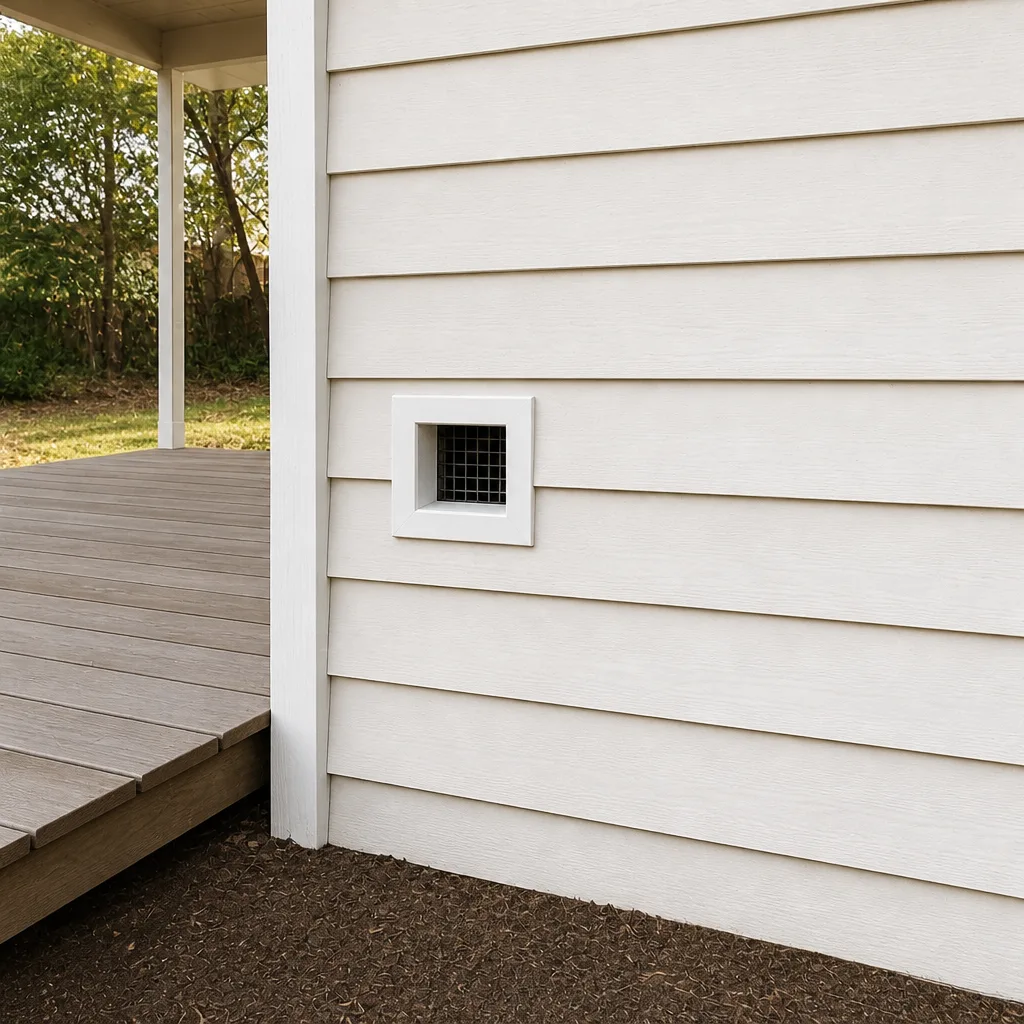
- Treating dryer vent cleaning as optional. Dryer vents collect lint that restricts airflow and creates a fire risk. If the ducts are being done, it’s the right time to clear the dryer vent too.
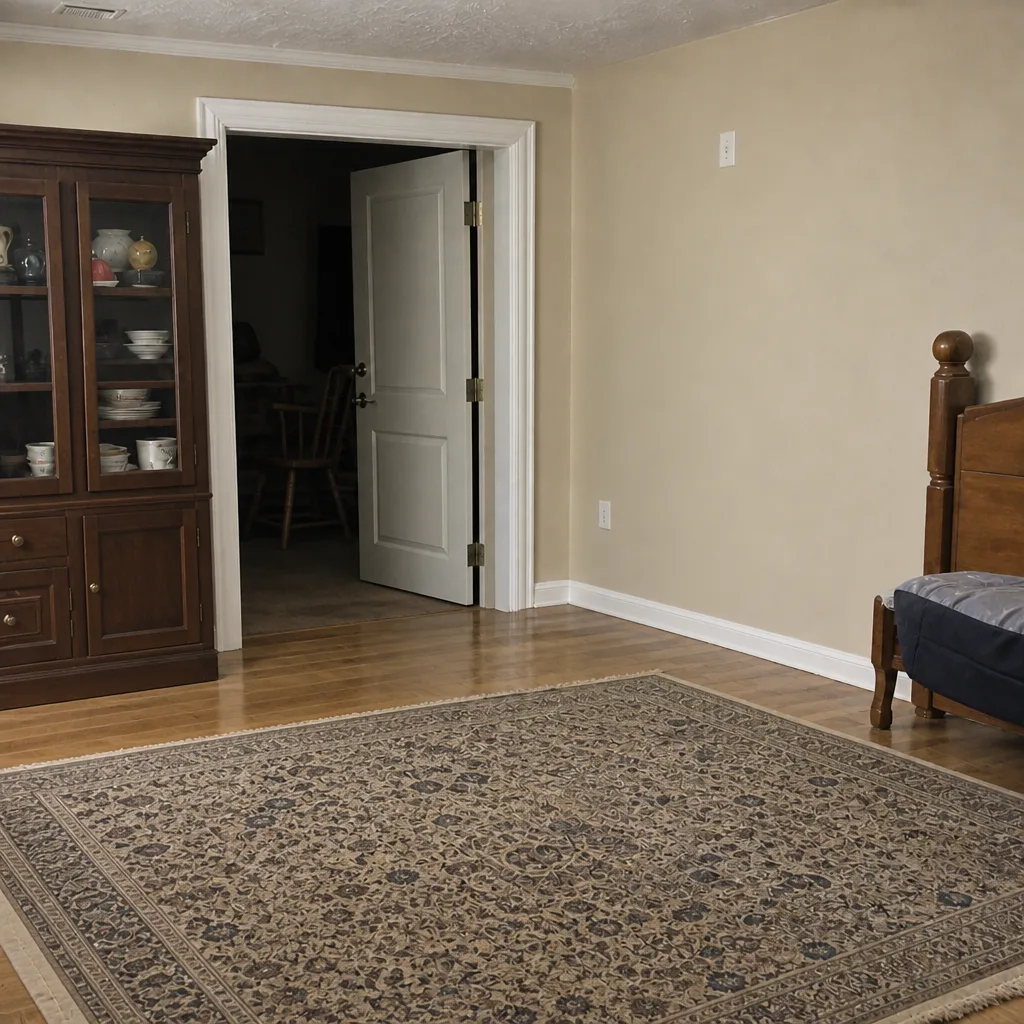
See the difference
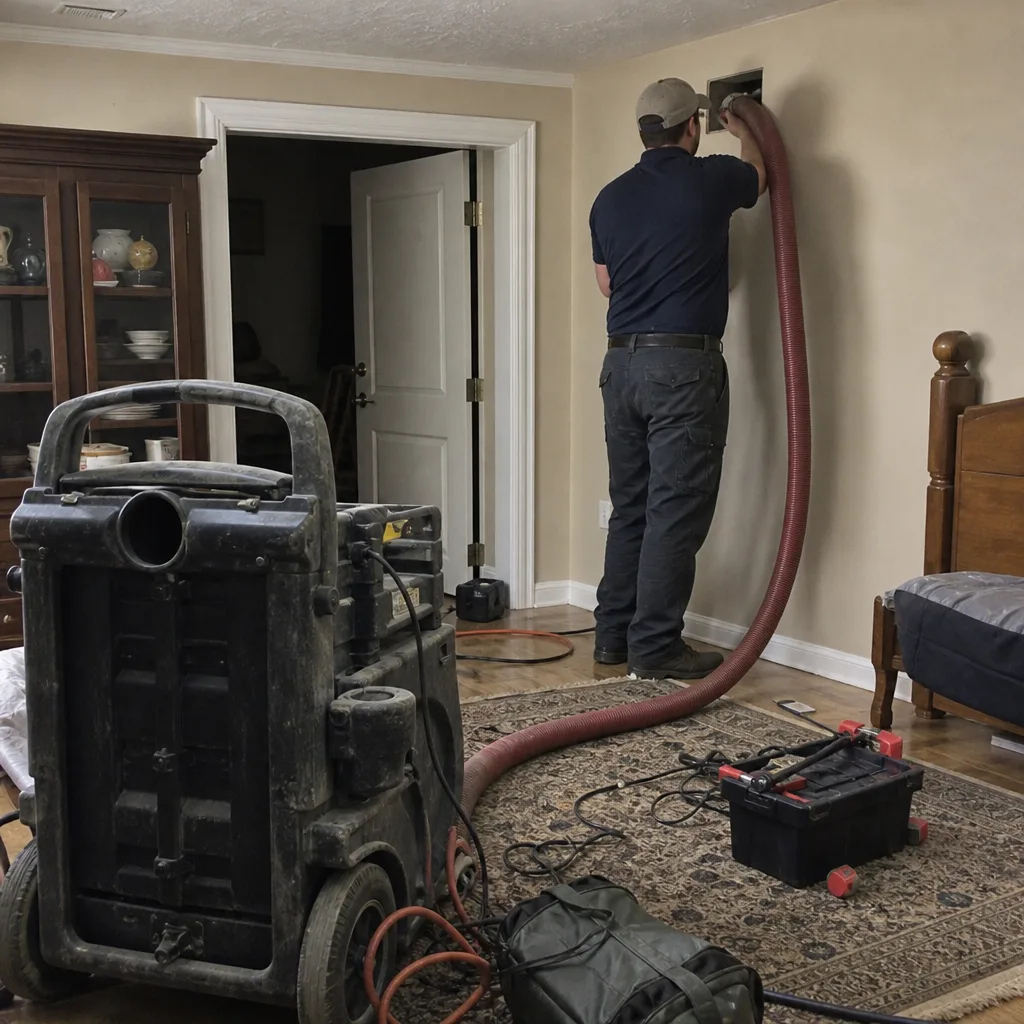 Before
 After
 Before
 After
 Before
 After
When to Call a Professional
Some situations call for a professional rather than a weekend attempt with a vacuum. If anyone in the home has allergies or asthma that worsen indoors, if you see visible dust blowing from supply registers when the system starts, or if you’ve had a major renovation in the last few years, it’s worth an inspection. If the ducts run through a crawlspace, if any return pulls air from a crawlspace or attic, or if you notice uneven airflow between rooms, those point to duct issues that cleaning alone won’t solve. Visible mold on duct surfaces or grilles is a clear reason to call, and it should be handled with remediation-grade equipment, not a consumer vacuum.
Stratford Air Duct Cleaning offers free estimates in Charlotte. Call (833) 962-6967. We answer 24/7. Fast dispatch from 7am to 7pm, Sunday through Friday. We’re closed Saturday. For homeowners in nearby communities like Locust, the same team covers the work with the same equipment.
Frequently Asked Questions
Most Charlotte homes benefit from a professional cleaning every few years, and more often if there are pets, allergy sufferers, or recent renovations. The long cooling season here means the system moves humid air through the ducts for most of the year, so contamination builds faster than in drier climates. A home with pets or a recent remodel may need it sooner. Call (833) 962-6967 for an honest assessment based on your system rather than a fixed schedule.
Cheap quotes usually reflect a different method, not a better price. Blower-only cleaning with a shop vac pushes loose dust around without breaking the adhered film off the duct walls, and it can release fine particulate back into your living space. Professional contact cleaning with HEPA-rated extraction takes longer and costs more, but it removes the contamination rather than moving it. Ask what equipment will be used before you compare. Call (833) 962-6967 for a quote that explains the method.
Ask for before-and-after photos of your own ducts. A technician using Rotobrush contact cleaning and Nikro HEPA extraction can show you the duct interiors before the work and after, and those images should be of your system, not a stock set. If a provider can’t show you your own ducts, that’s a sign. We show ours on every job.
Reducing the dust, pollen, clay particulate, and biological film in the ducts removes a source of indoor airborne irritants, which many allergy sufferers notice. It’s not a medical treatment and it won’t fix an unsealed return or a fouled coil on its own. The right sequence is cleaning, sealing, filtration, and coil work. Call (833) 962-6967 to talk through what your system needs.
Contact cleaning uses a rotary tool that physically contacts the duct wall to break adhered debris loose while the system is under negative pressure and HEPA capture is running. A vacuum-and-brush approach without real containment can release fine particulate into the room and often leaves the damp film behind. In Charlotte’s humid system, the contact method is what actually holds. Ask which one a provider uses.
A full duct-health visit should cover cleaning, dryer vent clearing, and any duct repair the inspection turns up, all from the same team. Many cleaners only clean and refer repairs elsewhere, which leaves the crushed run or unsealed return unfixed. Stratford handles all three in-house. Call (833) 962-6967 for a free estimate.
The Bottom Line
Air duct cleaning in Charlotte isn’t a commodity. The 200-plus cooling days a year, the humidity that keeps clay dust and pollen adhered to duct walls, the flex duct running through crawlspaces, and the steady pace of renovation all shape what a real job involves. The method matters: rotary contact cleaning paired with HEPA-rated extraction removes the contamination, while blower-only cleaning moves it. Equipment built for remediation work handles the heavy and contaminated cases that routine cleaning can’t. And fixing unsealed returns and crushed runs is what makes the work last. Ask what equipment will be used, ask to see your own before-and-after photos, and judge the quote on method, not price alone. Call (833) 962-6967 for a free estimate.
Written by the team at Stratford Air Duct Cleaning, serving Charlotte since 2017.