
Last updated November 14, 2026
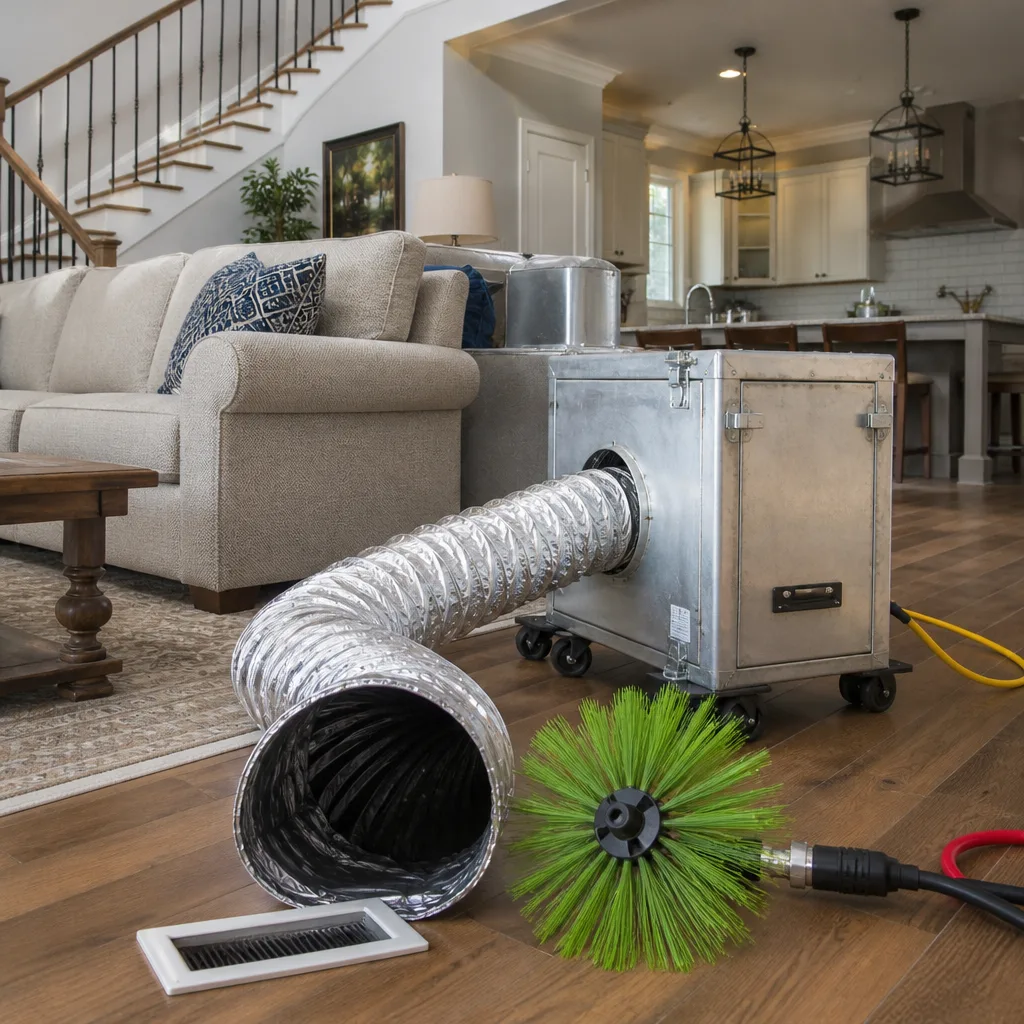 Whole-home duct cleaning
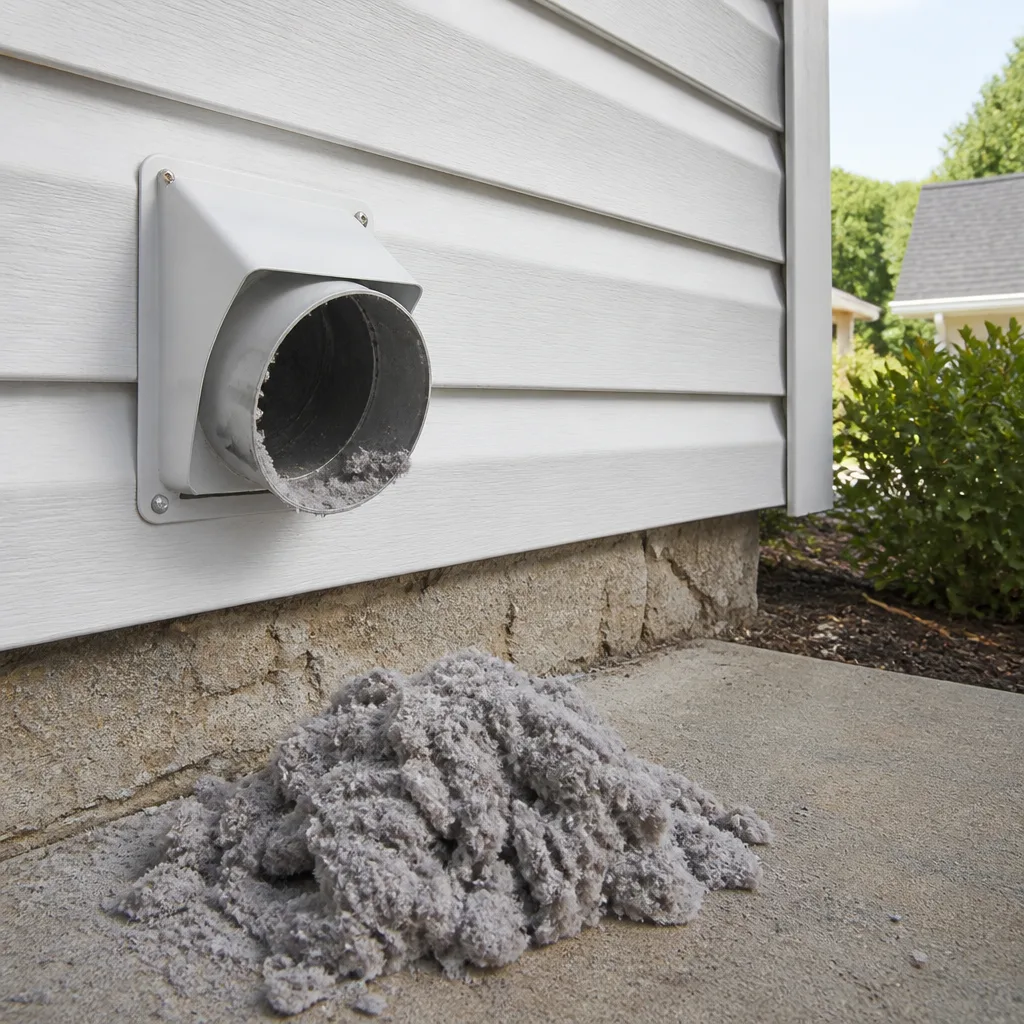 Dryer vent cleaning
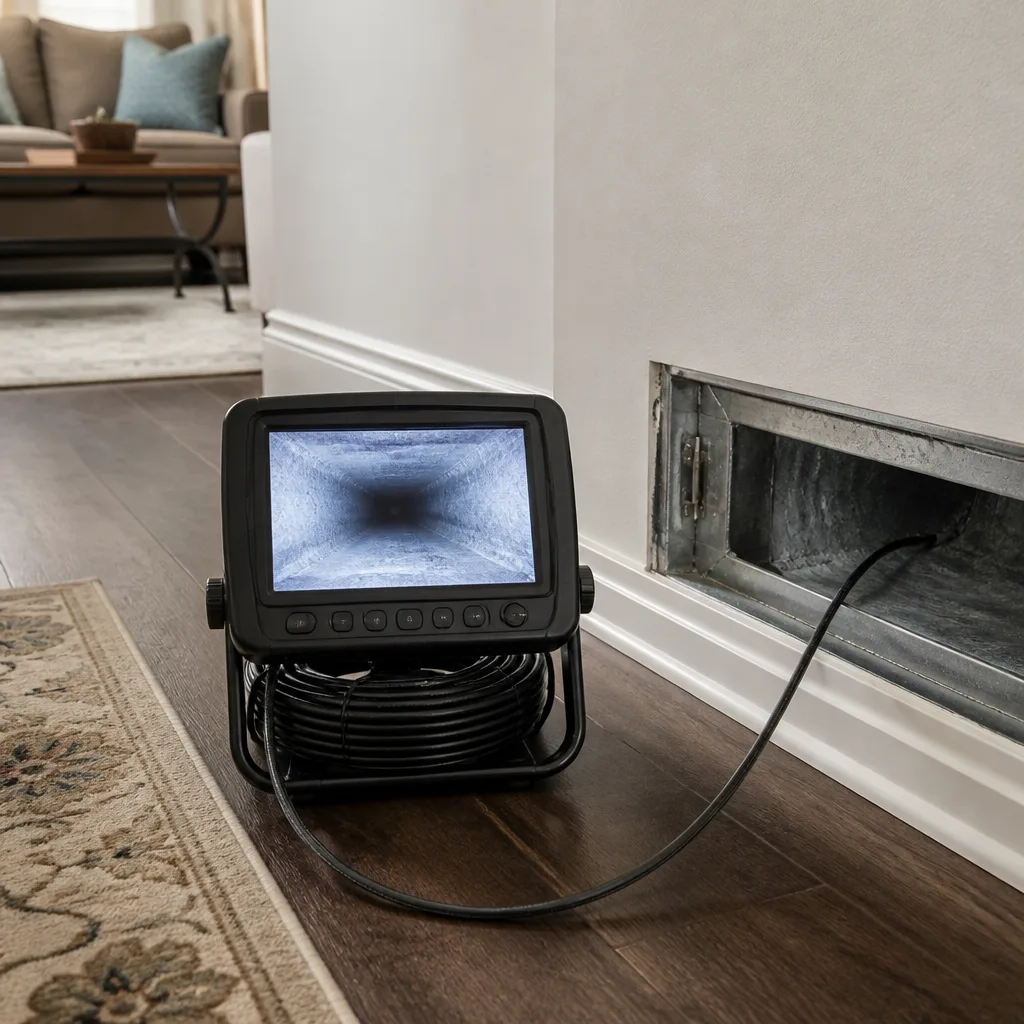 Camera inspection
 Sanitizing & deodorizing
Whole-system duct and dryer vent check with before-and-after photos - you see exactly what came out of your vents
That "$99 whole-house special" is a bait ad - the real number appears once they are in your hallway, or the "clean" is a shop-vac at the register. We photograph the inside of your ducts before and after instead.
Seasonal Air Duct Cleaning Care for Charlotte: Year-Round Homeowner’s Guide
Most Charlotte homeowners treat duct cleaning as an annual errand, something to schedule whenever the vents start looking fuzzy. That calendar misses the real problem. Charlotte puts four distinct stresses on an HVAC system every year, and each one arrives on its own schedule: spring pollen that loads filters and coils, summer humidity that condenses inside supply runs, fall debris that settles before the heat comes on, and winter heating mode that changes how air moves through older homes. Clean once a year and you handle one of those four. This guide maps the whole year, season by season, so you know what to check, when to act, and when to bring in professional equipment. We’ll cover the specific mechanics behind each risk, two defined service windows, and the DIY checkpoints worth your time in between.
Quick Answer
Year-round air duct care in Charlotte works best on a four-season cycle rather than a single annual cleaning: manage pollen and filter loading in spring, watch for condensation and mold conditions during the humid summer, clear debris and inspect the system before the first heating call in fall, and check pressure and return-path performance in winter. Two professional service windows, usually late spring and early fall, catch what a homeowner can’t see or reach. Everything else is inspection, filter changes, and attention to what your system is telling you.
Styles & brands we work with
- Whole-home duct cleaning
- Dryer vent cleaning
- Camera inspection
- Sanitizing & deodorizing
Table of Contents
- Why Charlotte’s Climate Demands a Seasonal Approach
- Spring in Charlotte: Pollen Loading and the Filter Cascade
- Summer in Charlotte: Humidity, Condensation, and Mold Conditions
- Fall in Charlotte: The Pre-Heating-Season Checklist
- Winter in Charlotte: Heating Mode and Pressure Dynamics
- Building Your 12-Month Duct Care Calendar
- The Two Professional Service Windows
- Why Equipment Choice Changes the Outcome
Why Charlotte’s Climate Demands a Seasonal Approach
Charlotte sits in a transition zone where the system runs both heating and cooling hard within the same year, and each mode moves air through the ducts differently. The cooling season is long and humid. The heating season is shorter but arrives fast, often with a sharp first cold snap that turns the system on all at once. Between the two, there’s a shoulder season where pollen and leaf debris do their work while the system is running less.
That combination produces four separate stress periods, not one continuous load. Pollen in April behaves nothing like condensation in July. Leaf debris in October is a different problem from a leaky return duct in January. Treating duct care as a single annual event means three of those four get ignored every year.
Housing stock matters too. Charlotte has a wide mix of older homes with original ductwork and newer construction with tighter envelopes and different return configurations. Older homes in many Charlotte neighborhoods tend to have more duct leakage and less sealed return paths, which becomes relevant once heating season starts and pressure dynamics shift. The age and condition of your ductwork shapes which seasons matter most, and that’s worth establishing before you build a maintenance plan.
The goal of this guide isn’t to sell you a cleaning schedule. It’s to show you what Charlotte’s climate actually does to an HVAC system across twelve months, so the decisions you make about filters, inspections, and professional service are grounded in what’s happening in your house, not a generic annual reminder.
Spring in Charlotte: Pollen Loading and the Filter Cascade
Spring in Charlotte brings a heavy pollen season, and the sequence of events that follows is where most homeowners get caught. Pollen loads the filter first. A clogged filter restricts airflow, which puts more strain on the blower and reduces the system’s ability to move air evenly through the ducts. Restricted airflow also means the evaporator coil doesn’t get the air movement it needs, and a coil that stays damp longer becomes a place for dust and biological material to collect.
That’s the cascade: filter loading leads to restricted airflow, which leads to coil fouling, which leads to reduced performance and a dirtier system downstream. It rarely announces itself. You just notice the house doesn’t cool as well as it did last summer, or the system runs longer to hit the same temperature.
What to do in spring:
- Change filters more often during peak pollen weeks. The standard three-month interval doesn’t hold when the outdoor air is thick with pollen and the system is pulling it in.
- Check the filter after the first heavy pollen stretch, not on a calendar date. Look at it. If it’s matted, it’s done.
- Keep windows closed during the heaviest pollen days if anyone in the house is sensitive to it. Every open window gives the system more particulate to handle.
- Note any rooms that feel under-served. Uneven cooling in spring often points to a duct or airflow issue that gets worse by July.
By the time spring ends, a system that started the season clean has done real work. That’s why the first professional service window lands in late spring, after the pollen load has peaked but before the cooling season demands everything from the system.
Summer in Charlotte: Humidity, Condensation, and Mold Conditions
Summer is when Charlotte’s humidity does its most consequential work inside duct systems, and it happens in places homeowners never see. Supply ducts running through unconditioned spaces like attics and crawlspaces carry cold air. In a humid Charlotte summer, the outside of those ducts can drop below the dew point of the surrounding air, and moisture condenses on the surface. The same can happen inside a duct if the system cycles on and off in a way that lets the interior warm up and then cool sharply.
Condensation on its own isn’t contamination. But persistent moisture on duct surfaces, combined with dust that collects there, creates the conditions where mold can colonize. That’s the key distinction: the moisture sets up the conditions, and the dust provides the material. Neither is visible from a vent, and neither shows up in a visual inspection of your living room.
What to watch for in summer:
- Musty or earthy smells when the system first comes on. That’s the most common early signal of moisture-related growth somewhere in the system.
- Visible condensation, dampness, or staining on duct surfaces in the attic or crawlspace. If you can safely look, look.
- Insulation that’s pulled away, torn, or missing on supply runs through unconditioned spaces. Exposed duct surface is where condensation starts.
- Any history of water intrusion near ductwork. A duct that’s been wet is a duct worth inspecting.
If you find conditions like these, a routine cleaning isn’t the right first response. That’s the point where the work calls for equipment built for remediation-level environments, which is why we keep Abatement Technologies systems on hand for jobs involving contamination or compromised duct conditions. A standard blower setup isn’t built for that job, and treating it like one can spread the problem rather than solve it.
Summer is also when the professional cleaning scheduled in late spring earns its keep: a system cleaned before the humid months starts the season with less material on duct surfaces for moisture to work with. If you haven’t had a full assessment in a while, our air duct cleaning service covers the inspection and cleaning in one visit.
Fall in Charlotte: The Pre-Heating-Season Checklist
Fall is the most important season for duct care in Charlotte, and it’s the one most homeowners skip. The reasoning is simple: whatever is sitting in your ducts in October is what you’ll smell and breathe in November, when the heat comes on for the first time and pushes all of it into the living space. That burnt-dust smell on the first cold morning isn’t a mystery. It’s the accumulation of a season that nobody addressed.
Fall is your window to handle it before the system switches modes. The checklist:
- Inspect the blower wheel and blower compartment. Dust accumulates on the blower wheel through the cooling season, and a dirty wheel moves less air. It’s one of the most overlooked components in a fall inspection.
- Check the return air path. Every return grille, every return duct, and the filter housing. A restricted return starves the system and causes pressure problems that get worse in heating mode.
- Look at the heat exchanger area for dust and debris accumulation. This is a component you should not inspect or service yourself. Have it checked by a trained technician, and treat any concern about the heat exchanger itself as a call to a qualified HVAC professional, not a DIY project.
- Clear debris and evidence of pest activity from duct openings and accessible runs. Fall is when small animals look for warmth. If you find nesting material or droppings, stop and call for professional service rather than handling it yourself.
- Replace filters before the first heating call. Don’t wait for the system to tell you.
- Walk the house and note any rooms that felt uneven last winter. Fall is the time to investigate, not January.
This is the checklist that prevents the November surprise. Do it in September or early October, before the first real cold snap, and the heating season starts clean.
Winter in Charlotte: Heating Mode and Pressure Dynamics
Heating mode changes how air moves through a house, and in older Charlotte homes with leaky returns, that change matters. A return duct that’s drawing some air from a crawlspace or attic in cooling season may pull more of it in heating mode, depending on how the system is balanced and how much leakage exists. The result is that air quality problems you didn’t notice in summer show up in winter, when the house is closed up and the system is moving air through paths that aren’t fully sealed.
Winter is also when the consequences of an unaddressed fall are most apparent: the smell, the dust, the uneven heat. And it’s when homeowners are least likely to want to schedule service, which is exactly backwards. Winter is the season to observe and document, not to start a major project.
What to do in winter:
- Note which rooms heat unevenly. That pattern points to specific duct runs worth investigating in spring.
- Pay attention to new smells when the heat cycles on. Persistent smells warrant a professional inspection.
- Keep filters changed on schedule. Heating season moves a lot of air, and a loaded filter compounds every pressure issue.
- Don’t seal or modify ductwork yourself to chase a comfort problem. Pressure problems in a duct system are diagnosis-first work.
Winter is the observation season. You’re gathering information for the spring service window, and you’re keeping the filter clean while the system runs its heaviest schedule of the year.
Building Your 12-Month Duct Care Calendar
A realistic calendar has two professional service windows and a set of DIY checkpoints in between. Here’s what that looks like across the year:
- March: Change the filter before pollen peaks. Note any rooms that felt cold over the winter.
- April to May: Check the filter again after the heaviest pollen stretch. Schedule the first professional service window for late spring, after pollen has peaked and before the cooling season is in full swing.
- June to August: Change filters on schedule. Look for musty smells, condensation, or damaged insulation on accessible duct runs. Note anything that concerns you.
- September: Run the fall pre-heating checklist. Replace the filter before the first heating call. Schedule the second professional service window.
- October to November: Complete the fall service. Address anything the inspection turned up.
- December to February: Observe. Change filters. Document comfort problems for spring.
Two professional visits a year sounds like more than most homeowners expect, but the Charlotte climate justifies it. A single annual cleaning lands in one season and leaves the other three unaddressed. Two windows, one after pollen and one before heating season, catch the two points in the year when the system’s condition matters most.
If your home has pets, young children, or family members with allergies, the calendar matters more, not less. More particulate in the house means faster filter loading and more material for the system to move. If you’re in one of the surrounding communities like Locust, the seasonal timing is the same, though the surrounding pollen and debris sources may differ slightly from Charlotte’s.
The Two Professional Service Windows
The late-spring window handles the pollen load and the coil condition that follows it. The early-fall window handles the pre-heating checklist and clears whatever accumulated over the summer. Together they keep the system from carrying one season’s problems into the next.
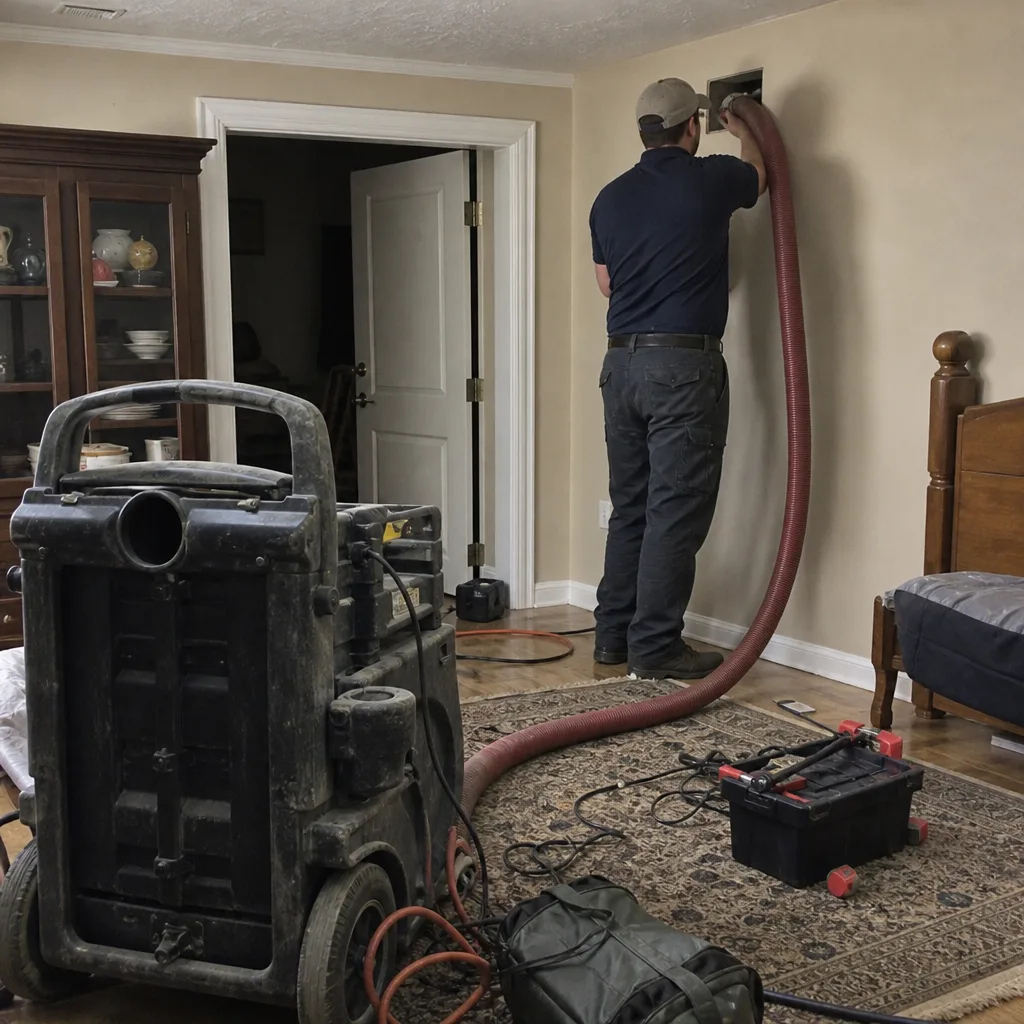
What a professional visit actually involves matters, because not every service is the same. A full duct-health visit should include contact cleaning of the duct surfaces, HEPA-rated extraction so fine particulate is captured rather than released into the air, and an inspection of the components that matter: blower wheel, return path, and the condition of accessible ductwork. If the inspection turns up damaged or disconnected duct sections, that’s a repair problem, and it should be handled by the same team rather than referred out.
This is where we’re direct about how we work. We clean with Rotobrush contact-cleaning systems and extract with Nikro HEPA vacuums, the same equipment standard used in professional remediation work. We don’t run a blower-and-hose setup and call it cleaning. If we find a problem that calls for repair, we repair what we find, because a cleaning visit that leaves a disconnected duct in place hasn’t solved anything. And for jobs where contamination or compromised conditions are present, we bring the equipment that’s built for it.
Contact Stratford Air Duct Cleaning to schedule either window. The estimate is free, and the price is set per job by the written estimate before any work begins.
Why Equipment Choice Changes the Outcome
Most homeowners don’t think about equipment until they’re comparing quotes and wondering why the prices differ so much. The answer is usually the equipment and the method, and it’s worth understanding before you book anything.
A blower-only or compressed-air setup moves dust around. It doesn’t necessarily remove it, and in a system with moisture-related growth or accumulated debris, moving it can spread the problem into more of the system. Contact cleaning physically agitates the duct surface so material releases and can be captured. HEPA-rated extraction then traps fine particulate rather than exhausting it back into the house. Those two things together, contact cleaning plus HEPA capture, are the difference between a cleaning that removes material and a service that redistributes it.
We also work with Honeywell and Aprilaire products, which means we can look at your filtration setup and tell you where the gaps are. If your current filter is undersized for the particulate load in your home, that’s a conversation worth having, and it extends the value of a cleaning visit. We’re not a filtration installer for those brands, but we know the products and can point you toward the right upgrade if your setup is asking for one.
One more thing worth naming: dryer vents. A clogged dryer vent is a leading cause of residential fires, and it’s a separate system from your HVAC ducts but the same category of problem. Our dryer vent cleaning service covers it, and it makes sense to handle both in the same visit window if you’re scheduling anyway. Seasonal care isn’t just about air quality. Some of it is about safety.
Common Mistakes to Avoid
- Cleaning once a year and calling it seasonal. In Charlotte’s climate, a single annual cleaning lands in one season and misses the other three. Two windows catch what one misses.
- Skipping the fall checklist because the system “seems fine.” It seems fine because the heat isn’t on yet. The first cold morning is when the accumulated dust announces itself, and by then you’re handling it in the worst possible week.
- Changing filters on a fixed calendar instead of by condition. Pollen weeks and heavy-use months load a filter faster than the label suggests. Check the filter, don’t just count the months.
- Treating a musty smell as a ventilation problem. A persistent musty smell in summer usually points to moisture conditions inside the system, not a house that needs more air. It’s worth a professional inspection.
- Assuming a cheap quote covers the same work. A price that’s dramatically lower than the others often means blower-only equipment and no HEPA capture. Ask what equipment and method the quote includes before you compare numbers.
- Sealing ductwork or adjusting returns as a DIY fix. Pressure problems in a duct system are diagnosis-first work. Modifying runs without understanding the pressure dynamics can make comfort worse.
- Ignoring the dryer vent because it’s a different system. It’s a fire-safety concern, not a comfort one. It deserves a place on the annual calendar.
See the difference
 Before
 After
 Before
 After
 Before
 After
When to Call a Professional
Some situations call for a professional visit regardless of where you are in the calendar. If you find visible mold growth, persistent musty smells that don’t clear, evidence of pest activity inside ductwork, disconnected or damaged duct sections, or condensation on supply ducts in the attic or crawlspace, stop and call. Those aren’t filter-and-wait problems, and some of them require equipment built for contaminated environments rather than a routine cleaning.
You should also call if a room heats or cools unevenly across seasons, if you’ve had water intrusion anywhere near ductwork, or if it’s been more than a year since the system had a full inspection. If you’ve just moved into a Charlotte home and don’t know the duct history, a first visit establishes a baseline for everything else in this guide.
Stratford Air Duct Cleaning offers free estimates in Charlotte. Call (833) 962-6967. We answer 24/7. Fast dispatch from 7am to 7pm, Sunday through Friday.
Frequently Asked Questions
Twice a year works best for most Charlotte homes, with one visit in late spring after pollen season and one in early fall before the first heating call. A single annual cleaning is the minimum, but it only addresses one of the four seasonal stress periods this climate creates. Homes with pets, allergies, or young children benefit most from the two-visit schedule. Call (833) 962-6967 for an exact quote on a scheduled visit.
The smell comes from dust that accumulated over the cooling season and the shoulder months, then gets heated when the system switches to heating mode and pushed into the living space. It’s the single best argument for the fall pre-heating checklist: address the accumulation in September or October and the first cold morning doesn’t smell like anything. A persistent smell after the first few cycles is worth a professional inspection. Call (833) 962-6967 to schedule one.
Yes, the conditions exist here. Condensation on cold supply ducts in humid attic or crawlspace air, combined with dust on duct surfaces, creates the conditions where mold can colonize. It usually shows up as a musty smell first. If you suspect it, a routine cleaning isn’t the right response; the job calls for inspection and equipment built for contaminated conditions. Call (833) 962-6967 to discuss what a full assessment involves.
Both, in sequence. Pollen loads the filter, restricted airflow follows, and the evaporator coil doesn’t get the air movement it needs to stay dry and clean. The filter is the first line, but the cascade that follows is why spring care is about more than a filter change. If your system hasn’t been inspected in over a year, spring is a reasonable time to get a baseline.
A cheap visit typically uses blower-only or compressed-air equipment, which moves dust rather than capturing it. A full duct-health visit uses contact cleaning to release material from duct surfaces and HEPA-rated extraction to capture it, plus an inspection of components like the blower wheel and return path. We work with Rotobrush and Nikro systems for exactly that reason. Call (833) 962-6967 for a free estimate on a full visit.
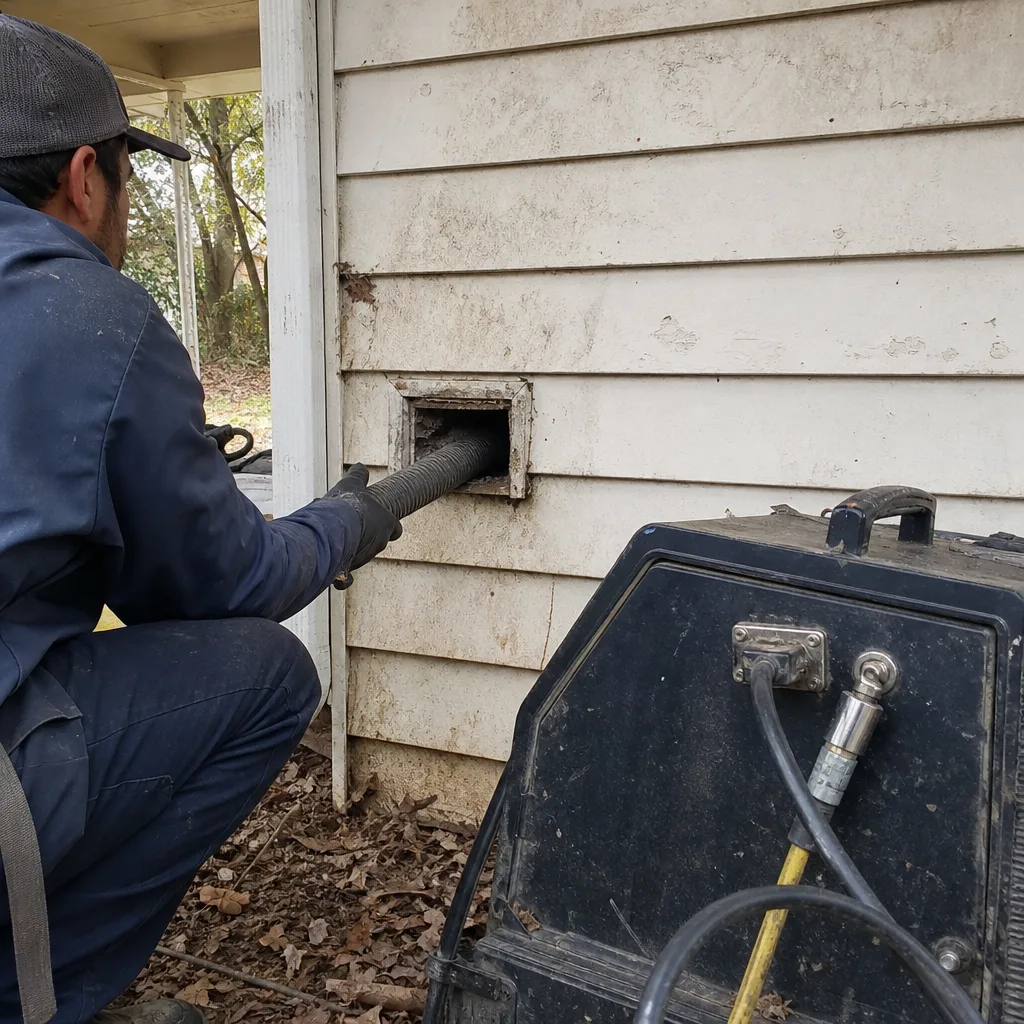
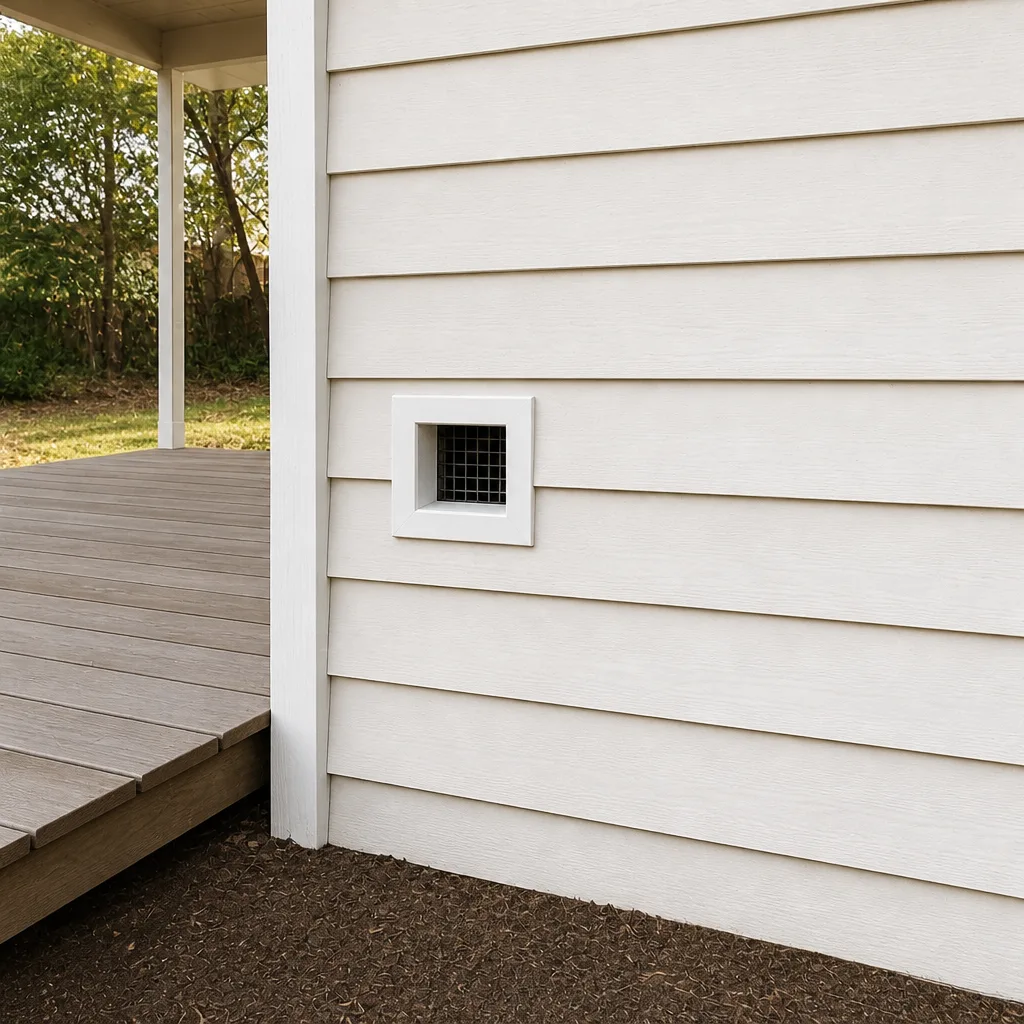
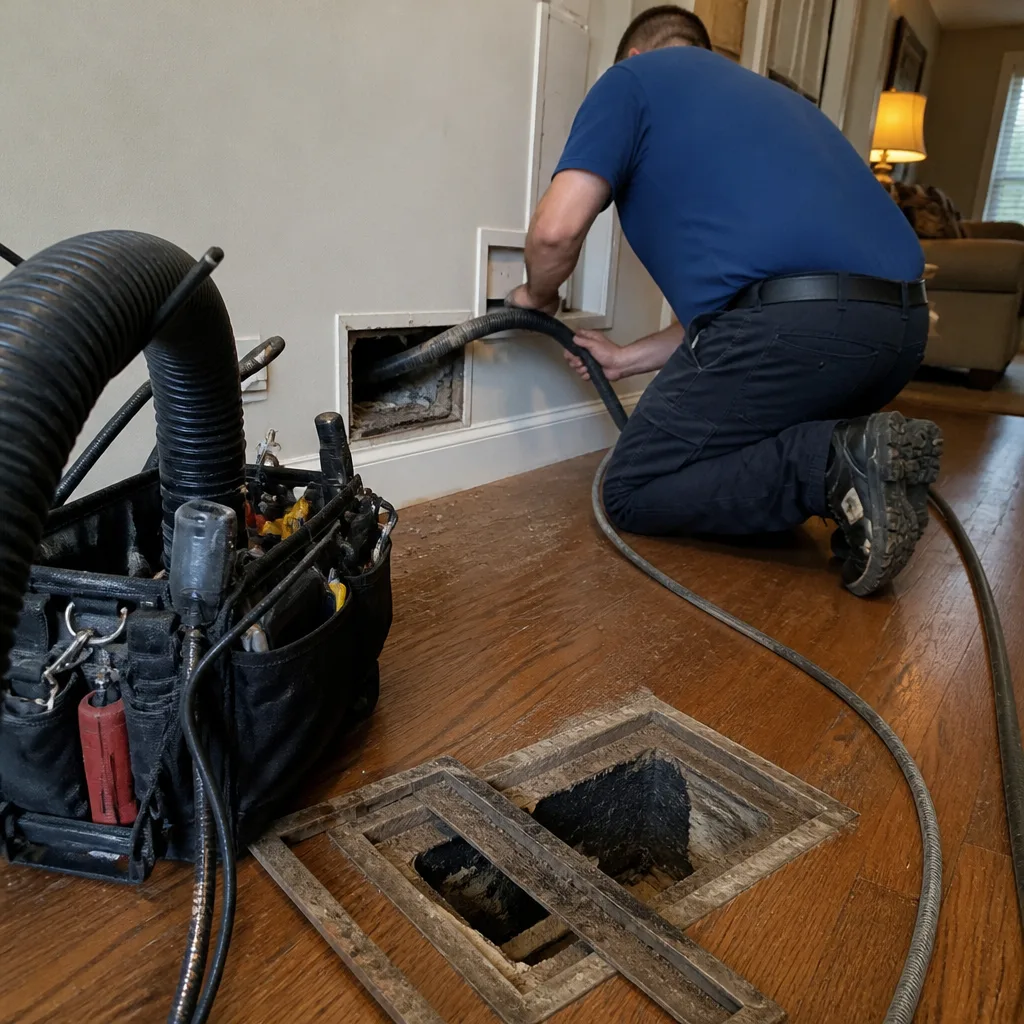
Ask for before-and-after photos of your own ducts. Any service that captures what it removes can show you the condition of your system before and after. If a company can’t or won’t document the work, that’s information worth having before you book. We photograph the work as part of the visit. Call (833) 962-6967 to schedule an estimate.
The Bottom Line
Charlotte’s climate creates four separate duct-stress periods, and a single annual cleaning only addresses one. The working calendar is two professional windows, late spring and early fall, with filter checks and inspection in between. Spring is about managing pollen and the airflow cascade that follows it. Summer is about watching for moisture conditions in attic and crawlspace ducts. Fall is the pre-heating checklist that prevents the November surprise. Winter is observation season, when pressure problems in older homes become visible and worth documenting.
The equipment matters as much as the timing. Contact cleaning plus HEPA-rated extraction captures what it removes; blower-only setups often don’t. And duct repair being handled by the same team as the cleaning means a disconnected run gets found and fixed in one visit rather than referred to a second contractor.
If you’re building a year-round plan for a Charlotte home, start with one professional assessment and work from what it finds. For more on our home city and surrounding service area, see Locust. Call (833) 962-6967 for a free estimate. We answer 24/7. Fast dispatch from 7am to 7pm, Sunday through Friday, and we’re closed Saturday. A call outside dispatch hours is booked into the next opening.
Written by the team at Stratford Air Duct Cleaning, serving Charlotte since 2017.