
Last updated November 14, 2026
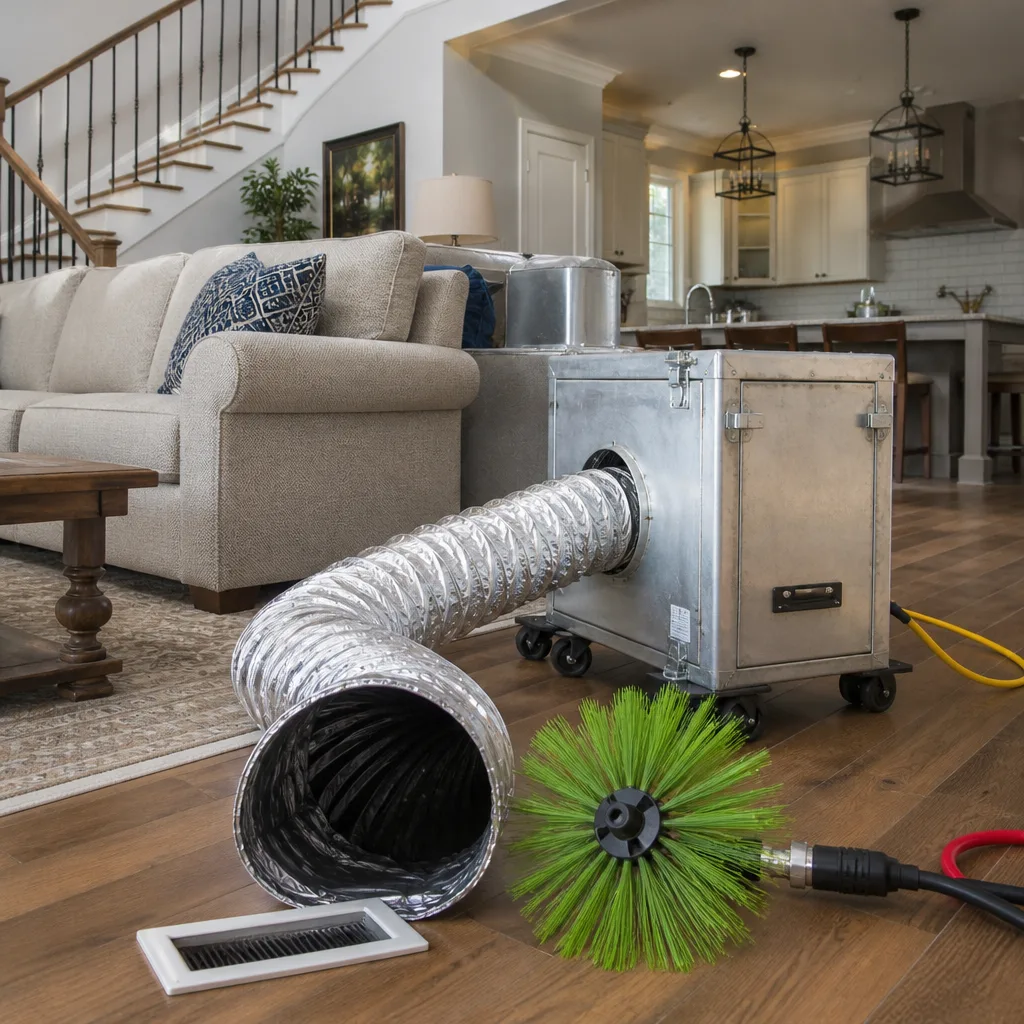 Whole-home duct cleaning
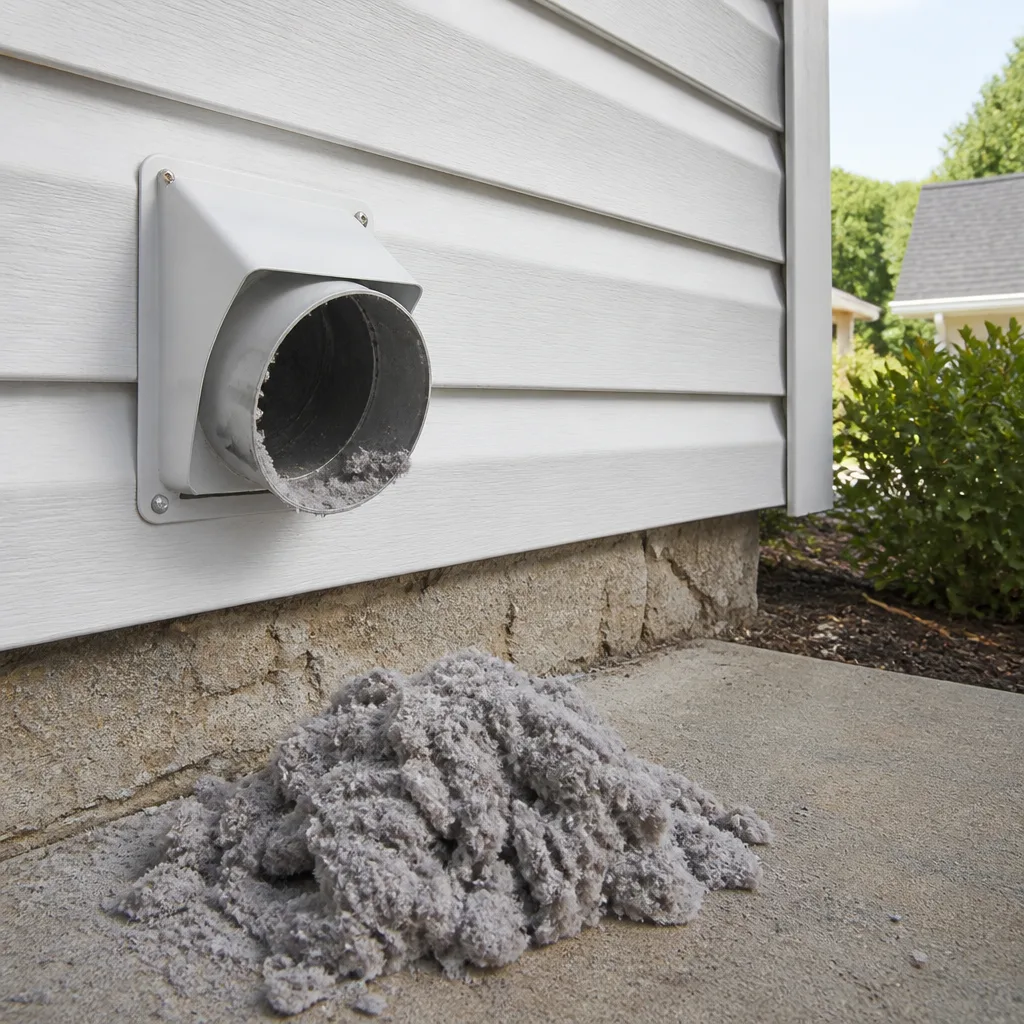 Dryer vent cleaning
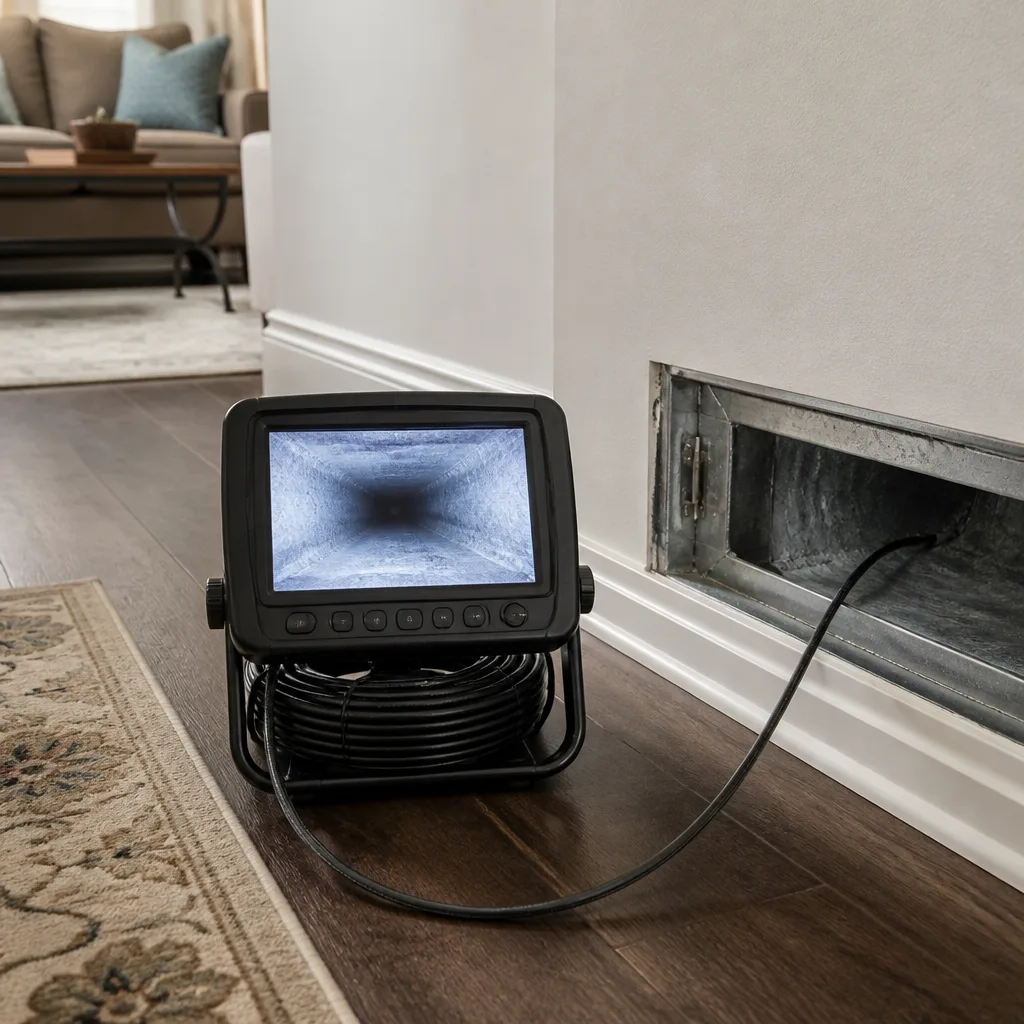 Camera inspection
 Sanitizing & deodorizing
Whole-system duct and dryer vent check with before-and-after photos - you see exactly what came out of your vents
That "$99 whole-house special" is a bait ad - the real number appears once they are in your hallway, or the "clean" is a shop-vac at the register. We photograph the inside of your ducts before and after instead.
Choosing the Right Air Duct Cleaning Brand: A Buyer’s Guide for Charlotte
When a duct cleaning company lists “Rotobrush certified” on its website, most Charlotte homeowners assume they’re reading a credential. It’s not. Rotobrush is an equipment system, and knowing what that system does, and what it doesn’t do, tells you far more about whether a contractor fits your job than any certificate could. The same goes for Nikro and Abatement Technologies. These names get pasted onto marketing pages across Charlotte without explanation, and buyers are left comparing logos instead of methods. This guide translates the equipment categories into plain-language capabilities, explains how duct type should drive the choice, and gives you the exact questions to ask during a quote call so you can tell a real answer from a rehearsed one.
Quick Answer
The right air duct cleaning brand in Charlotte is the one whose equipment matches the ducts in your home: continuous contact cleaning systems like Rotobrush for flex duct, HEPA-rated extraction like Nikro for fine particulate, and containment-grade equipment like Abatement Technologies when contamination is involved. A contractor who owns only one method will use that method on every job, whether it fits or not. Ask what system they’ll use on your specific duct layout before you ask about price.
Styles & brands we work with
- Whole-home duct cleaning
- Dryer vent cleaning
- Camera inspection
- Sanitizing & deodorizing
Table of Contents
- What Equipment Names Actually Tell You
- What Rotobrush Is Designed For
- What Nikro and HEPA Extraction Add
- When Abatement Technologies Matters
- The Duct Material Question in Charlotte
- Why One-Method Contractors Are a Risk
- How to Ask an Equipment Question
- Reading a Quote Like a Professional
What Equipment Names Actually Tell You
Equipment brand names in duct cleaning function as shorthand for capability categories. They aren’t certifications, memberships or licenses. When a company says it uses Rotobrush, it’s telling you it owns a rotary contact-cleaning system. When it says Nikro, it’s telling you it owns HEPA-rated vacuum equipment. When it says Abatement Technologies, it’s signaling containment-grade gear built for remediation environments. Each name describes a tool, and each tool solves a different problem.
This matters in Charlotte because the housing stock here is genuinely mixed. A company marketing across the metro is working in century-old bungalows near Plaza Midwood, mid-century ranches in Cotswold, and new builds out toward Ballantyne and Indian Trail, where flex duct runs dominate. Those four situations call for different equipment emphasis. The brand names on a website only mean something if the company can explain which tool fits which house.
We use Rotobrush contact-cleaning systems, Nikro HEPA-rated vacuums and Abatement Technologies equipment at Stratford Air Duct Cleaning because the range of homes in Charlotte requires exactly that range of tools. The equipment list isn’t a marketing badge. It’s an inventory.
How to read an equipment claim
- Note the brand name on the website or quote.
- Identify what category the tool belongs to: contact cleaning, HEPA extraction, or containment and negative air.
- Match the category against what your ducts actually are.
- Ask the contractor to name the system and explain why it fits your layout.
- Compare across quotes using the same categories, not the same adjectives.
What you’re doing with that sequence is converting a claim into a testable fact. A contractor who understands their own equipment will answer all five steps without hesitation. One who bought a Rotobrush because it was on a financing brochure will stall around step two.
What Rotobrush Is Designed For
Rotobrush is a rotary contact-cleaning system. A motorized brush head advances through the duct interior while a vacuum line runs alongside it, so the surface gets mechanically agitated and the loosened material gets pulled into the airstream at the same time. The integration is the point. Compressed-air whipping alone breaks debris loose and sends it down the run without guaranteed capture. Brushing alone leaves the fine material where it sits. The combined approach captures what it disturbs.
This system performs best in the duct types found in most of Charlotte’s newer construction and mid-range homes: flex duct branch runs, 6 to 8 inch diameters, continuous coils of ribbed liner where a rotating brush can follow the path. Flex duct accumulates dust on the ridges, and it collects it in a way that a simple blower won’t move. Contact cleaning reaches that layer. In older homes with sheet metal trunks and short flex branches, Rotobrush handles the branches and the trunk gets a different approach.
Where Rotobrush isn’t the whole answer
- Large sheet metal trunk lines where a rotating brush can’t reach every surface angle.
- Duct systems with mechanical damage, sagging, or disconnected joints where a brush shouldn’t be pushed.
- Contaminated environments where negative air containment has to come first.
- Heavy post-construction debris where the extraction side of the system bogs down.
An honest contractor will tell you that last list. A contractor who says Rotobrush handles every situation in every home hasn’t thought about it, or is choosing the tool because it’s what happens to be in the van.
Why the “Rotobrush certified” claim misses
The “certified” framing is a labeling problem. It sounds like an industry credential, and it isn’t. What actually matters is whether the technician running the machine knows how to control brush speed, when to stop at a damaged section, and how to verify the run was cleared. Equipment skill is applied judgment, not a sticker. That’s a different thing from a certification and worth asking about directly.
What Nikro and HEPA Extraction Add
Nikro HEPA-rated vacuum systems capture fine particulate down to a sub-micron level and hold it. That’s the technical distinction, and it matters in a real way. A standard shop vacuum, or an unrated truck blower, pulls a lot of air but releases ultrafine dust back into the room instead of containing it. When dust goes back into the room, the air quality after the visit is worse than before, and the homeowner has no way of knowing it happened.
In our experience, HEPA-rated extraction is the single most underrated component of a duct cleaning service. In a Charlotte house with carpet in the bedrooms and pets in the living room, a significant fraction of what’s in the ducts is fine organic material. If the system doesn’t capture it, it redistributes it. HEPA-rated equipment at the collection end, paired with contact cleaning at the duct surface, means the material leaves the house through a certified filter, not through a window screen.
What to listen for
- Mentions of a HEPA filter or HEPA-rated unit. Not “high-powered vacuum,” which describes airflow, not filtration.
- Negative air setup: the collection system should be creating pressure that draws material toward the unit, not pushing it outward.
- Containment language: a professional will describe how the work area is sealed before extraction begins.
Nikro is a name you’ll see on professional remediation trucks, and that’s the point. The equipment standard in restoration work is higher than the standard in routine residential cleaning, and there’s no reason a homeowner’s duct visit shouldn’t meet it. You’ll see the same principle applied to air duct cleaning services in smaller towns across the region, where the best contractors use remediation-grade extraction rather than consumer equipment.
HEPA versus blower: why the difference shows up later
Blower-based systems can move impressive amounts of air. The problem is what the air carries. Fine dust that comes out of the exhaust gets pulled back into the HVAC system on the next cycle, settles onto surfaces, or ends up in the filter where it should have been in the first place. HEPA-rated extraction contains the material at the source. Both methods look similar while the technician is working. Six weeks later, only one of them shows a measurable difference in what’s accumulating.
When Abatement Technologies Equipment Matters
Abatement Technologies is a containment and negative air equipment manufacturer with a deep presence in the remediation industry. When a duct cleaning company carries this class of gear, it signals something specific: it can handle jobs where contamination or structural compromise exists, not just routine dust removal. That’s a different service tier from a standard cleaning visit.
The situations where this matters in Charlotte include post-construction cleanup in recently renovated homes (particulate from drywall, insulation and framing is fine and persistent), water-damaged ductwork where microbial growth is possible, and any space where the duct interior has become a collection point for material that shouldn’t be redistributed into living areas. Negative air machines create pressure differentials that keep contaminated particles contained during the work.
What a full-service approach means for Charlotte homeowners
The practical value of carrying this class of equipment is that the usual referral loop disappears. When duct problems go beyond routine cleaning, the standard industry response is to patch through to a second contractor for the repair or containment side. That handoff is where work gets lost and responsibility scatters. At Stratford Air Duct Cleaning, cleaning, dryer vent cleaning, and duct repair are handled by the same team, and the containment-grade gear means the contaminated scenario is covered too. We repair what we find, rather than handing off.
You should be wary of any company claiming contamination remediation certification that hasn’t actually confirmed it. Stratford’s Abatement Technologies equipment is a capability statement for the cleaning environment, not a claim to mold remediation certification. Ask specifically what the equipment does and what the scope of work includes, and if a company implies a certification, request it in writing.
The Duct Material Question in Charlotte
Charlotte’s housing stock splits roughly into two duct eras, and the equipment needed for each is different. It’s the first thing to identify before you get serious about quotes.
Homes built before 1990
Older Charlotte homes (Midwood, Plaza Midwood, Wesley Heights, and much of the inner ring) often have a main sheet metal trunk running through the crawl space or attic with flex branch runs feeding individual rooms. Sheet metal accumulates a different kind of buildup: it’s smoother, but the seams, joints and turns collect dust in a way that uniform brushing doesn’t address. The trunk needs a combination of agitation and high-volume extraction, and the flex branches need contact cleaning. A contractor equipped only for flex duct is going to leave the trunk undercleaned. One equipped only for sheet metal won’t do the branches properly.
Homes built after 1990
Newer construction in Charlotte (Steele Creek, Ballantyne, University City) is dominated by flex duct. The branch runs are longer, more numerous, and more likely to have sagging sections or compression against framing that traps material. Flex duct is where Rotobrush-style contact cleaning earns its place. The brush head follows the ridges and works the build-up loose, and the integrated vacuum pulls it into the collection line before it settles further down.
There’s also a humidity factor. Charlotte summers run hot and humid, and flex duct in unconditioned attic space can sweat when the system cycles, creating damp conditions where dust turns into a compacted film on the liner. That film doesn’t come off with a blower. It needs contact cleaning, and it’s a reason to schedule duct cleaning for the spring before the cooling season loads the system.
Quick identification checklist
- Look at the supply registers: metal boot boxes in an older home, flex connections in a newer one.
- Check the air handler location and follow the closest trunk.
- Look at the accessible attic or crawl space run if you have one.
- Note the approximate build year of the home.
- Tell the contractor what you found before they quote.
Why One-Method Contractors Are a Risk
A contractor with only one type of equipment will choose your cleaning method based on inventory, not on your ducts. That’s not a knock on the individual technician. It’s straightforward incentive math. If the van has one system in it, the sales process shapes around that system. The quote that says “our method handles everything” is describing the limits of the equipment, not the state of your home.
There’s a second version of the problem: the company runs a truck-mounted blower and calls it full-service. Blowers have a legitimate place in the process, but they’re airflow tools, not capture tools. They don’t do contact cleaning, and they don’t hold fine particulate. A company whose entire method is a blower is going to look under-equipped on a flex duct system with compacted liner, and no amount of marketing language fixes that.
What a good equipment conversation looks like
A contractor with real capability will describe the system, describe the ducts in your specific house, and explain how the two match. They’ll name the specific tools, describe the sequence, and tell you when they plan to switch from one to another. They won’t hedge, they won’t dodge, and they won’t get vague about brands. If the answer is “our equipment handles everything,” you’re getting a sales pitch, not a technical one.
That holds whether you’re in Charlotte or a smaller market like Locust, where the same equipment standard applies. The method-to-duct match is universal, even when the housing stock isn’t.
How to Ask an Equipment Question
The single best question is specific: “What system are you going to use on my ducts, and why that one?” It sounds simple, and it’s devastating to a vague quote. Here’s how to run the conversation.
- Name the duct type you have before the call. “I’ve got flex branch runs and a sheet metal trunk, late 1980s build.” This forces the contractor to answer the specific scenario rather than a generic one.
- Ask what equipment they plan to use. Listen for a brand name and a category, not just “our equipment.”
- Ask why that equipment fits that duct type. A confident answer describes the tool’s mechanism and the duct’s characteristics, and explains how they line up.
- Ask what happens on the trunk section. A good answer acknowledges that different duct types need different equipment.
- Ask how contamination is contained if it’s found. A vague answer about “we’ll take care of it” is a warning.
- Ask what happens if they find damaged duct during the job. If the answer involves a referral, the company isn’t full-service.
What a bad answer sounds like
- “We use state-of-the-art equipment.” No brand, no category, no mechanism.
- “Our process is the best in the industry.” An adjective, not an answer.
- “Our truck-mounted blower handles everything.” A single system applied to every situation.
- “We’re Rotobrush certified.” A category claim mistaken for a credential, without any detail on how it applies to your house.
- “We’ll figure it out when we get there.” A real answer, just not a good one.
A strong answer sounds like this: “Your flex branches get contact cleaned with a rotary brush and integrated vacuum, and your metal trunk gets a different agitation pass with HEPA extraction on the collection line, because a brush won’t reach the trunk seams the same way.” That’s a technician describing their tools, not a marketing department describing a service.
Reading a Quote Like a Professional
Once you’ve had two or three equipment conversations, the quotes themselves become easier to compare. The price matters, but the line items inside the price tell you whether the work described matches the job.
What a solid duct cleaning quote includes
- The equipment being used and by name, not a generic description.
- The scope by duct section: branches, trunks, air handler, registers, and any returns.
- A description of containment if contamination is possible.
- A note on what happens if the technician finds damaged duct during the visit, and whether repair is in-house or referred.
- A price that’s set for the whole system, not a per-vent figure or a teaser coupon that changes on the driveway.
What to ask about pricing structure
Per-vent pricing is a red flag, and it’s common in this market. A low number per vent gets quoted on a call, then the job expands once the crew arrives and counts the registers. Legitimate work is priced as a whole system, with the scope defined before anyone starts. We work that way: one flat price per system agreed before work begins, with before-and-after photos of your own ducts so you can see what was actually removed. That’s the answer to the bait-and-switch reputation this trade carries, and it’s worth demanding of any contractor you interview.
How to verify the work was done
- Ask for before-and-after photos of the ducts themselves, not just the equipment on the driveway.
- Look inside the return and a supply register yourself after the work is complete.
- Check that the filter was changed or cleaned as part of the visit.
- Note whether the crew described what they found and what they removed.
Common Mistakes to Avoid
- Treating “Rotobrush certified” as a credential. It’s an equipment system, and what matters is whether the contractor knows how to apply it to your specific duct layout. Ask about method, not the sticker on the van.
- Choosing a quote with no named equipment. Charlotte has a wide range of duct systems, and a quote that doesn’t describe the tools is probably a quote that doesn’t have them. You’ll find out the hard way.
- Setting a cleaning date before you know what’s in the ducts. If a company quotes before asking what your duct type is, they’re pricing a generic job. The equipment match has to come first.
- Accepting a per-vent quote. A per-vent structure invites scope creep the moment the crew is on site. Whole-system pricing with a defined scope is the only structure that protects you on the invoice.
- Confusing a blower with a full cleaning system. Truck-mounted blowers move air. They don’t do contact cleaning and they don’t contain fine particulate. If a company’s equipment is a blower and nothing else, your flex duct isn’t getting what it needs.
- Skipping the containment question. In a home that’s been renovated recently, or where water damage has ever occurred, negative air containment is part of doing the job right. If the contractor doesn’t carry it, they can’t offer it.
- Scheduling a cleaning and ignoring the dryer vent. Dryer vents are a fire safety concern, and the equipment that does duct cleaning well can address them properly. Contractors who don’t handle it are leaving a real risk unaddressed.
See the difference
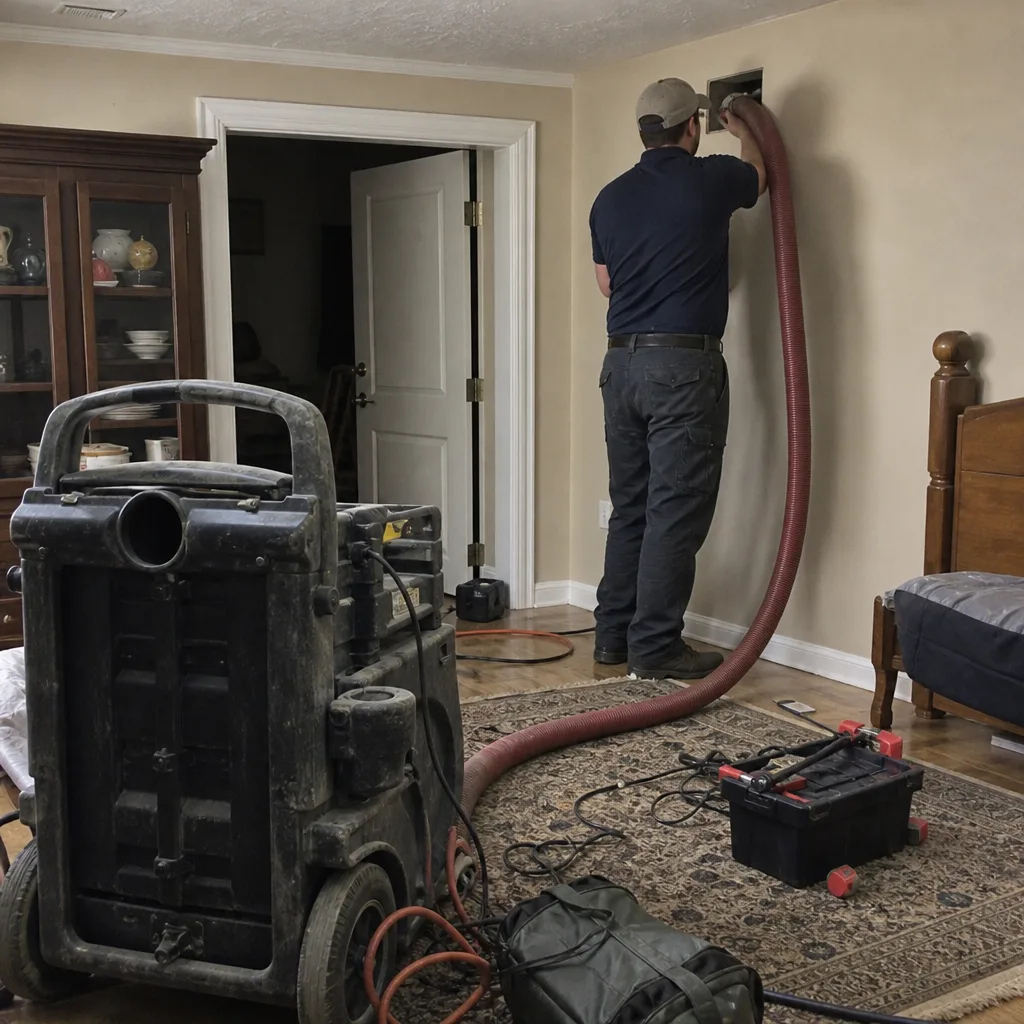 Before
 After
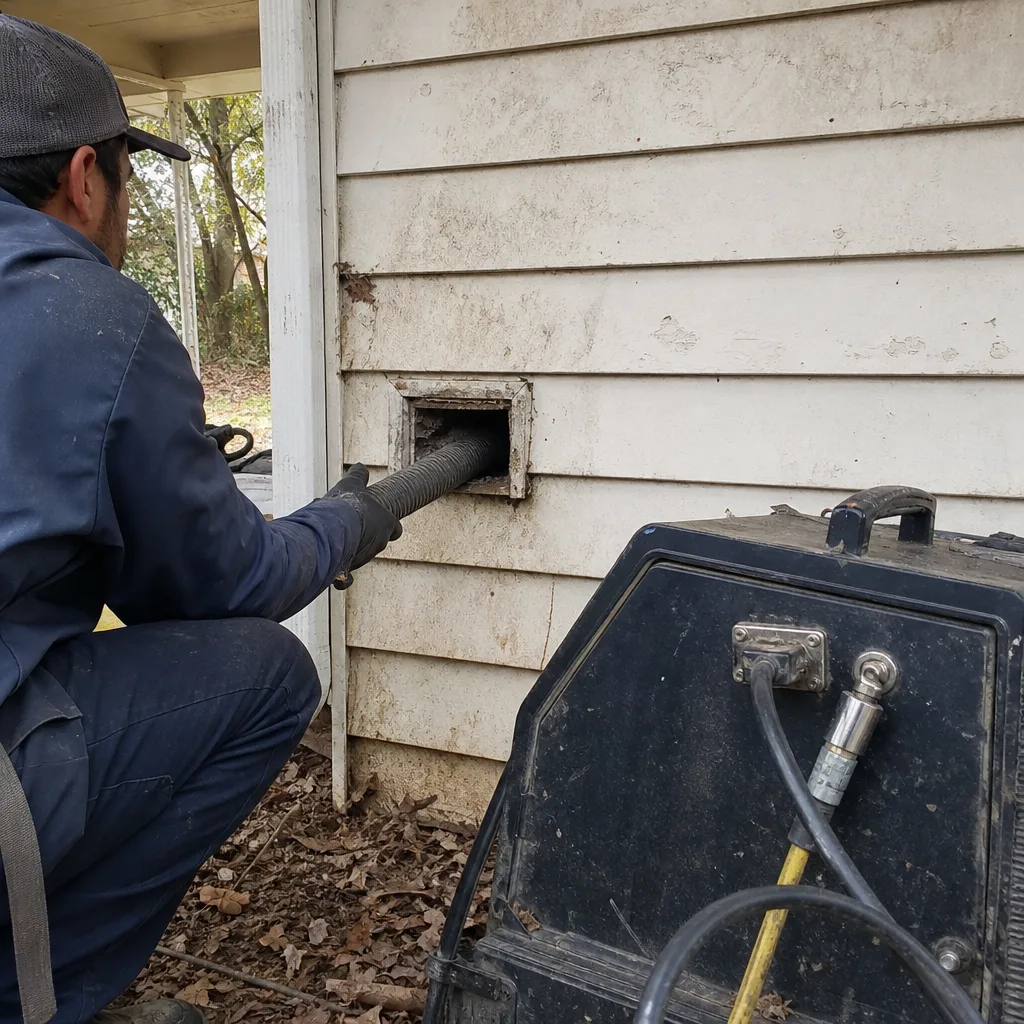 Before
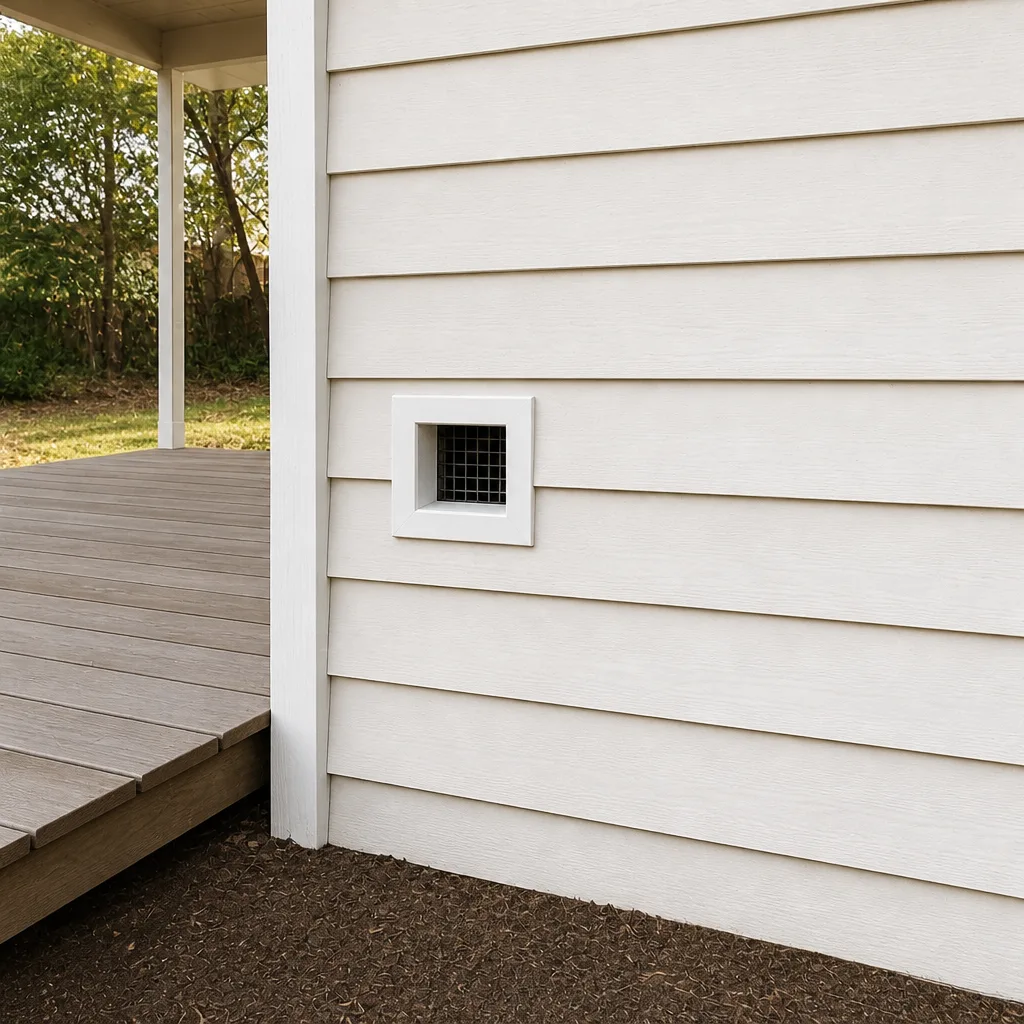 After
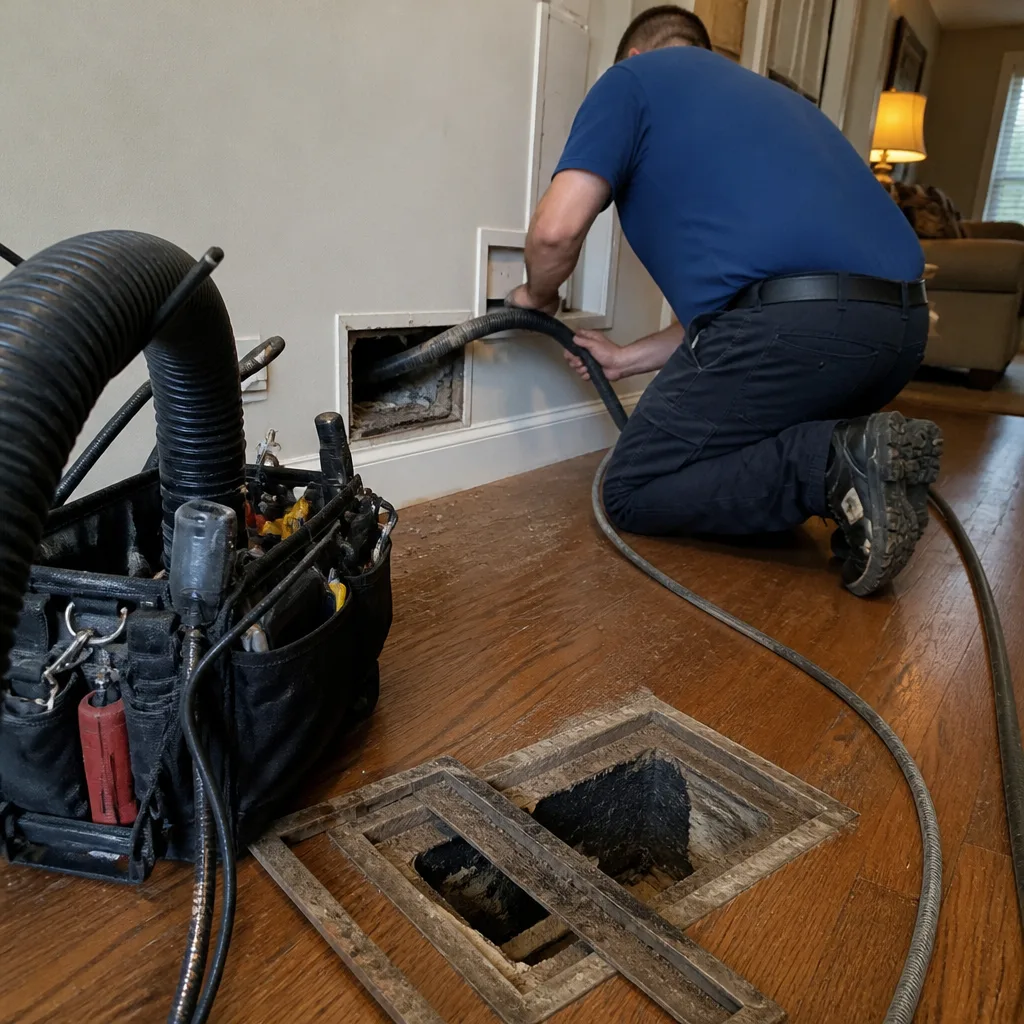 Before
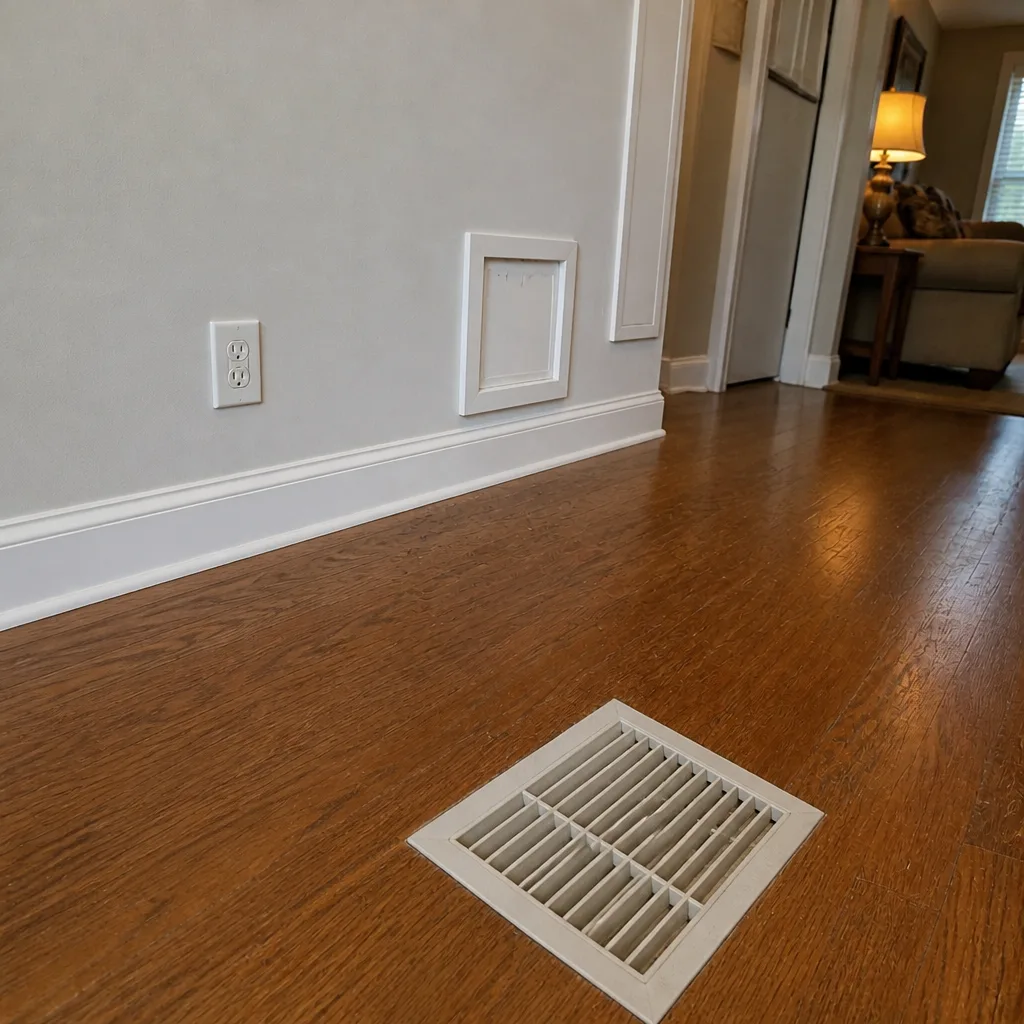 After
When to Call a Professional
The obvious moments are after a renovation, when you’ve moved into a previously occupied home in Charlotte, or when someone in the household is dealing with allergy symptoms that aren’t improving. Less obvious: when you notice uneven airflow between rooms, when visible dust settles quickly on surfaces after a cleaning, or when you’re selling a home and the inspection turned up duct concerns. Dryer vent cleaning is worth scheduling on its own, since lint accumulation in the vent run is a leading cause of residential fires and a vent that’s been running for years without attention is worth having looked at.
What should prompt a call rather than a wait is any situation where duct condition is uncertain. A full duct-health assessment before a cleaning visit is the right first step, and it clarifies whether a routine cleaning is what your system needs or whether the work involves repair or containment. Stratford Air Duct Cleaning offers free estimates in Charlotte. Call (833) 962-6967. We answer 24/7. Fast dispatch from 7am to 7pm, Sunday through Friday.
Frequently Asked Questions
Duct cleaning in Charlotte is priced per job, based on the size and layout of the system and the equipment needed, so there’s no reliable single number across the market. Whole-system pricing confirmed in writing before work starts is the structure to look for. Call (833) 962-6967 for an exact quote; estimates are free.
Lower quotes usually come from contractors with one equipment type, focused on the branch runs only, which means the trunk and air handler go unaddressed. A quote with no named equipment and no defined scope is worth less than one with both, regardless of the headline number. If the price seems unusually low, ask what’s included and what’s excluded before you agree.
Ask for before-and-after photos of your own ducts, inspect a register or return yourself after the visit, and confirm that the filter was part of the scope. A contractor who takes before-and-after images and shares them is offering you verification rather than asking you to trust the process. We photograph every job and share the images with the homeowner.
Rotobrush is a contact-cleaning system: a rotary brush mechanically agitates the duct surface while an integrated vacuum captures what’s loosened, so the material doesn’t redistribute. A truck-mounted blower moves air through the system but doesn’t make contact with duct surfaces, and it’s a different category of tool. Which one you need depends on your duct type and the condition of the system.
Yes, and it’s the first thing to check. Charlotte homes built before 1990 often have a sheet metal trunk with flex branches, and newer homes are dominantly flex duct. Sheet metal requires agitation that reaches joints and seams; flex duct requires contact cleaning that follows the ribbed liner. The right contractor will match the equipment to both.
Ask a specific question: “What system will you use on my ducts, and why that one?” Then listen. A contractor who names the tool, describes the mechanism and explains why it fits your duct layout is demonstrating capability. A vague answer about “state-of-the-art equipment” or “our process” is not. Call (833) 962-6967 if you want to test that question on us.
The Bottom Line
Equipment brand names in duct cleaning are capability statements, not credentials, and reading them that way changes the whole buying process. Rotobrush is contact cleaning for flex duct. Nikro is HEPA extraction that holds fine particulate instead of releasing it. Abatement Technologies is containment-grade gear for jobs where contamination is possible. A contractor who owns all three can match the tool to the house. One who owns a single system will match the house to the tool. Ask the equipment question, listen for a specific answer, and insist on whole-system pricing with photos of the work. The right choice for a Charlotte home isn’t the lowest quote, it’s the company whose equipment actually fits the ducts.
Two things to remember from this guide
- Ask which equipment category your ducts need before you price the job.
- Confirm the scope in writing: whole-system, no per-vent pricing, before-and-after photos.
Other services we handle
Our teams also provide dryer vent cleaning and duct repair in the same visit, so a cleaning can address both the comfort side and the safety side of the system. If you want a full picture of what’s running through the system in your home, we can assess that alongside the cleaning scope.
Contact
Stratford Air Duct Cleaning has served the Charlotte area since 2017. We use Rotobrush contact-cleaning systems, Nikro HEPA-rated vacuums and Abatement Technologies equipment because the range of homes in this city calls for exactly that range of tools. We work with Honeywell and Aprilaire filtration products to close air quality gaps when we find them, and Guardsman finishing on the protection side. Call (833) 962-6967 for a free estimate. We answer 24/7. Fast dispatch from 7am to 7pm, Sunday through Friday.
Written by the team at Stratford Air Duct Cleaning, serving Charlotte since 2017.